
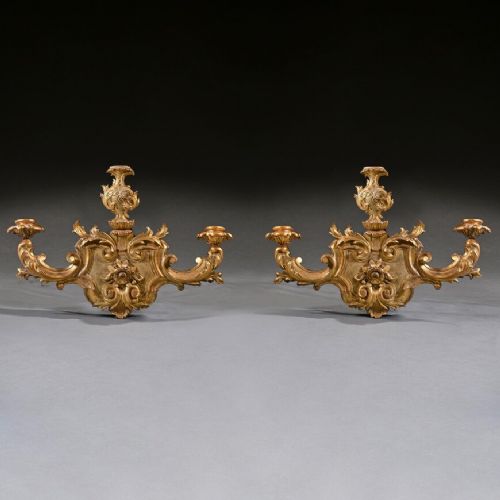
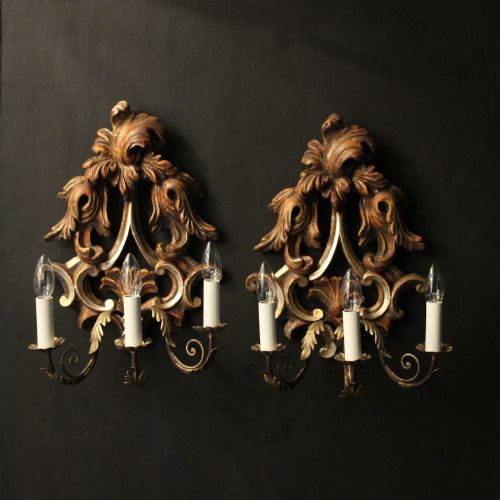
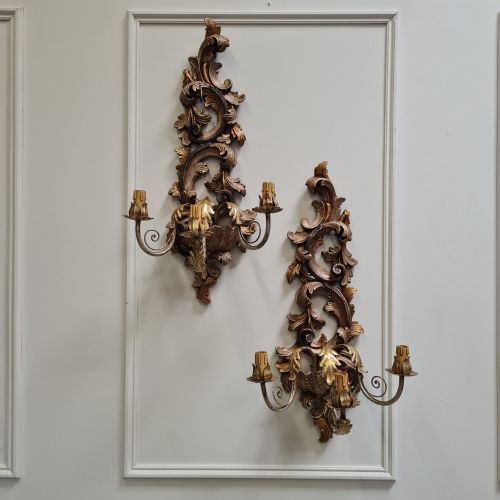
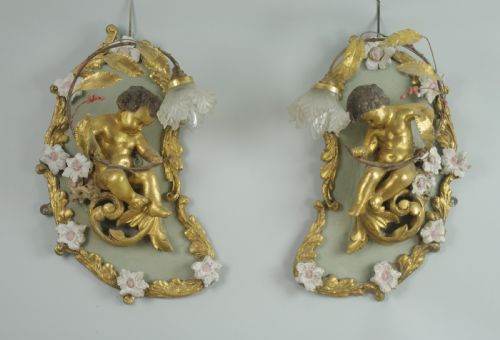
Pair Giltwood Wall Sconces
Pair giltwood wall sconces bring warmth and decorative illumination to a room, catching candle or electric light against carved, gilded surfaces.
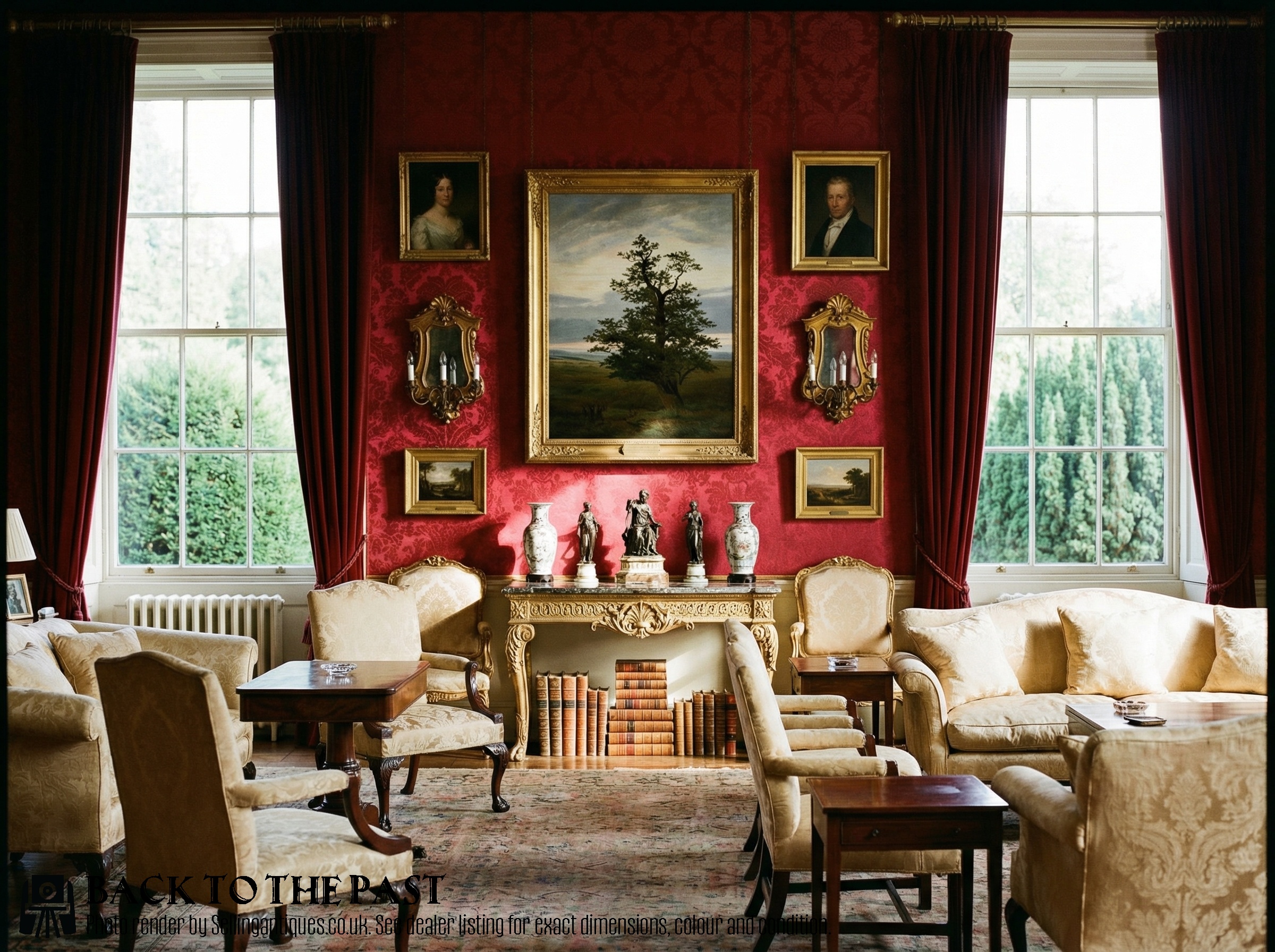
Pair Giltwood Wall Sconces
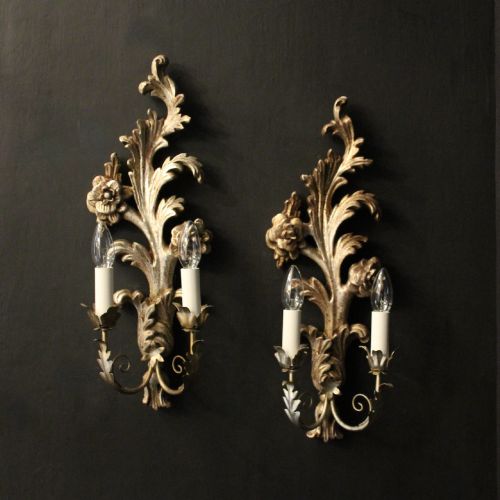
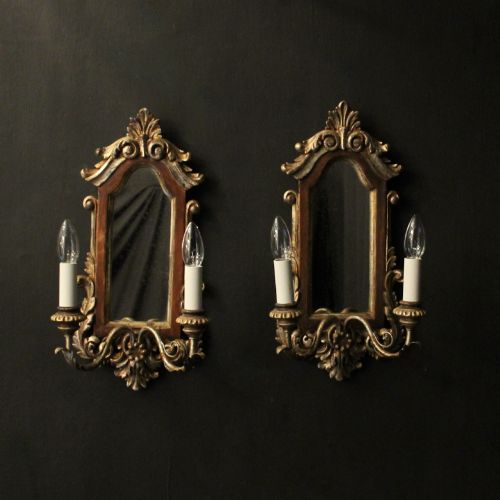
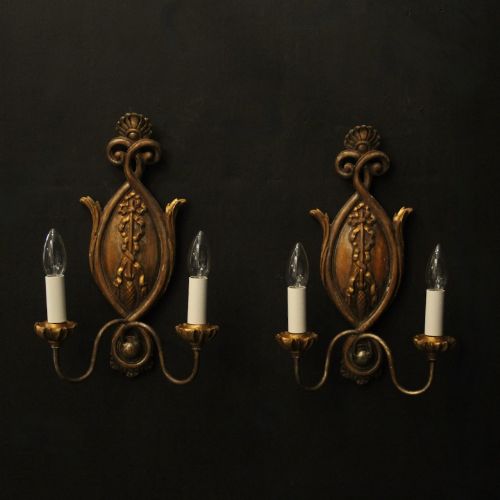
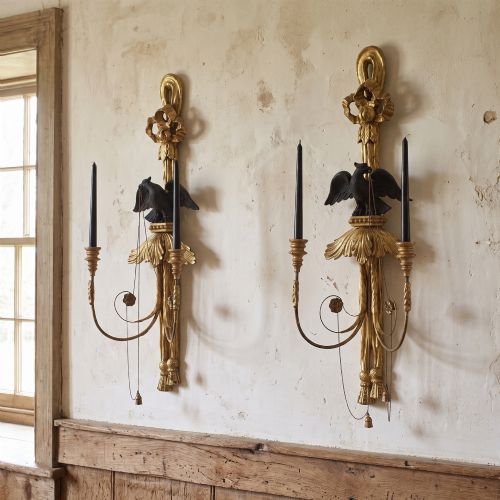
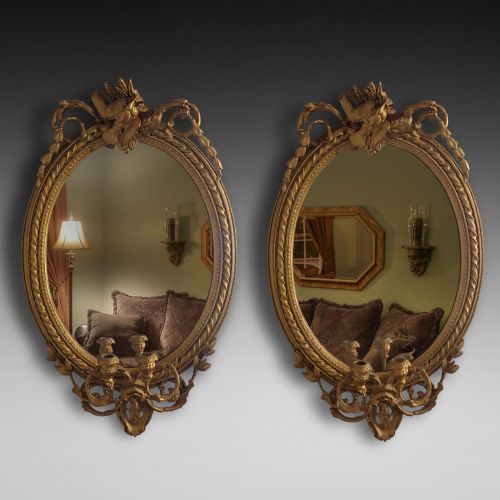
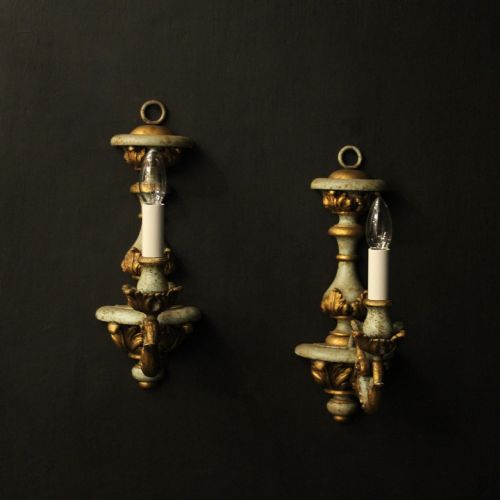
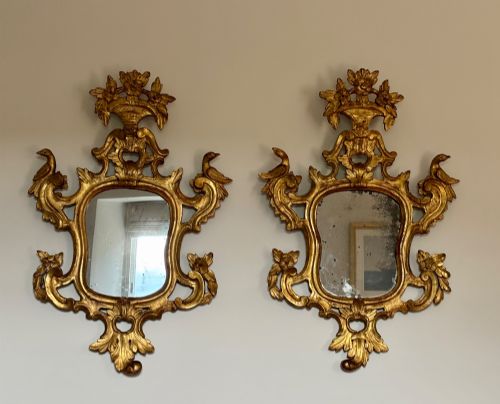
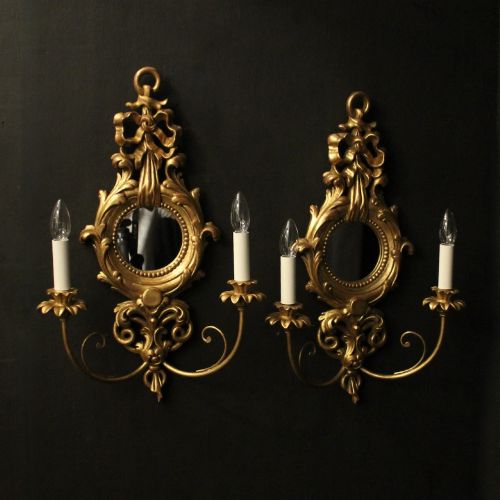
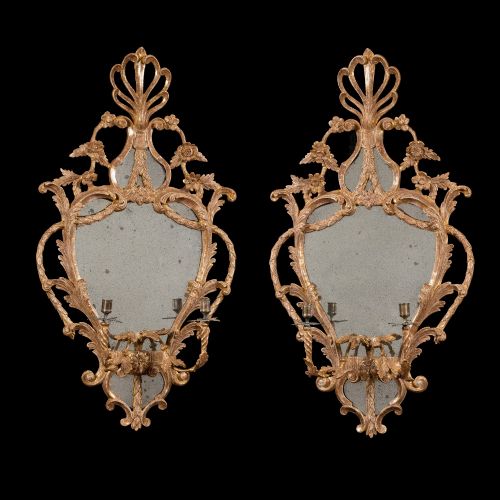
When searching for pair giltwood wall sconces, collectors encounter lighting fixtures and wall ornaments designed to reflect light and adorn domestic interiors. The selection spans centuries of craftsmanship, from eighteenth-century Venetian mirrors and girandoles to twentieth-century Florentine wall lights.
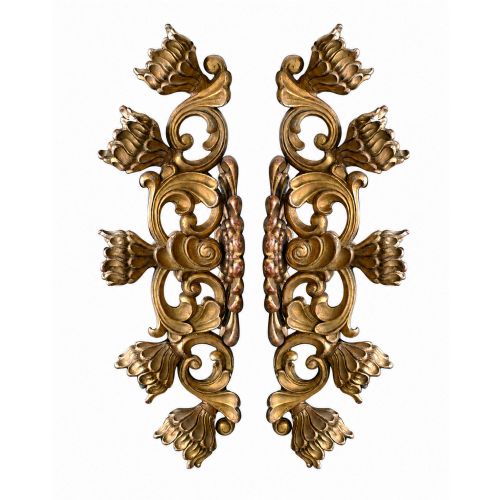
Most examples originate from Italian, French, and British workshops, adopting styles that range from restrained neoclassical lines to ornate rococo curves. Forms include twin and triple-arm candle branches, mirror-backed girandoles, and carved wooden brackets designed to hold ornaments or candles.
How they were made
Carved wood and gesso form the primary structural foundation for these objects, providing a stable base for intricate ornamentation. Artisans applied thin sheets of gold leaf or applied silver and gilt paint over the prepared surfaces to achieve a luminous finish.
Many items incorporate glass elements such as mirrored plates or Murano components, while others integrate metal fittings and brass arms to support the weight of candles or electrical wiring.
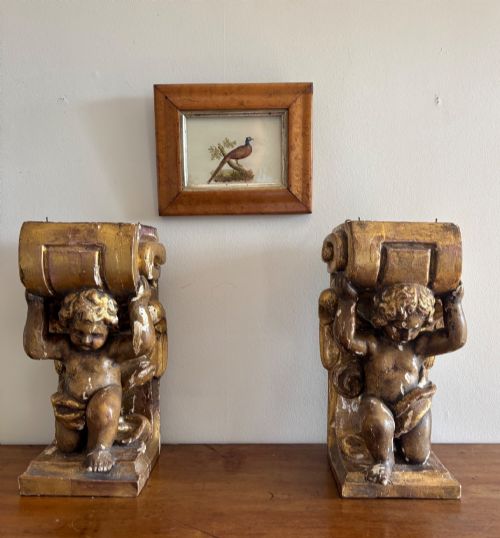
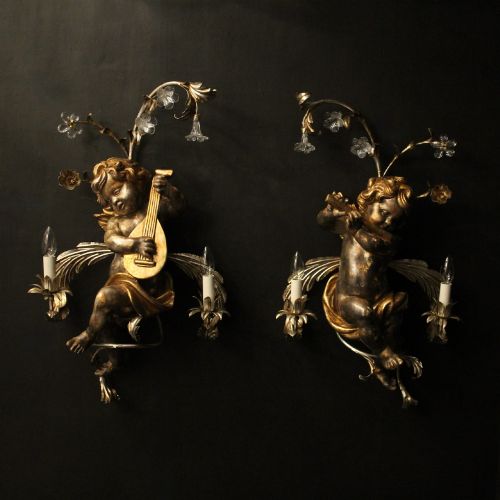
Several wooden cherubs hold candle branches with expressions of mild astonishment.
What varies in quality
The depth and crispness of the hand-carved detail separate ordinary items from exceptional ones, particularly in foliage, cherubs, and scrollwork. Superior examples retain their original gilding and gesso layers intact without heavy modern overpainting.
Structural integrity of the timber base and the quality of the glass plates in girandoles influence the overall standard of the piece.
The Pair Giltwood Wall Sconces Glossary
- Giltwood
- Timber coated with gold leaf or gold paint. This technique gives wooden carvings the appearance of solid gold while keeping the weight manageable for wall mounting.
- Girandole
- A branched wall-light that incorporates a mirror. The reflective glass multiplies the illumination cast by the candles.
- Gesso
- A plaster mix applied to wood before gilding. It provides a smooth white ground that carvers could shape before applying gold leaf.
- Neoclassical
- A style drawing inspiration from classical antiquity. It favours symmetry, straight lines, and urn or leaf motifs.
- Rococo
- An ornate design movement characterised by asymmetric scrolls and shell motifs. It produces highly dramatic silhouettes on wall lights.
Pair Giltwood Wall Sconces: Frequently Asked Questions
How do I mount pair giltwood wall sconces safely?
These fixtures require secure fixings into wall studs or appropriate masonry plugs due to the combined weight of carved wood, gesso, and glass. Professional installation is recommended to support the load safely.
Position them at a height that complements surrounding furniture and protects the delicate gilded surfaces from accidental knocks.
Were these sconces made for candles or electricity?
Historical examples were originally designed for wax candles, utilising reflective backplates and gilt surfaces to maximise the available light. Many surviving pieces have since been adapted for electrical wiring.
Conversions should be checked by a qualified electrician to ensure safety while preserving the historic appearance of the arms.
How do I clean and maintain giltwood surfaces?
Dusting requires a very soft, dry brush to prevent abrasive particles from scratching the thin gold leaf or paint layers. Moisture and chemical cleaners must be avoided entirely.
Gentle handling preserves the fragile gesso and gilding that accumulated over centuries of existence.
How can I tell eighteenth-century pieces from later revivals?
Eighteenth-century items show distinct tool marks on the reverse and natural ageing in the gesso and timber layers. Revival pieces from the nineteenth and twentieth centuries often employ heavier construction methods and different priming materials.
Examining the depth of the carving and the composition of the wood helps determine the exact period.