

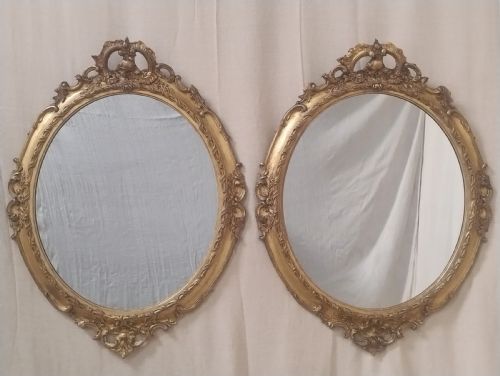


Pair Gilded Oval Frames
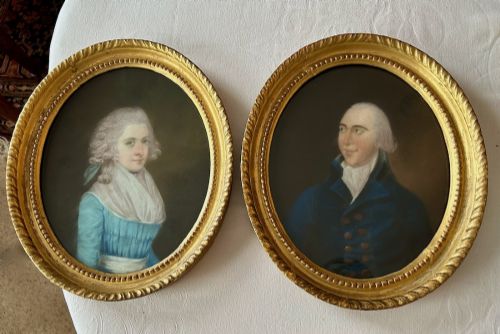
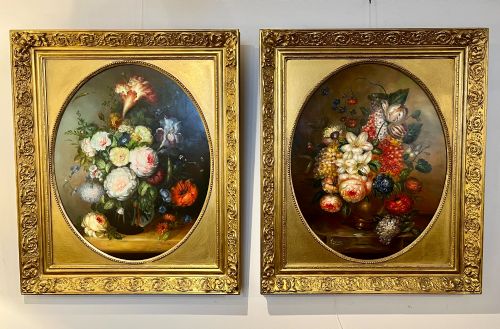
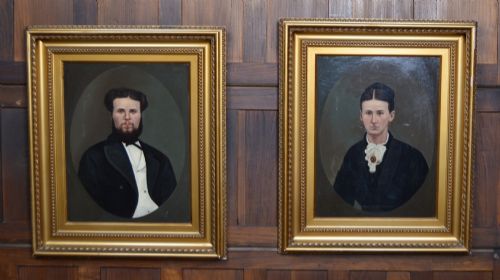
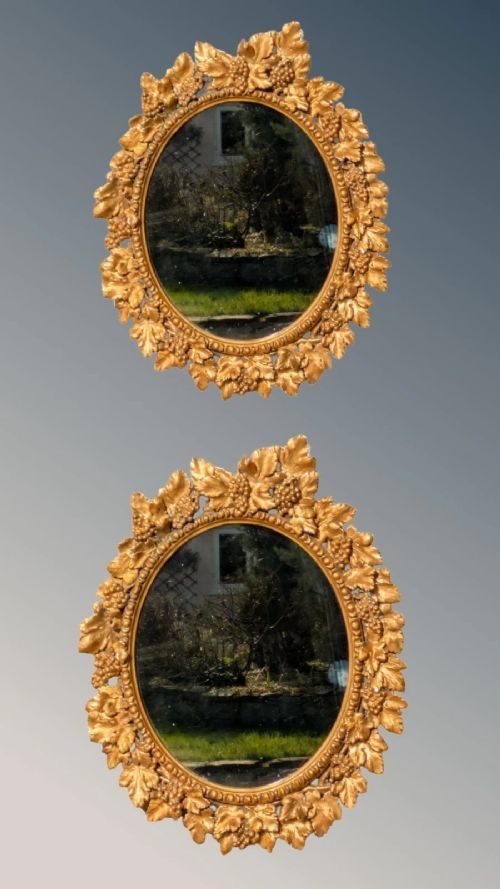
Pair gilded oval frames bring immediate symmetry and warmth to a room, enclosing portraits, mirrors and needleworks in shining gold.
Pair Gilded Oval Frames
Pair gilded oval frames encompass matching pairs of curved borders finished in gold, housing everything from oil paintings and pastel portraits to wall mirrors and needleworks. When searching for pair gilded oval frames, buyers encounter items spanning from the seventeenth century through the Victorian era and into the early twentieth century.
The selections on this page lean heavily towards nineteenth-century wall mirrors and portrait paintings, alongside eighteenth-century works and specialised objects like ceramic plaques or botanical prints. Forms range from miniature frames suitable for intimate desks to grand country house mirrors stretching several feet high.
Origins vary across British, French, Dutch and Italian workshops, reflecting diverse regional tastes in decorative carving and surface gilding. Whether framing a pair of nineteenth-century London river scenes or seventeenth-century oil paintings, these matched pieces rely on their curving geometry to soften architectural angles.
How they were made
Makers constructed the underlying structure primarily from wood, often applying a layer of gesso to smooth the surface before adding metallic leaf. Gilding techniques involved laying thin sheets of gold leaf over bole, creating a brilliant reflective surface that catches natural light.
Carvers shaped intricate details such as vine leaves and rococo scrolls directly into the wood or moulded them in gesso. Once decorated, these frames frequently housed glass, canvas, paper or panel paintings secured within the curved rebate.
Butterflies and birds occasionally share wall space with stately seventeenth-century baronets.
What varies in quality
Quality rests in the crispness of the hand-carved detail and the depth of the gilding, where older pieces show the subtle warmth of genuine gold leaf over prepared gesso. Heavier wooden foundations and finer botanical or figural motifs distinguish superior examples from simpler production.
The integrity of the matching pair matters greatly, as true companion pieces share identical patination, wear patterns and original glass or backing materials. Finer items retain their original surface without heavy over-gilding, preserving the authentic ageing of the period.
Michael Dahl·Thomas Murray·George Hargreaves·Francis Moltino·K P M·Royal Worcester
The Pair Gilded Oval Frames Glossary
- Giltwood
- Wood that has been coated with gold leaf or gold paint. This finish defines the reflective surfaces of many antique frames.
- Gesso
- A plaster-like mixture applied to wood to create a smooth base for carving and gilding. It allows artisans to shape delicate relief ornaments.
- Rococo Revival
- A nineteenth-century design style emulating the ornate, asymmetrical curves and shell motifs of the eighteenth century. It appears frequently in nineteenth-century mirror frames.
- Portrait Miniature
- A small, highly detailed painting, often executed on ivory or vellum. These intimate works frequently reside in matching oval surrounds.
- Needlework
- Hand-stitched textile art created with yarn or thread on canvas. Eighteenth-century examples occasionally survive within water-gilded frames.
Pair Gilded Oval Frames: Frequently Asked Questions
How do I hang heavy oval mirrors safely?
Heavy oval mirrors require secure fixings anchored directly into wall studs or masonry using appropriate heavy-duty picture hooks.
Because these frames often feature substantial wooden and gesso construction, balanced two-point hanging systems distribute the weight evenly.
Are these frames usually sold with their original art?
Many listings preserve the original paintings, prints, mirrors or needleworks intended for the frames from the time of their creation.
Some pairs house later replacements, making it helpful to examine how the artwork fits within the rebate and whether the backing materials correspond to the period.
How do I clean antique giltwood frames?
Antique giltwood surfaces require very gentle dusting with a soft, dry brush to remove particles without disturbing delicate gold leaf.
Water and chemical cleaning agents can strip historical gesso and modern moisture can damage underlying wood structures.
How can I tell an eighteenth-century frame from a nineteenth-century revival piece?
Eighteenth-century frames typically exhibit hand-carved wooden detailing and deeper patination beneath the gold leaf, reflecting older construction methods.
Nineteenth-century revival pieces often utilise moulded gesso composition ornament and display different tooling marks on the reverse.
What is the best way to display a pair of oval frames?
Hanging them symmetrically at eye level allows viewers to appreciate their matched proportions and curving outlines.
Placing them above a fireplace, sideboard or flanking a larger central artwork creates a balanced focal point in a room.