




Pair Georgian Sauce Boats
Pair Georgian sauce boats are matched sets of dining vessels for serving gravies and condiments, prized for their elegant contours and silver craftsmanship.
Pair Georgian Sauce Boats
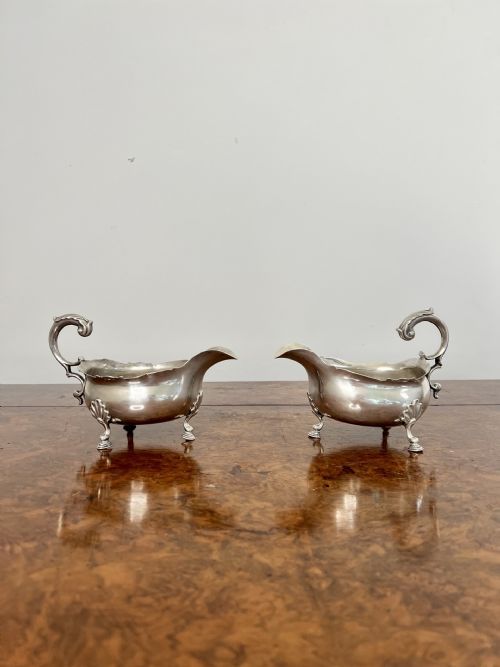
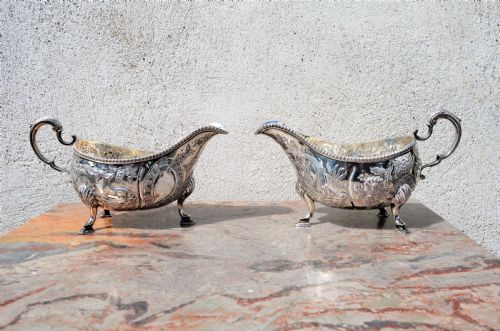
Pair Georgian sauce boats are matched dual vessels designed for the formal dining table to serve gravy, melted butter, or sauce. They appear in styles ranging from authentic George III periods down to later Victorian revivals and twentieth-century silver plate.
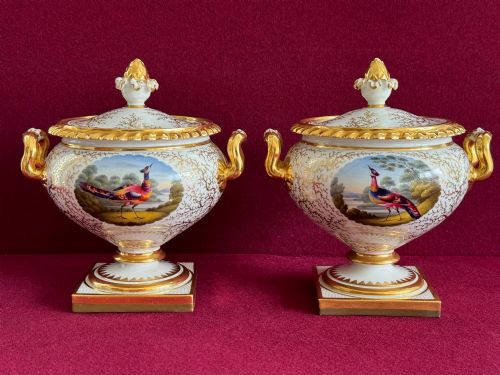
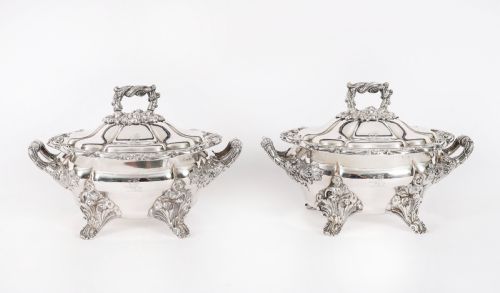
The inventory on this page shows pieces originating across the eighteenth, nineteenth, and twentieth centuries. Alongside sterling silver and silver plate, collectors encounter porcelain, ironstone, copper, and enamel examples taking the form of open boats and lidded tureens.
How they were made
Silversmiths constructed sterling silver and old Sheffield plate variants using traditional smithing techniques, shaping metal sheets into graceful pedestal bases and curved bodies. Silver plating methods applied a thin layer of silver over a base metal such as copper.
Ceramic equivalents like Mason's ironstone china utilised moulded earthenware decorated with intricate patterns such as the Japan basket design. Potters fired these pieces at high temperatures to achieve durable serveware suited to regular dining use.
Early diners required specialised vessels because enthusiastic Georgian appetites demanded abundant butter sauce for almost every course.
What varies in quality
Quality depends upon the crispness of the chasing, the proportional balance of the pedestal foot, and the weight of the metal. Early sterling silver examples demonstrate superior hand-finishing compared to later mass-produced silver plate.
The survival of original surface patination and maker's marks dictates the desirability of a set. Well-preserved makers' stamps and uniform matching across both vessels distinguish finer specimens from ordinary domestic serveware.
William Grundy·William Collins
The Pair Georgian Sauce Boats Glossary
- Sauce boat
- An open vessel with a lip and handle designed for holding and pouring table sauces. These typically rest on three feet or an oval pedestal base.
- Old Sheffield plate
- An early fusing technique where a thin sheet of silver was fused to a copper core. This method predates modern electroplating and produces a warm tone.
- Pedestal
- A raised foot or columnar base supporting the body of the vessel. Georgian silversmiths frequently utilised this feature to add height and elegance.
- Tureen
- A deep covered vessel used for serving soups or sauces at the table. Lidded versions keep contents warm during formal meals.
Pair Georgian Sauce Boats: Frequently Asked Questions
What is the difference between sauce boats and sauce tureens?
Sauce boats are open vessels with spouts intended for pouring liquids like gravy or melted butter. Sauce tureens include fitted lids and sometimes matching trays to keep richer sauces warm.
Open boats allow rapid pouring during a meal, whereas covered tureens provide insulation and a more formal presentation on the dining table.
How do I care for silver and silver-plated sauce boats?
Sterling silver and old Sheffield plate require gentle cleaning with dedicated silver polish and soft cloths. Avoid abrasive cleaners that strip thin plating layers.
Store them in dry environments away from direct sunlight to minimise tarnishing. Regular handling prevents severe oxidation from accumulating on display surfaces.
Can I use antique ceramic sauce tureens for dining?
Ironstone and porcelain tureens remain structurally robust enough for occasional table use. Hand washing preserves the antique glazes and delicate painted patterns.
Avoid thermal shock by not exposing cold ceramic pieces to boiling liquids. Modern dishwashers can damage historical glazes and crazing.
How can I tell Georgian style from later revivals?
Georgian pieces display hallmarks, hand-hammered construction marks, and distinct eighteenth-century proportions. Revivals often feature heavier machine-stamped details or later nineteenth-century assay marks.
Examining the underside and interior reveals tool marks characteristic of period manufacturing methods.