
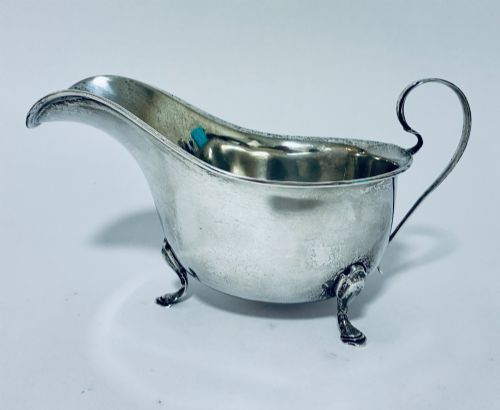
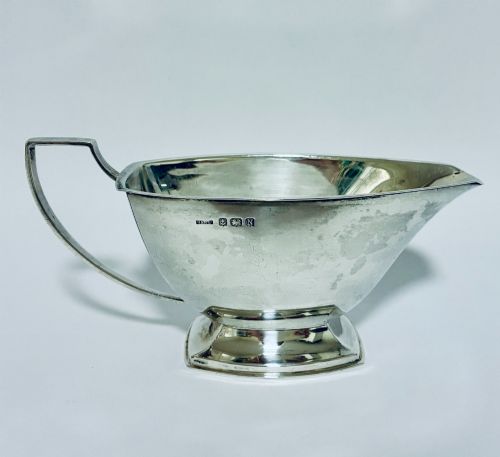
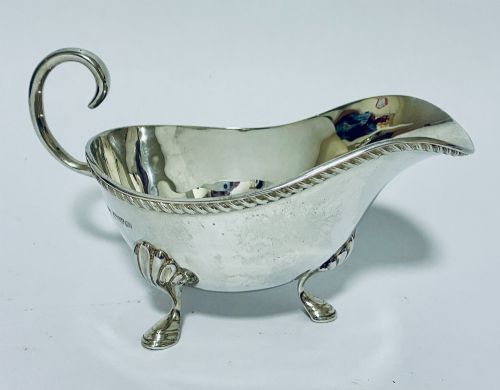
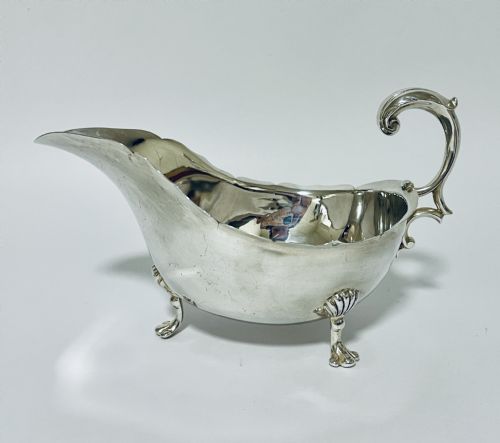




Antique Sterling Gravy Boat
An antique sterling gravy boat brings genuine elegance to the dining table, combining practical form with centuries of silversmithing skill.
Antique Sterling Gravy Boat
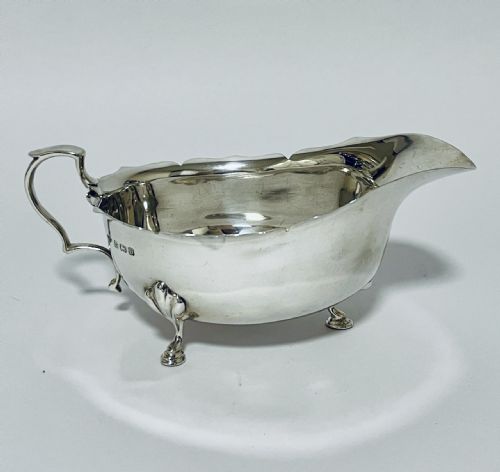
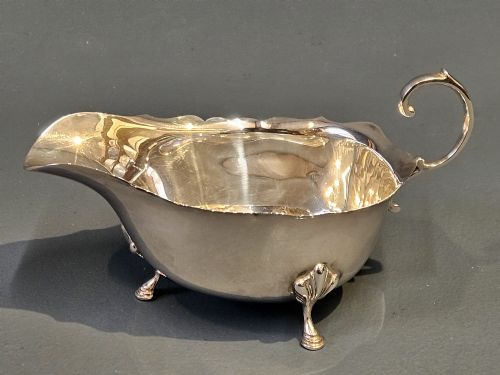
An antique sterling gravy boat is a specialised serveware vessel designed for pouring sauces and gravies, featuring a deep body, a shaped spout, and a comfortable handle. You will frequently encounter Victorian and Georgian examples on this page, alongside twentieth-century iterations spanning Art Deco and George V styles.
The form developed to sit centrally on the formal dining table, often accompanied by a matching undertray or resting on small cast feet. Pieces range from simple domestic utility items to heavy, ornate pairs intended for grand dining rooms.
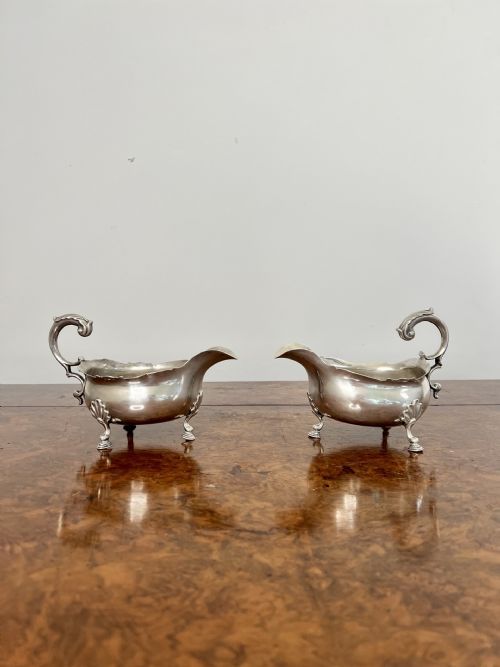
Origins vary across English, Scottish, Irish, and American workshops, with London and regional assay offices leaving clear marks of authenticity. Collectors seek both single vessels for daily use and matched pairs that reflect the symmetry of period dining.
Materials and construction
Silversmiths constructed these vessels primarily from sterling silver, shaping the metal through hammer-raising, spinning, or casting depending on the period. Silver-gilt interiors appear occasionally, offering a rich gold wash over the silver surface to prevent tarnishing from acidic contents.
Decoration techniques include crisp chasing, embossed floral motifs, naturalistic acorn designs, and restrained Celtic style detailing. Handles and feet were typically cast separately and soldered securely to the main body.
Victorian silversmiths occasionally rendered gravy boats as miniature woodland scenes complete with textured acorn feet and curling oak leaf handles.
Distinctions in quality
The weight of the metal and the balance of the vessel separate standard production from exceptional work, with heavier gauges offering greater durability and a reassuring heft in the hand. Crispness in cast details, such as paw feet or scroll handles, indicates the skill of the original maker and the quality of the initial mould.
Legibility of hallmarks adds considerable confidence, ensuring the piece retains its historical integrity without significant alteration or repair. Superior examples display harmonious proportions where the spout, body, and handle unite in a balanced silhouette.
Tiffany and Co·Theodore B Starr·William Comyns·Walker and Hall·William Grundy·James Welch
The Antique Sterling Gravy Boat Glossary
- Sterling silver
- A silver alloy containing 92.5 percent pure silver and 7.5 percent other metals, usually copper, chosen for durability.
- Assay office
- An official body that tests the purity of precious metals and stamps items with a series of hallmarks.
- Chasing
- A metalworking technique where the smith pushes the silver from the front with hammers and punches to create raised surface decoration.
- Pedestal
- A raised foot or base that elevates the main body of the gravy boat off the table surface.
- Silver-gilt
- Sterling silver that has been coated with a thin layer of gold on the interior or exterior surfaces.
Antique Sterling Gravy Boat: Frequently Asked Questions
How do I date a silver gravy boat?
English and Irish pieces usually carry a date letter hallmark alongside the maker's mark and city symbol, allowing precise dating against assay office records. Stylistic clues such as George III pedestal forms or Art Deco geometric lines further narrow the period.
Unmarked or foreign pieces rely on design evolution, construction methods, and family provenance to establish their approximate decade of manufacture.
Are these gravy boats safe for modern use?
Solid silver possesses natural antibacterial properties and remains entirely safe for serving warm gravies, sauces, and melted butter at the table. Hand washing with mild soap and soft cloths protects the antique finish from unnecessary scratching.
Harsh abrasive cleaners or modern dishwashers should be avoided entirely to preserve the original surface and historical hallmarks.
Why do some gravy boats have double lips?
Double lip gravy boats feature a pouring spout on both ends of the vessel, allowing servers to pass the piece easily in either direction across a long dining table. This thoughtful design improvement appeared frequently during the twentieth century to enhance practical usability.
Such pieces remain particularly popular for modern family gatherings where sharing dishes efficiently matters.