

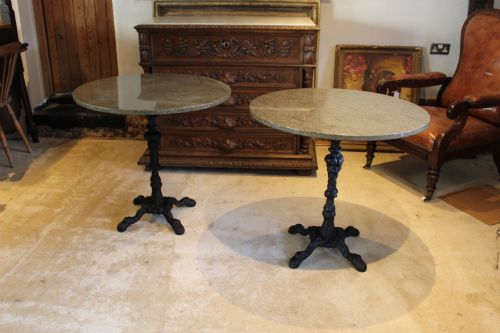
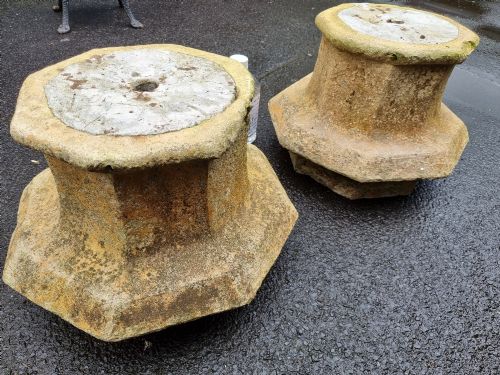
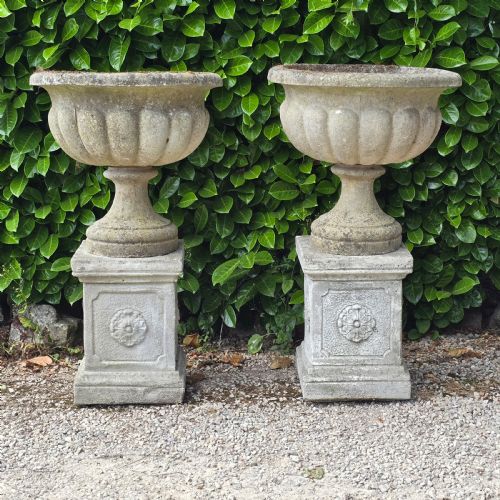
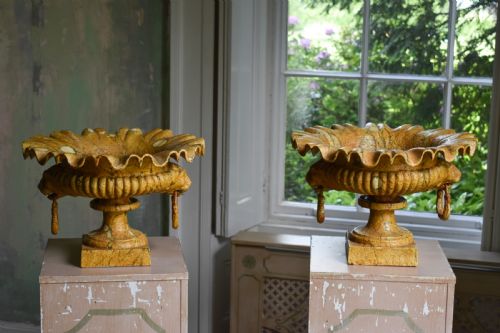


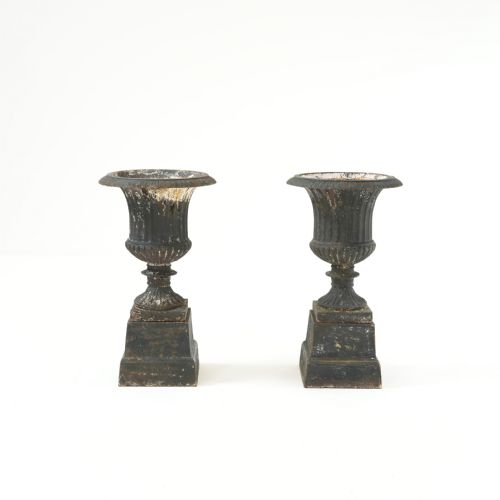


Pair Garden Pedestals
These pair garden pedestals bring classical architecture and sturdy metalwork into outdoor spaces, holding urns and planters with distinct period character.
Pair Garden Pedestals
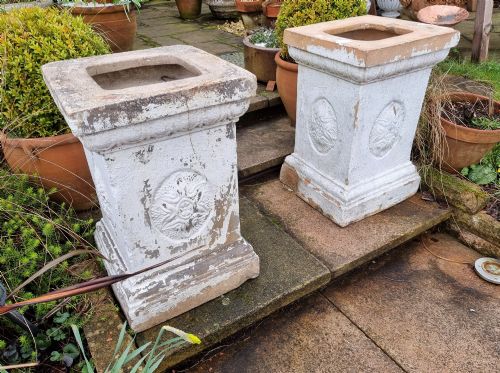
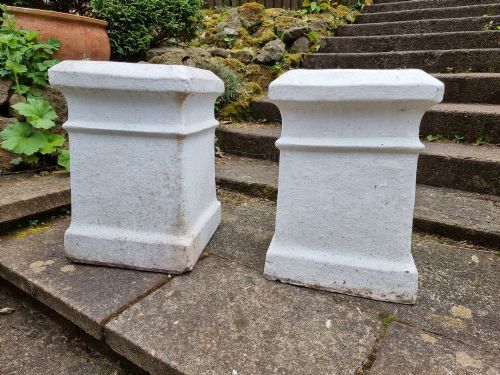
When you search for pair garden pedestals, you find matching structural columns and plinths designed to elevate planters, urns, and sculptures in outdoor settings. The forms range from classical revival columns to heavy masonry blocks intended to bear significant weight in gardens and conservatories.
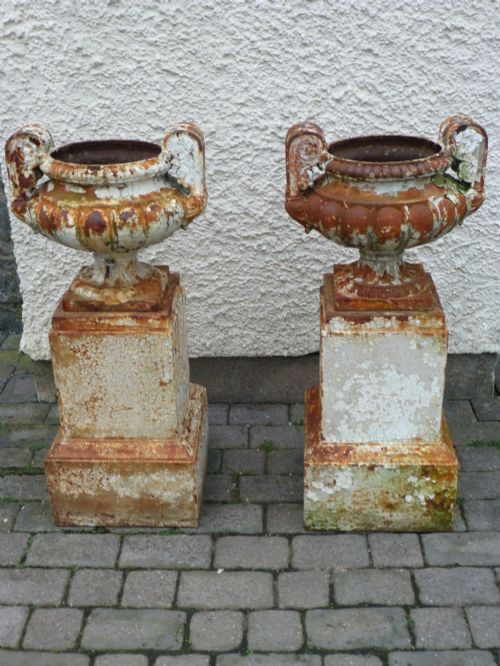
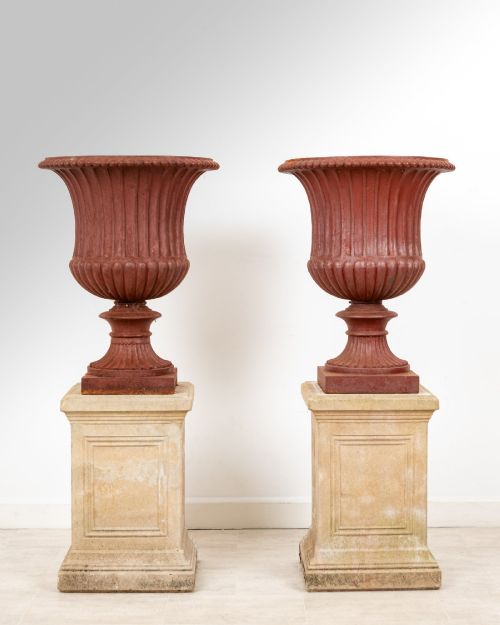
The most common examples on this page are nineteenth century cast iron designs paired with campana urns or stone plinths. These pieces frequently appear in Victorian and Regency styles, displaying classical proportions adapted for landscape display.
Beyond traditional cast iron, the selection includes composite stone, terracotta, limestone, and marble pieces dating from the nineteenth and early twentieth centuries. Some listings incorporate wood or lacquer finishes intended for conservatory or sheltered patio placement rather than open lawns.
Materials and construction methods
Cast iron production dominates the heavier examples, utilising foundry moulds to shape durable metal stands and matching urns that withstand outdoor exposure. Foundries such as Falkirk Carron and Coalbrookdale employed these techniques to create robust garden furnishings with sharp decorative details.
Stone and terracotta alternatives rely on carving or moulding earth and mineral aggregates, producing composite stone, salt glazed earthenware, and limestone plinths. These materials often weather over decades, developing patinas that distinguish older garden ornaments from modern reproductions.
Several heavy iron urns carry the scars of generations of climbing ivy and stubborn garden moss.
Distinctions in quality and execution
Quality in these pieces rests upon the crispness of the casting or carving and the integrity of the material. Finer examples display deeply defined classical motifs and precise proportions, whereas simpler utilitarian stands show softer surface detailing.
The completeness of a matched set heavily influences the standing of a piece, particularly when original plinths accompany their corresponding urns. Surviving foundry marks or documented foundry origins also separate standard utility garden ware from notable manufactory productions.
Dunfermline Clay Company·Falkirk Carron foundry·Coalbrookdale
The Pair Garden Pedestals Glossary
- Campana urn
- A bell-shaped garden vessel with an everted rim and a pedestal foot, frequently mounted on matching columns. These classical shapes derive from ancient Roman bronze and marble wine vessels.
- Plinth
- A heavy rectangular or square base block that elevates a column, urn, or statue. They provide visual weight and structural stability on garden lawns and terraces.
- Composite stone
- A durable mixture of stone dust and binding agents moulded into architectural shapes. This technique allowed nineteenth-century makers to produce ornate garden ornaments efficiently.
- Salt glaze
- A vitreous coating formed by throwing common salt into the kiln during high-temperature firing of earthenware. This treatment creates a distinctive textured finish on garden pottery.
Pair Garden Pedestals: Frequently Asked Questions
How do I choose the right height for garden pedestals?
Consider the scale of your garden and the size of the urn or planter placed on top. Taller columns suit open lawns or grand pathways, while shorter plinths work better in intimate courtyards or conservatories.
Matching the proportions of the base to the vessel ensures visual stability and prevents the arrangement from appearing top-heavy.
Can cast iron pedestals stay outside all winter?
Cast iron is robust and withstands outdoor conditions well, especially when painted or properly weathered. Regular maintenance helps protect the metal from excessive moisture accumulation.
Terracotta and composite stone elements require more attention during freezing temperatures to prevent cracking from expanding moisture.
How do I tell an antique pedestal from a modern reproduction?
Examine the surface for natural weathering patterns, tool marks, and foundry stamps characteristic of nineteenth-century production methods. Genuine older pieces often show heavy oxidation on iron or deep patination on stone.
Comparing the weight and material composition against documented period examples also clarifies the age of the piece.
Were these pedestals always meant for outdoor use?
While most functioned as garden and patio ornaments, some lighter wooden, lacquered, or marble examples were designed for indoor conservatories and reception rooms. The material and finish usually indicate the intended environment.
Indoor plant stands often feature more delicate painted surfaces that would quickly degrade under direct exposure to rain.