
Pair French Tables
When searching for pair french tables, buyers uncover matched furniture designed to create symmetry in domestic rooms.
Pair French Tables
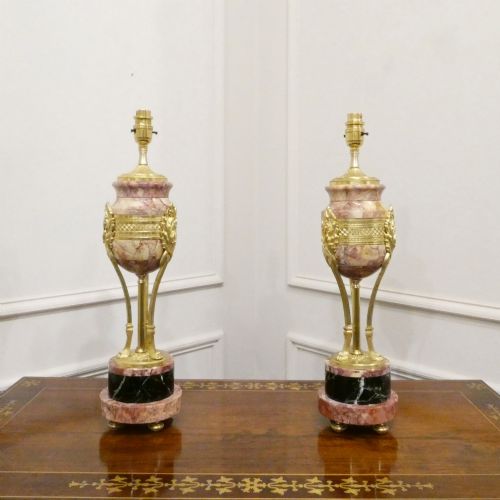
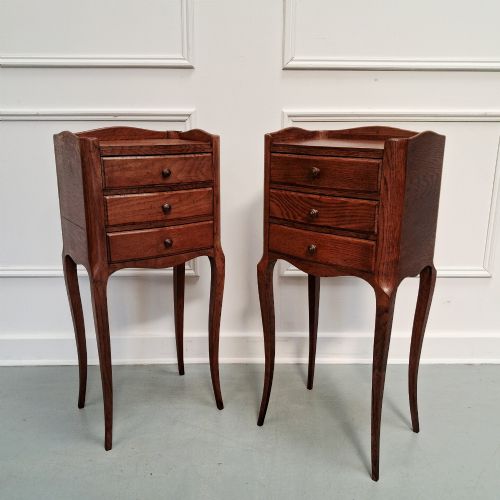
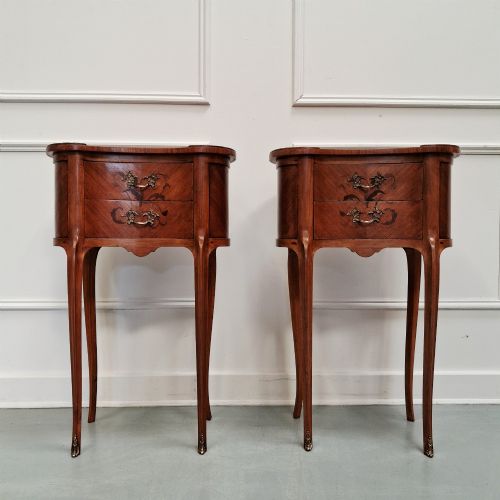
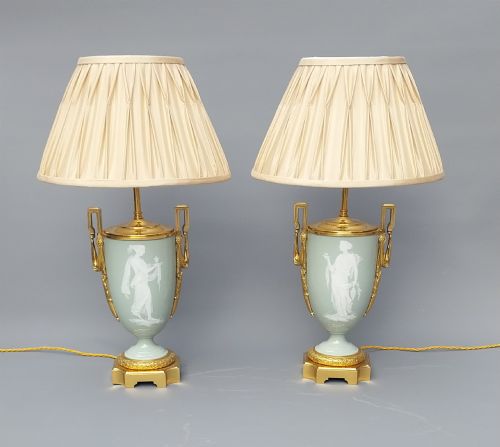
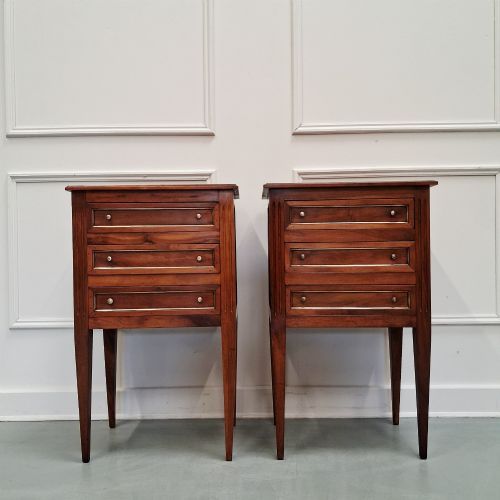
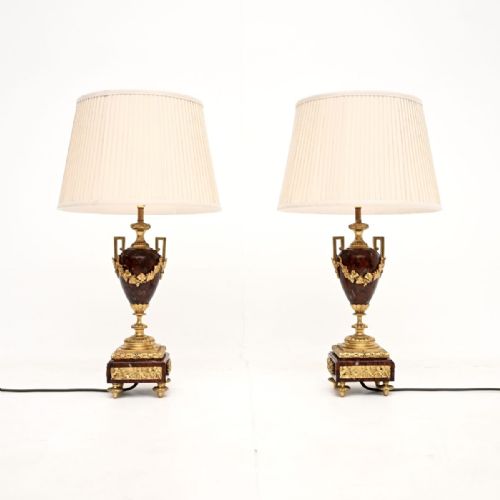
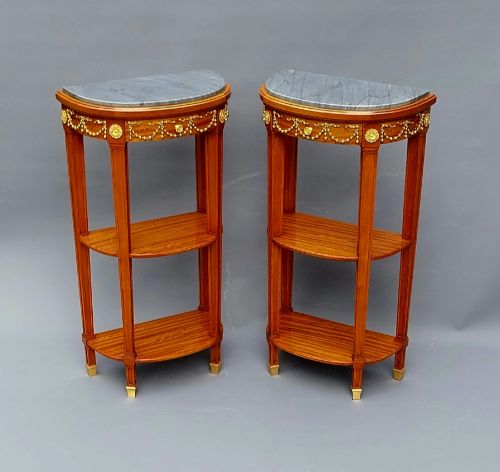
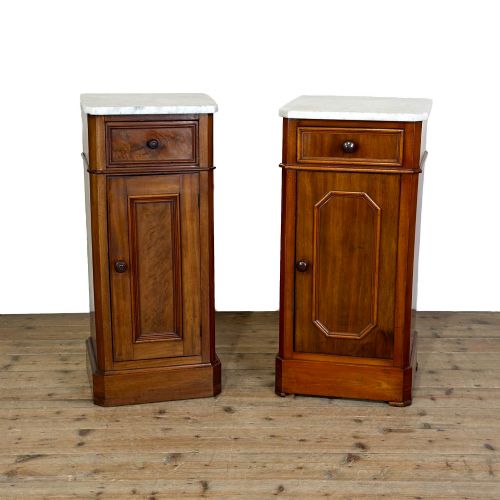
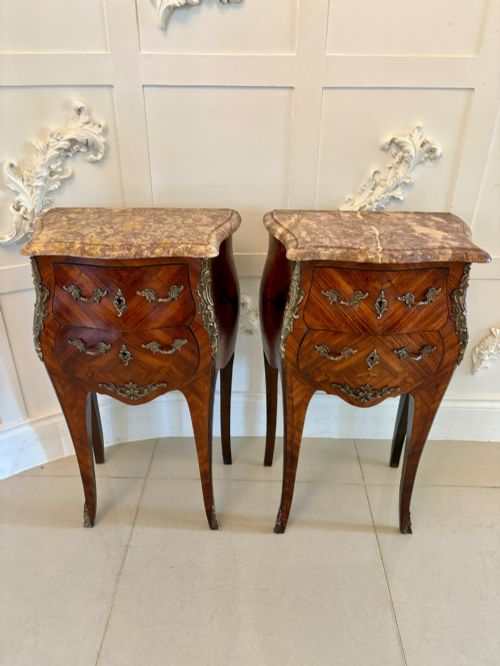
Pair french tables encompass bedside cabinets, side tables, console tables, and lamp tables originating from various historical periods including the nineteenth century and the twentieth century. These matching pieces provide balanced placement flanking a bed or within a hallway.
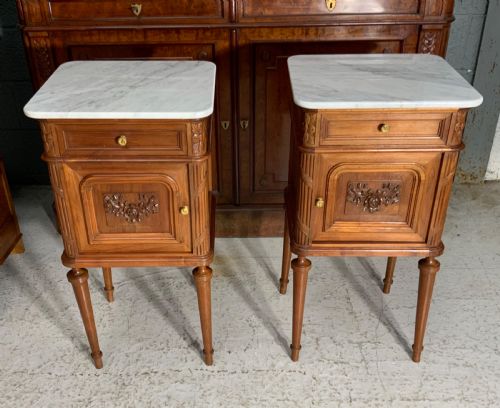
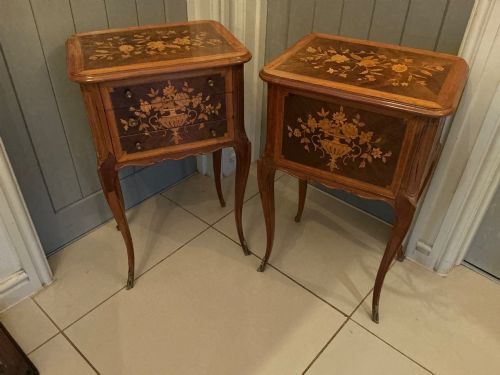
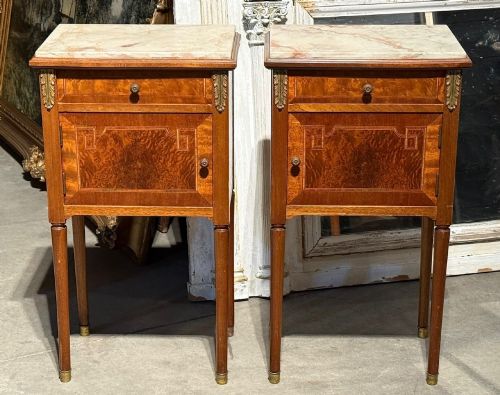
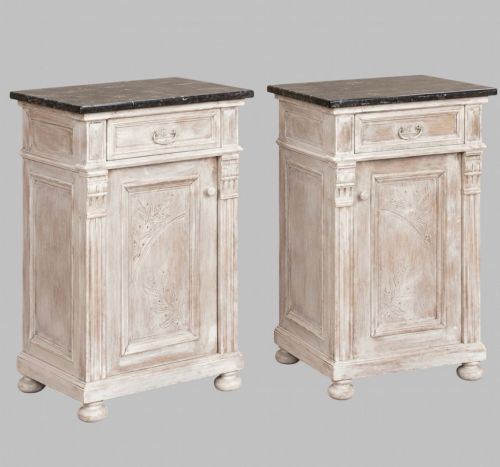
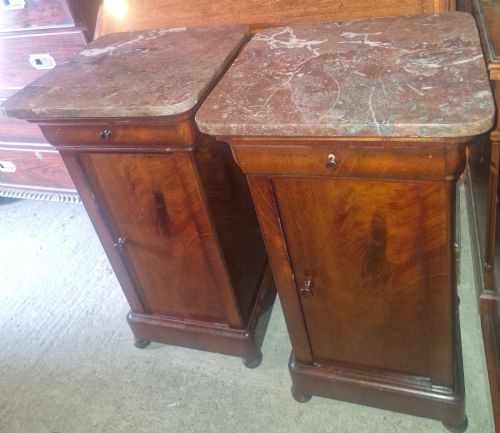
The selection frequently includes bedside chests and nightstands displaying marquetry, parquetry, or plain timber surfaces. Many examples incorporate marble tops in white, rouge, or other varieties, supported by woods such as walnut, oak, mahogany, cherrywood, and kingwood.
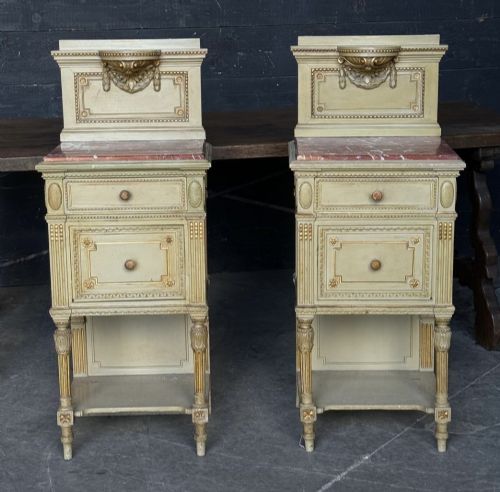
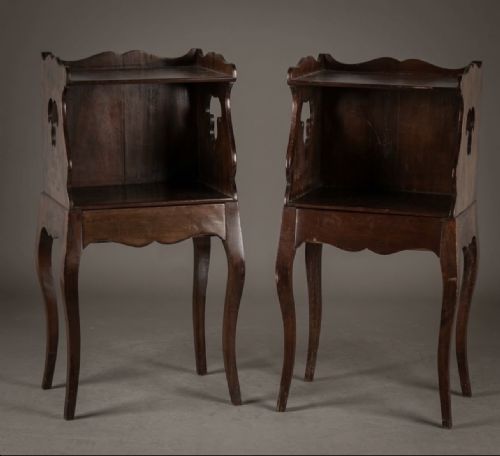
Stylistic influences span Louis XV Revival, Louis XVI style, Art Deco, and French Provincial aesthetics. Buyers encounter everything from compact provincial cupboards to grander ormolu-mounted occasional tables.
How they were made
Cabinet makers utilised traditional timber framing alongside detailed veneer work, cutting fine slices of kingwood, walnut, and mahogany to form geometric marquetry and parquetry patterns. Structural stability relied on precise joinery within the carcases of bedside cupboards and chest drawers.
Decorative metal elements such as ormolu and gilt brass mounts were cast and chased separately before being applied to marble tops and wooden frames. Cast bronze cherubs, glass components, and hand-carved pine or giltwood further completed the ornamentation of these paired items.
Listings feature oak, walnut, mahogany, and kingwood timbers alongside marble tops and gilt bronze mounts.
What varies in quality
The standard of materials dictates much of the distinction, separating simple oak or pine construction from finely figured kingwood veneers and genuine Carrara or rouge marble slabs. Heavier, more deeply chased ormolu mounts indicate superior craftsmanship compared to lighter, pressed metal alternatives.
Structural integrity and the precision of the marquetry inlay define the upper tiers of production. Well-fitted drawers, intact parquetry geometric lines, and stable marble inserts show meticulous execution by the original cabinet maker.
Pierre Philippe Thomire·E Rousseau·Maison Jansen
The Pair French Tables Glossary
- Ormolu
- Gilded bronze used for decorative mounts on furniture and candelabra. The technique involves applying a mercury and gold amalgam to cast bronze before heating.
- Marquetry
- The art of applying decorative veneer pieces to a structure to form intricate designs. Craftsmen use various coloured woods to create floral or geometric pictures.
- Parquetry
- Geometric mosaic woodwork used for flooring and tabletop surfaces. Small wood blocks form repeating patterns like cubes or chevrons.
- Gueridon
- A small French occasional table supported by one or more columns. These tables often feature circular marble tops.
- Console table
- A table fixed to a wall or supported by front console brackets. They frequently stand in hallways beneath mirrors.
Pair French Tables: Frequently Asked Questions
How do I style pair french tables in a bedroom?
Position them symmetrically on either side of the bed to ground the room visually. Matching lamps or decorative objects placed on top complete the balanced arrangement.
Ensure the height of the tables aligns comfortably with the mattress top for practical daily use.
What is the difference between bedside cabinets and lamp tables?
Bedside cabinets typically feature enclosed storage such as doors or drawers to keep personal items out of sight. Lamp tables are generally open structures designed primarily to hold lighting and small decorative pieces.
Both serve similar functional footprints depending on whether storage or open display is required.
How do I care for marble top tables?
Clean the marble surface regularly with a soft, damp cloth and neutral soap. Avoid acidic liquids or harsh chemical cleaners that can etch the stone.
Use coasters beneath glasses to prevent moisture rings from forming on polished marble.
How do I distinguish Art Deco from Louis XV Revival styles?
Louis XV Revival pieces display curved cabriole legs, ornate ormolu mounts, and intricate floral marquetry. Art Deco items favour clean geometric lines, streamlined forms, and symmetrical parquetry patterns.
Examining the silhouette and decorative hardware quickly reveals which design era influenced the construction.