

Pair French Marble Nightstands
Pair french marble nightstands bring practical bedside surface space and classical Continental elegance together.
Pair French Marble Nightstands
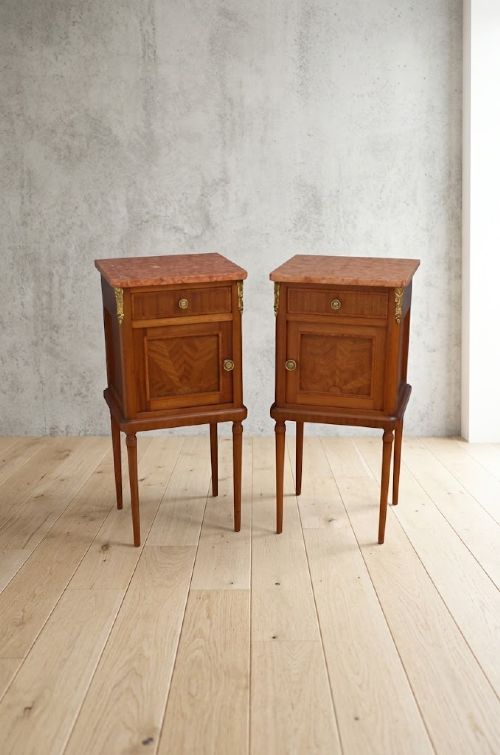
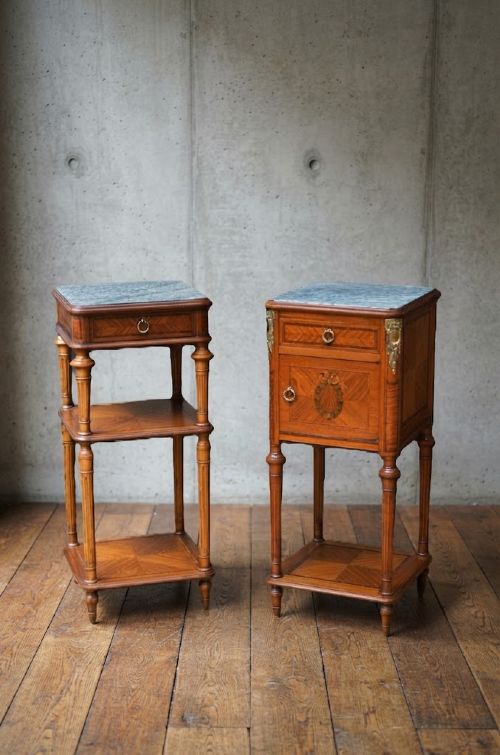
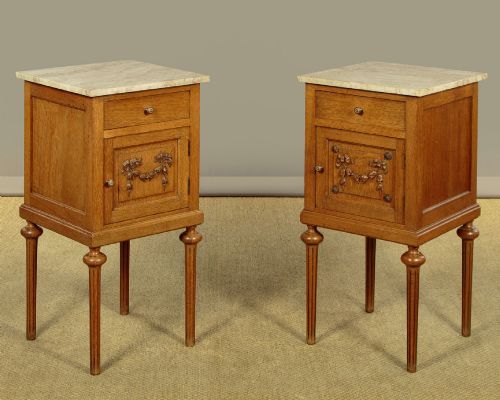
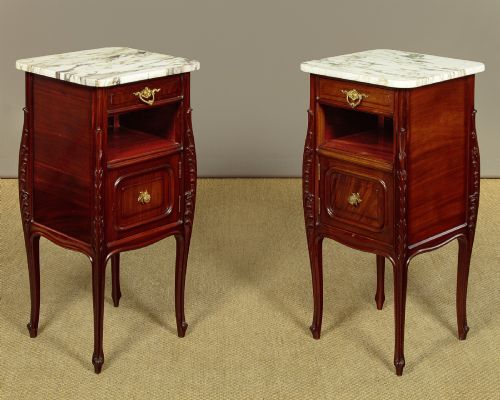
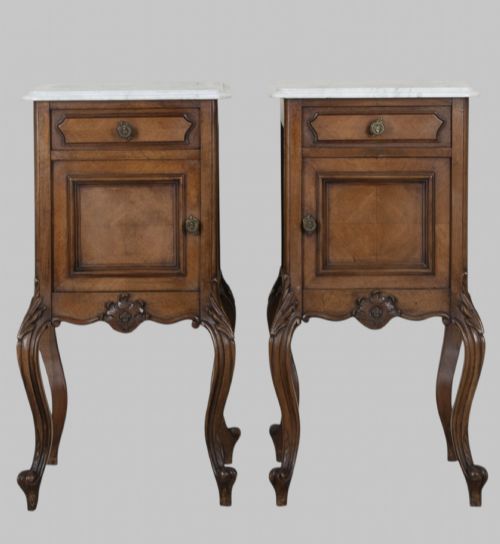
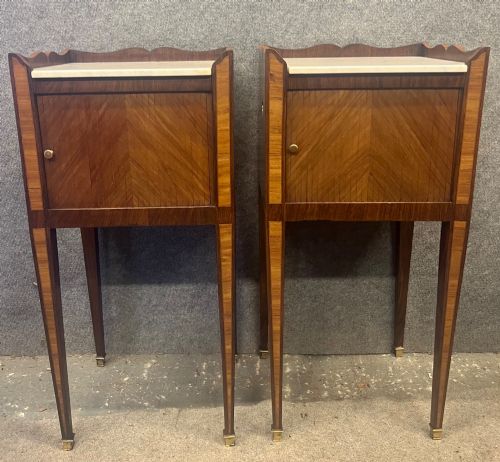
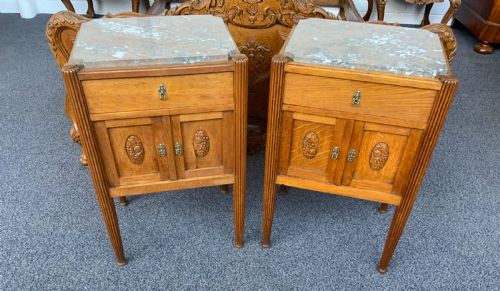
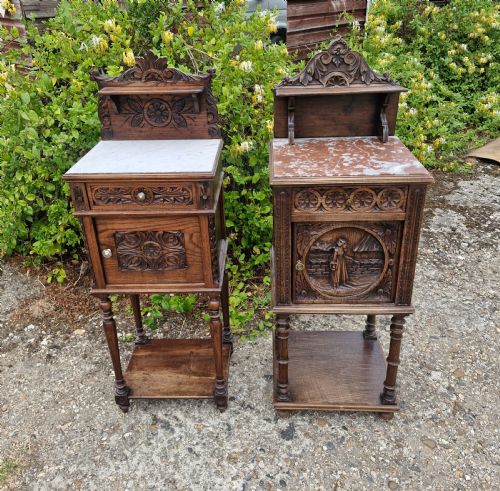
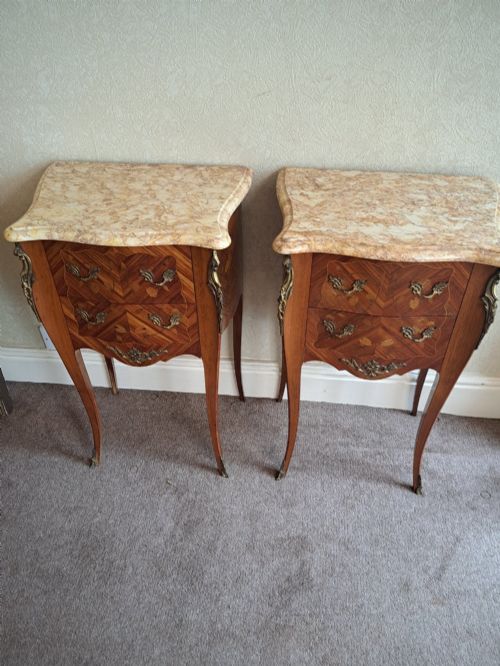
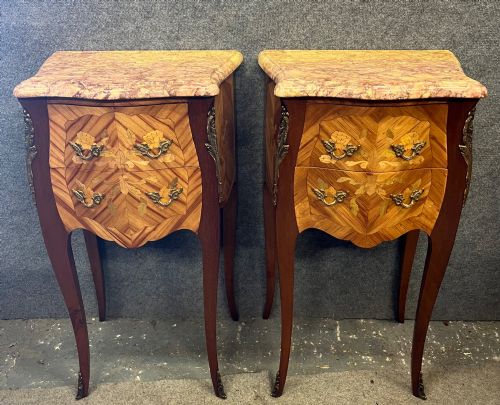
When you search for pair french marble nightstands, you encounter matched sets of bedside storage furniture designed to hold evening essentials while introducing decorative presence to a bedroom. The forms range from compact bedside cabinets and cupboards to open lamp tables and small chests of drawers.
The pieces emerge across several periods, stretching from nineteenth century Empire and Louis styles through to Art Deco designs of the nineteen-thirties. Walnut, oak, and kingwood carcasses appear frequently, often paired with contrasting veneer work and stone surfaces.
Materials and construction
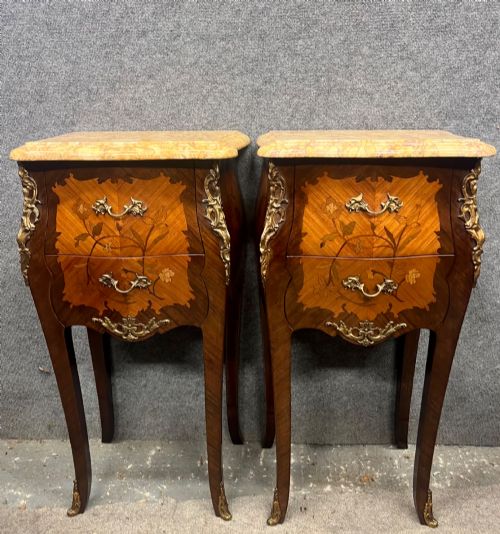
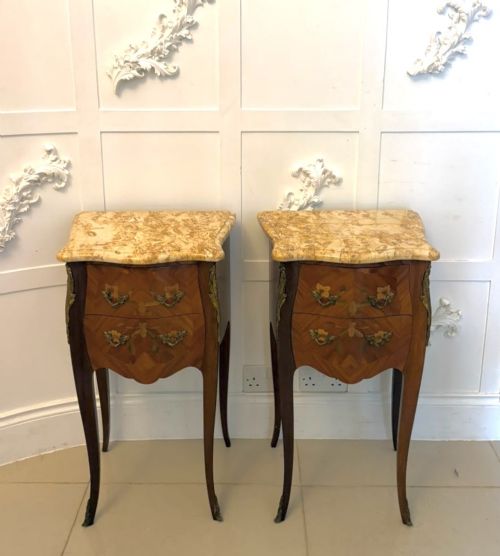
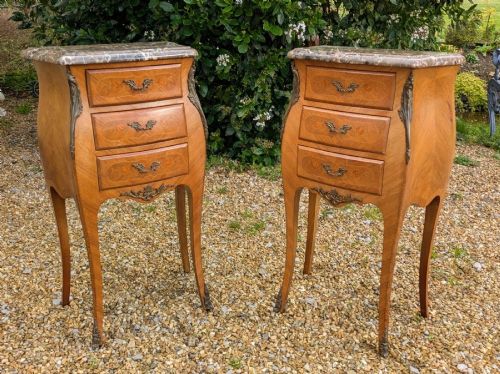
Cabinet makers constructed the frames from timbers such as walnut, oak, satinwood, and fruitwood, frequently applying decorative veneers including kingwood and burr. Marquetry and parquetry patterns introduce geometric or floral details across the drawer fronts and side panels.
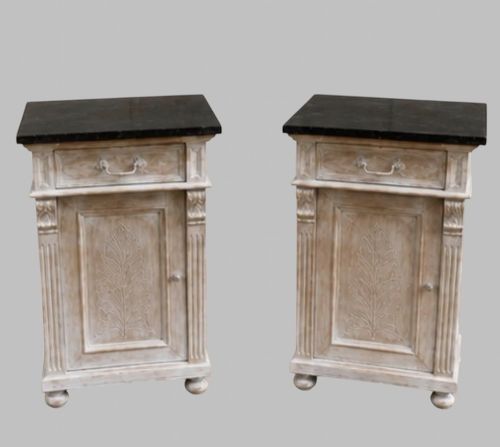
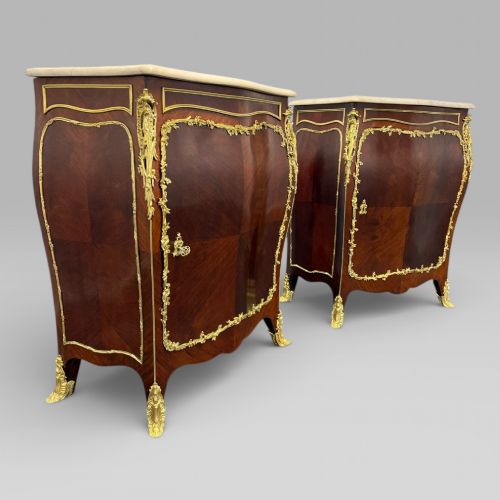
Slabs of marble, including Belgian Sainte-Anne varieties, form the tops, providing a durable and cool surface. Ormolu mounts, bronze details, and brass handles punctuate the woodwork, whilst specialised finishes range from lacquered chinoiserie to painted treatments.
Several cabinets arrive wearing fresh coats of modern paint, proving that even classical French furniture enjoys a casual wardrobe change.
Evaluating standard and execution
The division between standard tiers rests on the precision of the cabinet work and the ambition of the surface decoration. Finely executed marquetry, well-matched wood veneers, and crisply cast ormolu mounts signal superior workshop production.
The integration of the marble top and the balance of the proportions dictate the visual success of the pair. Matched grain patterns and harmonious proportions separate standard utility items from more decorative examples.
E Kahn
The Pair French Marble Nightstands Glossary
- Chevet
- A small French bedside table or cabinet designed to sit beside a bed. These often contain a small cupboard space and a drawer.
- Bombe
- A swelling, outward-curved contour found on the front and sides of certain cabinet furniture. This silhouette requires considerable skill from the woodworker.
- Ormolu
- Gilded bronze used for decorative mounts and furniture hardware. It provides metallic contrast against dark timber surfaces.
- Marquetry
- The art of applying pieces of veneer to a structure to form decorative patterns and pictures. Craftsmen utilise contrasting timbers to create depth.
- Parquetry
- A geometric mosaic of wood pieces used for decorative floors and cabinet surfaces. It forms repeating patterns across table tops and drawer fronts.
Pair French Marble Nightstands: Frequently Asked Questions
How were these nightstands used historically?
These cabinets served to hold chamber candlesticks, water jugs, and personal items within reach of the bed. Their enclosed cupboards kept intimate belongings concealed.
Over time, their surface utility evolved to accommodate reading lamps and decorative objects while maintaining their primary bedside function.
How do I care for the marble tops?
Marble requires gentle cleaning with warm water and mild soap to preserve the polished finish. Acidic liquids can etch the stone surface over time.
Using coasters and avoiding harsh chemical cleaners protects the historical stone from staining and wear.
How do I distinguish Louis XV from Louis XVI styles?
Louis XV pieces typically display flowing serpentine curves, cabriole legs, and asymmetrical rococo ormolu mounts. The overall movement feels organic and rounded.
Louis XVI furniture introduces neoclassical restraint with straight tapered legs, fluted columns, and symmetrical geometric proportions.
Are these tables usually found as matched pairs?
Bedside furniture of this type was predominantly manufactured in balanced pairs to flank a bed symmetrically. Surviving matched sets retain their original visual harmony.
Minor variations between the left and right cabinets sometimes occur due to hand construction methods used in period workshops.