



Pair Floral Wall Sconces
These pair floral wall sconces bring character to a room, offering practical illumination alongside distinctive period craftsmanship.
Pair Floral Wall Sconces
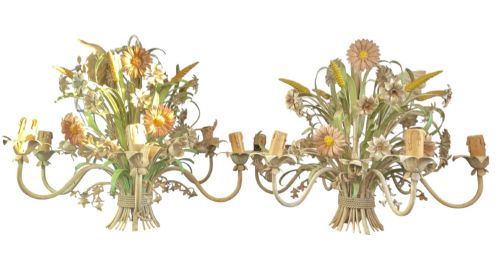
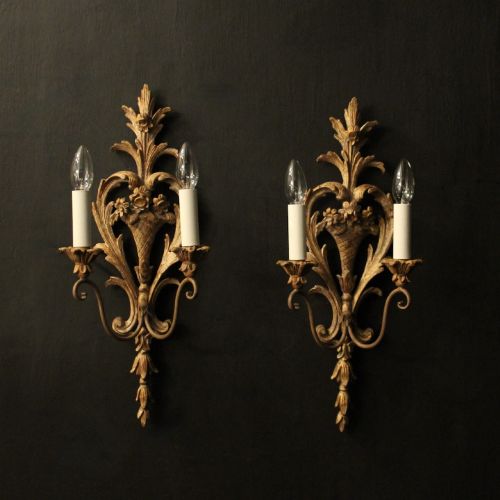
When you search for pair floral wall sconces, you examine decorative lighting designed to mount directly onto interior walls in matched pairs. The selections span eras from the late nineteenth century into the twentieth century, bringing botanical motifs and structural metalwork to domestic spaces.
You are most likely to meet French designs featuring painted metal, wrought iron, or polychrome finishes dated around nineteen thirty. Alongside these, examples from Italian, Florentine, and Anglo-Indian traditions emerge, utilising giltwood, porcelain, and mirrored surfaces.
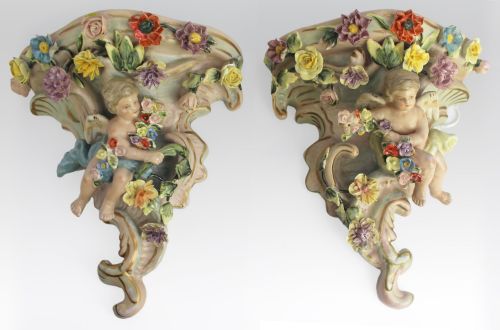
The forms function primarily as wall lights, wall sconces, and wall brackets, often configured with twin or multiple arms. These pieces showcase diverse regional aesthetics ranging from Rococo Revival curves to Art Nouveau and French Chateau styling.
How they were made
Makers shaped metal, iron, and wrought iron into structural frames and branching arms, often applying paint, polychrome, or gilt finishes to mimic natural foliage. These durable foundations provided the necessary strength to support multiple light sources safely against a wall.
Ceramic elements, porcelain cherubs, and mirrored components were integrated into select frames to enhance visual depth and reflect candlelight or early electric illumination. Giltwood carving appeared in Florentine pieces, introducing intricate floral and botanical detailing carved directly into timber.
Pair Floral Wall Sconces Retail Price Guide 2026
Typical asking prices for pair floral wall sconces among the pieces listed under this phrase on Sellingantiques today, from the lower quarter to the upper quarter. They describe what is for sale here now, not the wider market.
Listings feature periods spanning from eighteen ninety to nineteen thirty, incorporating materials such as giltwood, porcelain, iron, and painted metal.
What varies in quality
The sophistication of the botanical carving and the crispness of the metalwork distinguish finer examples from standard production. Superior items display careful hand-painted details on floral elements and well-balanced proportions across both halves of the pair.
The choice of materials alters the overall presence of the fixture, with substantial wrought iron and carved giltwood offering a heavier visual weight than lighter toleware or painted metal versions. Preservation of original surface finishes significantly influences the character of each piece.
The Pair Floral Wall Sconces Glossary
- Toleware
- Painted or lacquered sheet metal items popular in domestic decoration. This technique allowed makers to apply vibrant floral colours to everyday lighting fixtures.
- Giltwood
- Timber treated with gold leaf or gold paint to simulate solid gold. Florentine pieces frequently utilised this method to highlight intricate carved details.
- Rococo Revival
- A nineteenth-century design style embracing asymmetrical curves, scrollwork, and naturalistic plant motifs. It heavily influenced the shaping of ornamental wall brackets.
- Polychrome
- Decoration executed in multiple colours on a single object. This surface treatment brings distinct painted floral details to life on metal and ceramic components.
Pair Floral Wall Sconces: Frequently Asked Questions
How were pair floral wall sconces used?
These fixtures were mounted in pairs flanking mirrors, doorways, or fireplaces to provide ambient room illumination. Candles or early bulbs lit the space while the decorative floral frames served as prominent wall ornaments.
In period interiors, matching pairs created symmetry within drawing rooms, hallways, and dining spaces. Their dual placement distributed light evenly across the wall surface.
How do I live with antique wall sconces?
Position them at eye level or slightly above to ensure the light distributes effectively without glare. They work well in living rooms and bedrooms where soft, layered illumination is preferred.
Ensure proper electrical wiring if the fixtures have been adapted for modern use. Professional installation protects fragile antique metalwork and older mounting points.
How can I tell the periods apart?
Nineteenth-century examples often display heavy Rococo Revival curves, ornate giltwood, or Victorian Italianate forms. Materials from this era tend to emphasise hand-carved wood and porcelain.
Pieces from the nineteen thirties lean towards simplified French toleware, wrought iron, and painted metal finishes. Stylistic shifts reflect the transition from ornate nineteenth-century revivalism to cleaner twentieth-century aesthetics.
What materials should I expect?
Common materials include painted metal, wrought iron, and standard metal forming the structural arms and backplates. Porcelain and mirrored glass frequently appear as decorative accents.
Certain regional pieces utilise giltwood for carved wooden frames or incorporate polychrome finishes. Each material combination dictates the weight and installation requirements of the fixture.