

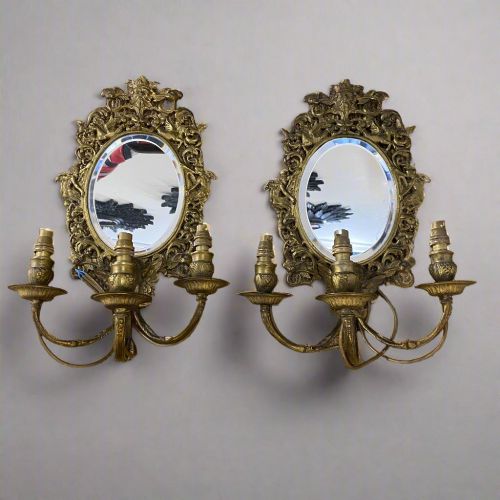
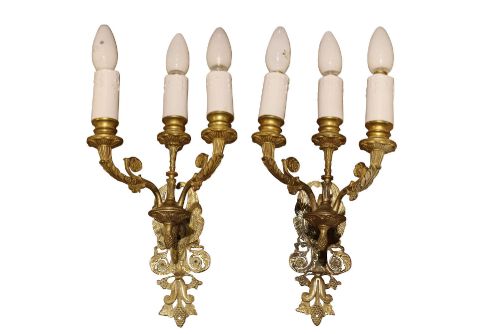
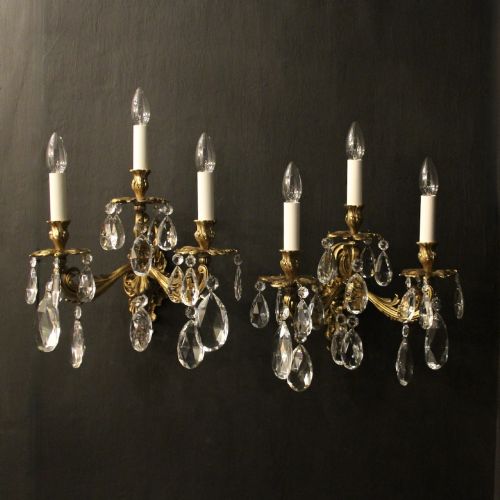
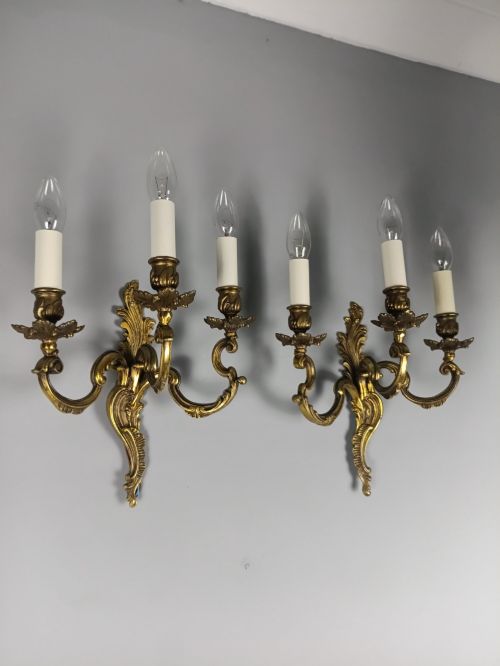
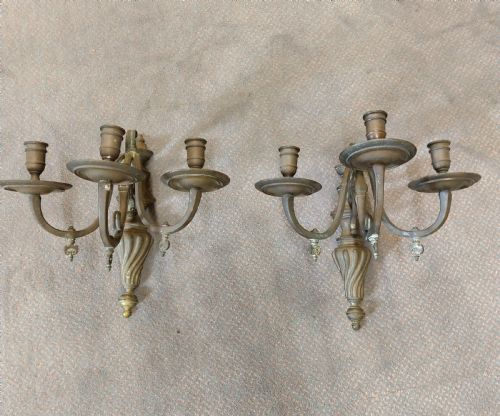
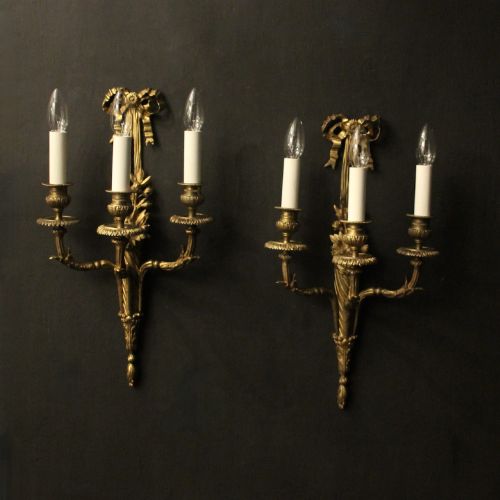
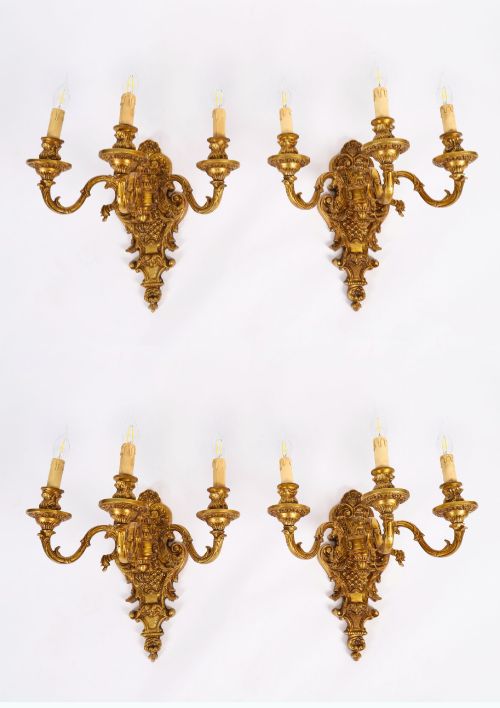
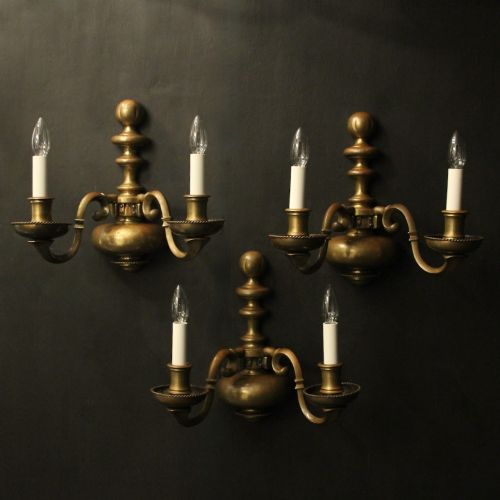
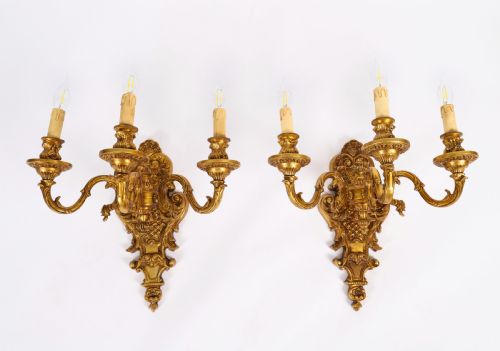
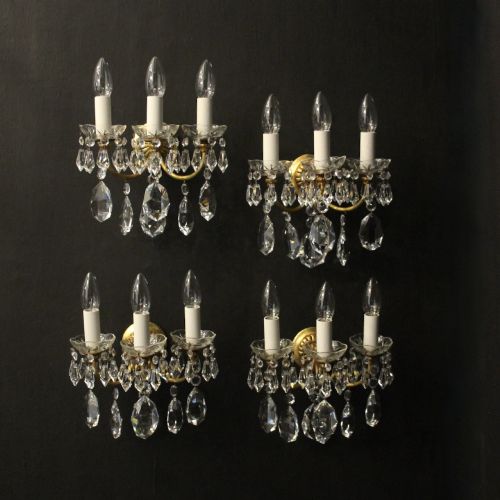
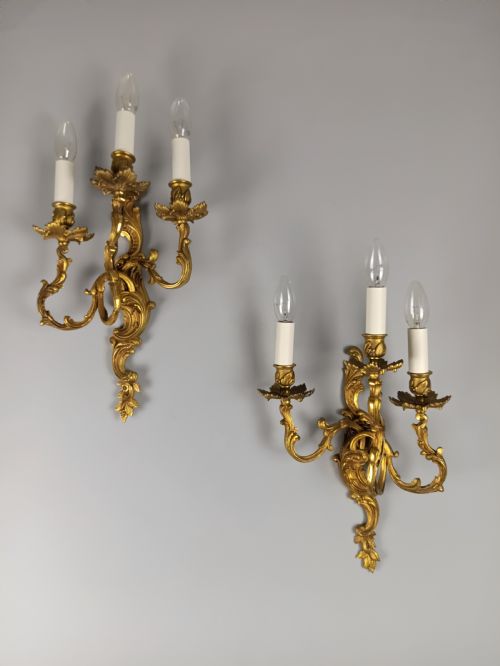
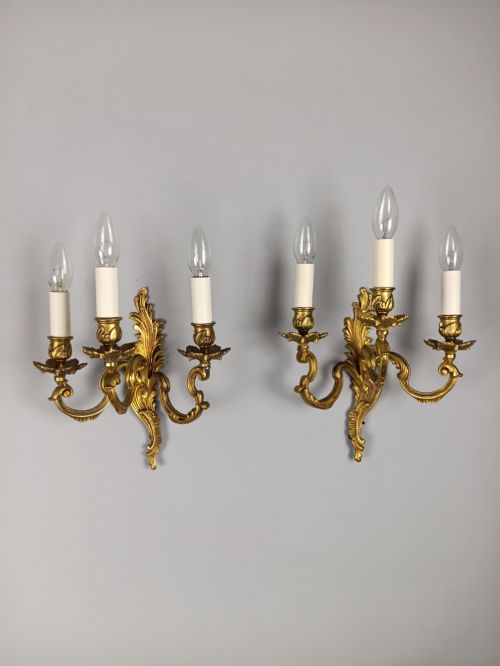
Brass Three Light Sconce
A brass three light sconce brings warmth and sculptural presence to a wall, illuminating a room with multiple candle or bulb branches.

Brass Three Light Sconce
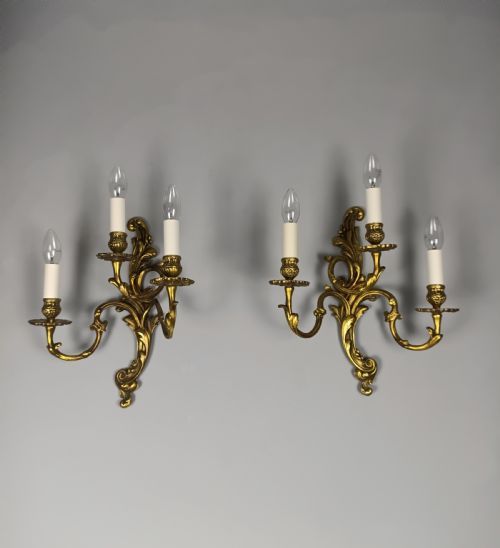
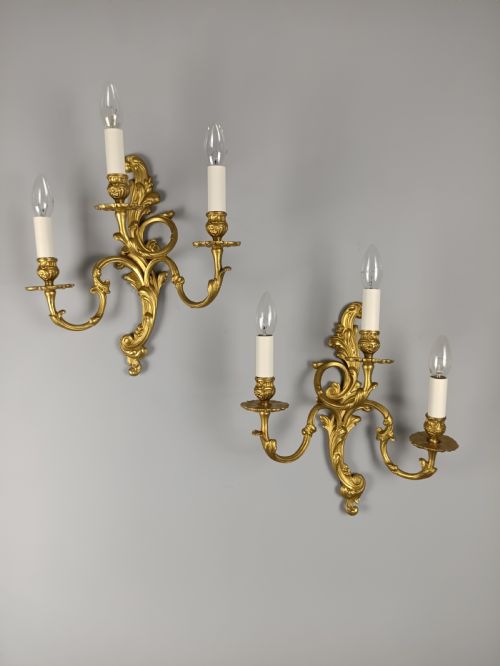
A brass three light sconce typically takes the form of a triple-arm wall light or appliqué designed to project illumination across a room. The pieces found here span the Victorian era, the nineteenth century, and the early decades of the twentieth century, with a strong representation of French origin.
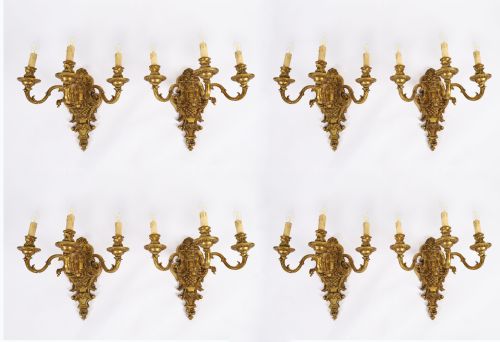
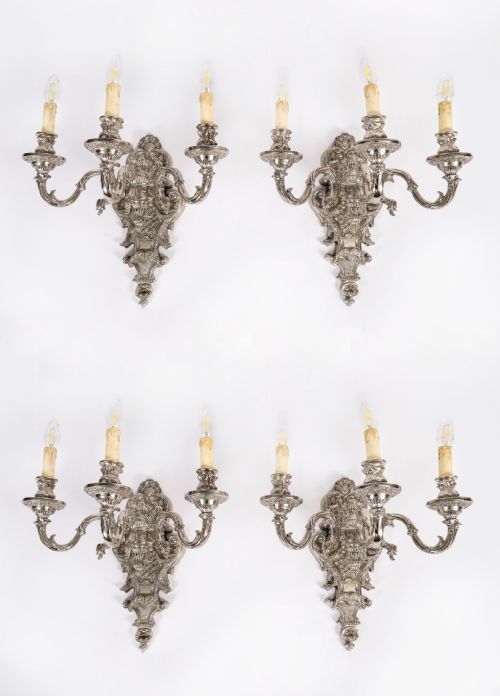
Buyers frequently encounter matching pairs and larger sets rather than single items, often executed in styles that draw on Rococo, Louis XVI, and Neoclassical vocabularies. These fixtures serve both practical lighting needs and decorative purposes, mounting directly to wall surfaces in hallways, reception rooms, and dining spaces.
Materials and construction
Makers utilised brass, bronze, and gilt metal, frequently applying ormolu or gilding to achieve a bright surface finish. Cast brass components form the structural backbone of these fixtures, supporting multiple curved arms that radiate from a central backplate.
Details such as crystal drops, Sevres porcelain portraits, and mirrored panels integrate into the construction of specific pieces. Metalwork often combines cast elements with chased surface enrichment, creating textured foliage, scrolls, and classical motifs.
Brass Three Light Sconce Retail Price Guide 2026
Typical asking prices for brass three light sconce among the pieces listed under this phrase on Sellingantiques today, from the lower quarter to the upper quarter. They describe what is for sale here now, not the wider market.
Listings feature works in brass, gilt bronze, ormolu, and gilded metal across Victorian and early twentieth-century periods.
Craftsmanship and distinction
Quality rests in the crispness of the casting and the depth of the chasing on the metal surface. Superior examples display sharp definition in ornamental foliage and scrollwork, whereas simpler pieces rely on smoother, less articulated contours.
The weight of the cast metal and the integration of secondary materials like crystal or porcelain distinguish standard production from exceptional examples. Heavier bronze foundations and finely detailed ormolu finishings separate the finest decorative pieces from more utilitarian lighting.
The Brass Three Light Sconce Glossary
- Appliqué
- A wall-mounted lighting fixture or sconce designed to hold candles or electric bulbs. These fixtures attach flat against wall surfaces to provide ambient illumination.
- Ormolu
- Gilded bronze, where a finely ground high-carat gold amalgam is applied to a bronze base. This technique creates a rich golden finish characteristic of French decorative arts.
- Rococo
- An ornate design style marked by asymmetric curves, C-scrolls, and naturalistic plant motifs. It appears frequently on nineteenth-century French lighting frames.
- Louis XVI
- A neoclassical style characterised by symmetry, straight lines, and classical architectural details such as urns and ribands. This aesthetic provides a formal contrast to earlier curvilinear designs.
- Backplate
- The flat or shaped metal section that mounts directly to the wall and supports the projecting arms of the sconce. It distributes the weight of the fixture evenly.
Brass Three Light Sconce: Frequently Asked Questions
How do I install an antique sconce?
Many period sconces arrive rewired for modern electrical standards, allowing a qualified electrician to mount them directly to standard wall junction boxes using the existing backplate.
Heavier cast bronze fixtures require secure anchoring into wall studs or solid masonry to support their weight safely.
Were these sconces originally for candles?
Most nineteenth-century and early twentieth-century examples were manufactured for candles before being converted to gas or electricity during subsequent decades.
Today, modern candle-style bulb covers allow these fixtures to retain their original visual balance while providing functional electric light.
How do I clean gilded brass safely?
Dusting with a soft, dry cloth is sufficient for routine maintenance of gilt surfaces, avoiding abrasive cleaners that strip thin layers of ormolu or gold leaf.
Moisture should be kept away from internal wiring and vulnerable additions like crystal pendants or porcelain plaques.
How do I date a brass wall light?
Stylistic clues such as Rococo asymmetry or Neoclassical symmetry offer initial guidance, alongside manufacturing techniques visible on the reverse of the backplate.
Cast construction methods and screw thread types often reveal whether a piece originates from the nineteenth century or the 1920s and 1930s.