


Ormolu Wall Brackets
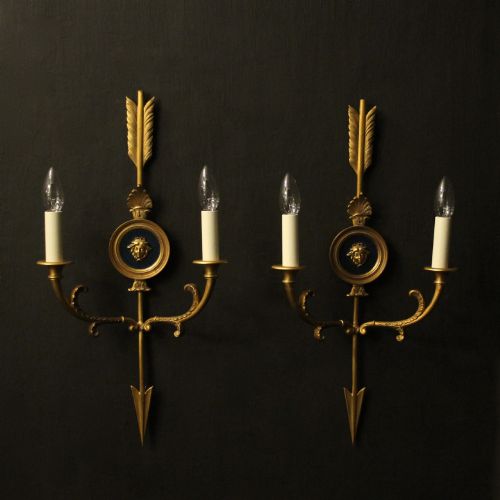
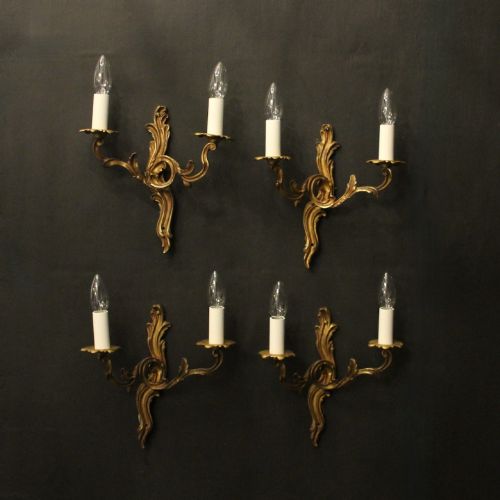
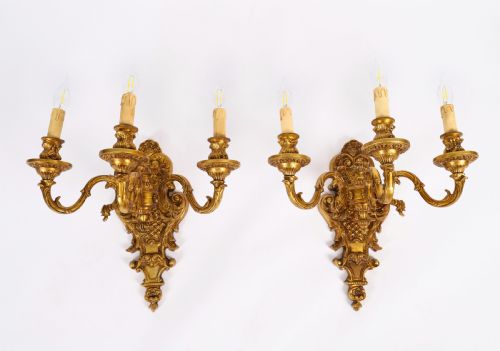
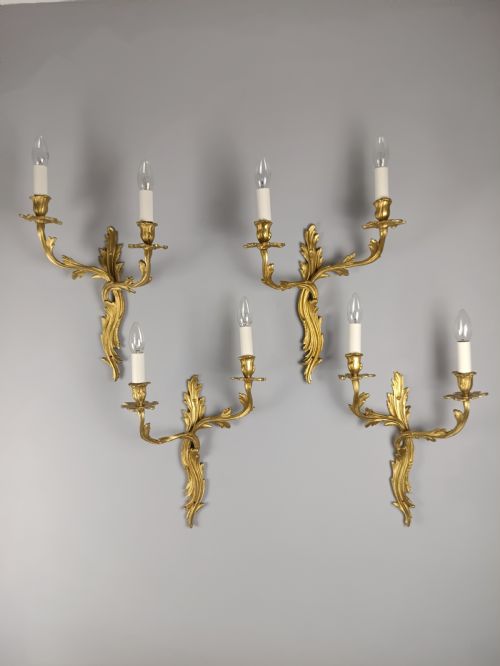
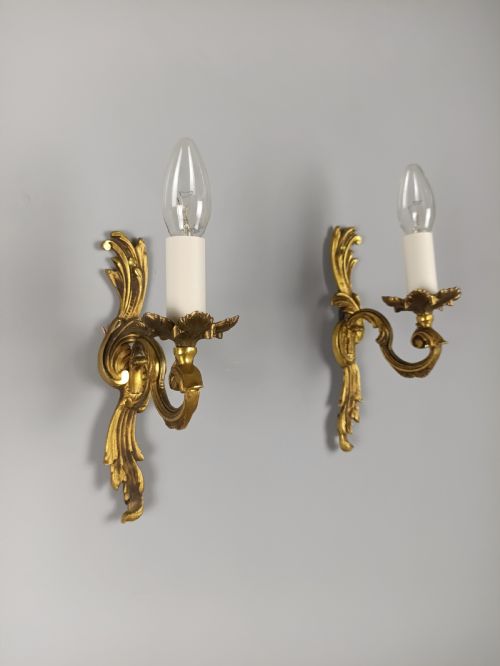
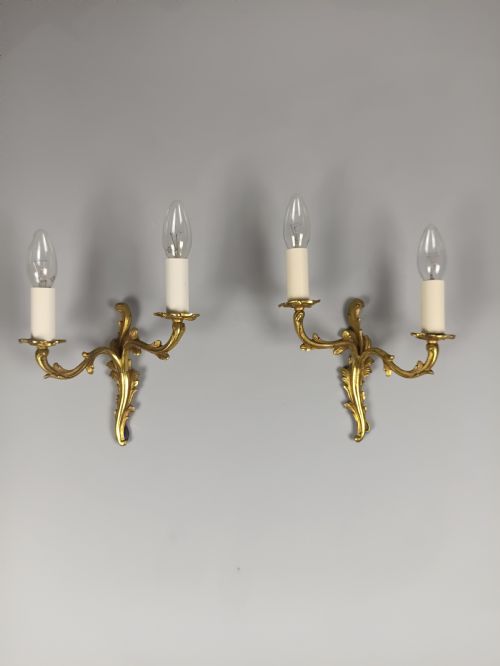
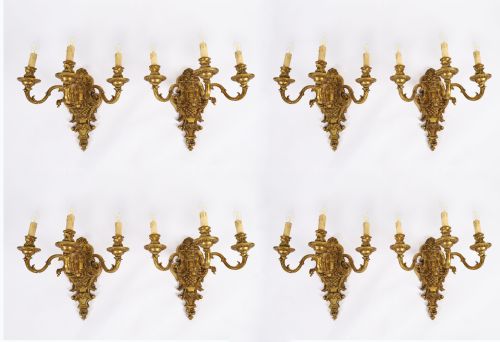
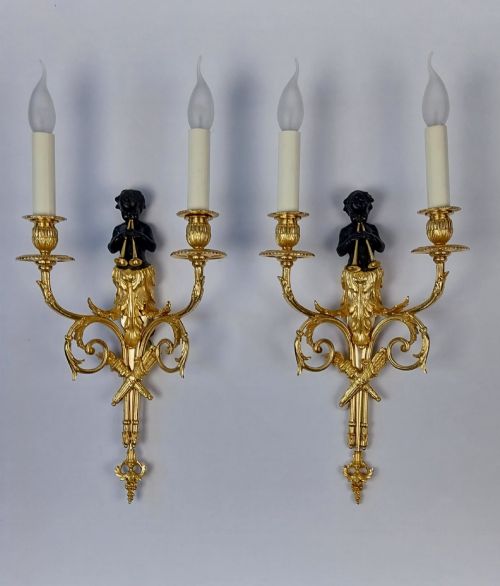
Ormolu wall brackets bring glittering French and English candle or electric light to a room, mounted securely upon gilded metal.

Ormolu Wall Brackets
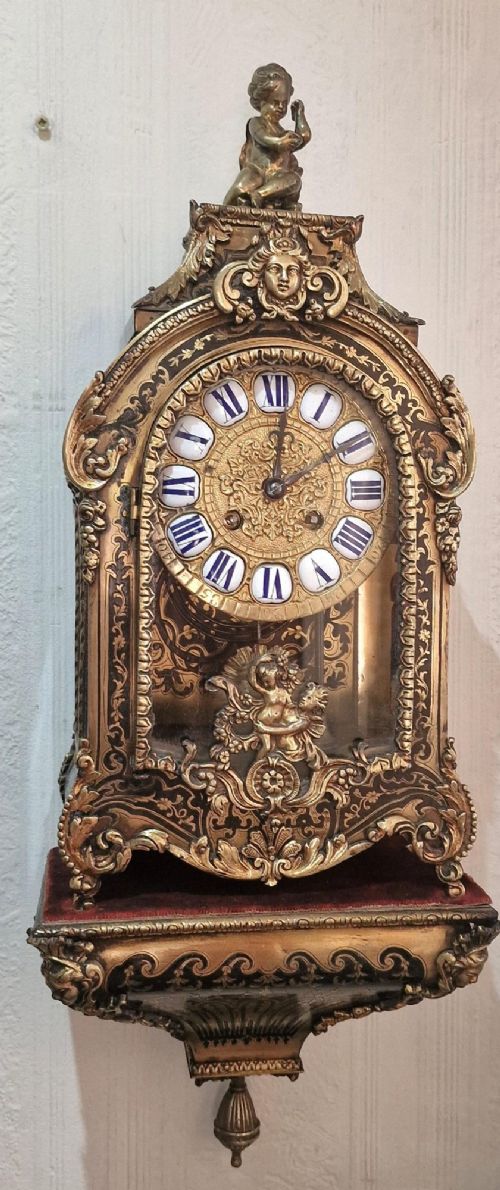
When you search for ormolu wall brackets, you encounter decorative fixtures designed to project illumination or support items outward from a wall. These objects include multi-armed wall lights, sconces, and dedicated support brackets intended for clocks or porcelain.
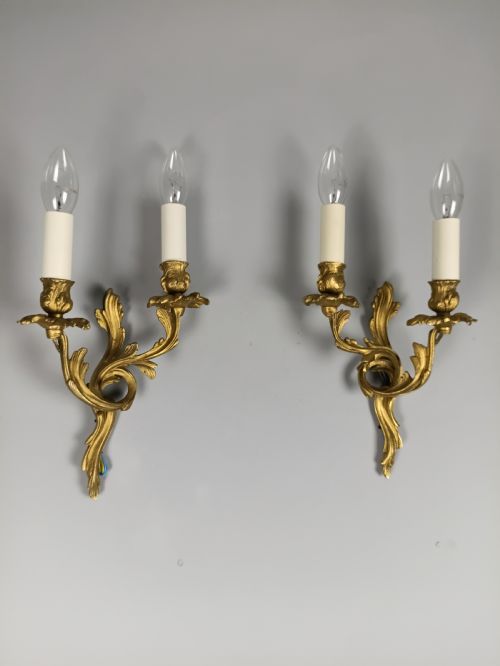
The pieces appearing most frequently originate from French workshops spanning the nineteenth and early twentieth centuries. They emerge in matched pairs and larger sets, carrying candle branches or electrical fittings.

Materials and construction
Manufacturers cast bronze and brass into ornate forms before applying mercurial gilding or modern plating to produce the bright ormolu surface. Certain examples incorporate contrasting elements such as tortoiseshell, enamel, ceramic panels, and crystal drops.
The construction relies on sturdy backplates secured to the wall, supporting single, twin, or triple scroll arms cast in high relief. Fasteners and pins join the structural components beneath the decorative gilding.
Gilded bronze and brass dominate the material record, though occasional pieces integrate blue and white ceramic alongside tortoiseshell.
Judging the range
Execution depth in the metalcasting separates standard commercial output from superior work. Crisply chased surface details and balanced arm symmetry distinguish finer French models from simpler brass castings.
Material integration also marks the scale. Elaborate mounts combining tortoiseshell, porcelain portraits, or heavy bronze indicate higher ambition than plain single-arm brass variants.
Henri Marc Of Paris
The Ormolu Wall Brackets Glossary
- Ormolu
- Gilded bronze produced by applying a gold amalgam to a bronze base. This technique creates a rich, warm metallic lustre characteristic of luxury continental decorative arts.
- Applique
- A wall-mounted light fixture or decorative metal plaque affixed directly to a surface. These ornaments often match furniture mounts of the same period.
- Boulle
- A form of marquetry employing brass inlaid into tortoiseshell. This decorative method frequently appears on mantel clocks paired with matching wall brackets.
- Rococo
- An asymmetrical design style defined by C-scrolls, foliage, and shell motifs. Many nineteenth-century wall lights adopt this exuberant aesthetic.
- Neoclassical
- A revival style drawing on classical Greek and Roman motifs such as urns, swags, and symmetry. Such pieces offer cleaner architectural lines than their Rococo counterparts.
Ormolu Wall Brackets: Frequently Asked Questions
How were wall brackets used?
These brackets served primarily to hold heavy mantel clocks or decorative porcelain pieces away from flat wall surfaces. By elevating objects, they displayed ornamental items at eye level in formal rooms.
Secondary variants functioned as structural supports for candles, allowing reflected light to illuminate wall hangings or mirrors.
Are these lights electrified?
Many surviving pieces began as candle sconces or oil lamps before undergoing conversion to electricity during the twentieth century. Wiring methods vary according to when the adaptation took place.
Unconverted examples retain their original drip pans and candle nozzles without modern internal wiring.
How do I date a wall bracket?
Dating relies on stylistic indicators, casting techniques, and materials visible on the backplate. Pieces spanning the nineteenth century frequently show hand-chased bronze work and traditional mounting screws.
Twentieth-century reproductions or later variations often display standardised machine threading and lighter brass construction.
Do wall lights come in pairs?
A large proportion of these fixtures survive as matched pairs or sets of four designed to flank a mirror, fireplace, or doorway. Symmetrical placement was essential to nineteenth-century interior design.
Single pieces do appear occasionally, having been separated from their original pairing over time.