




Pair Ecclesiastical Candlesticks
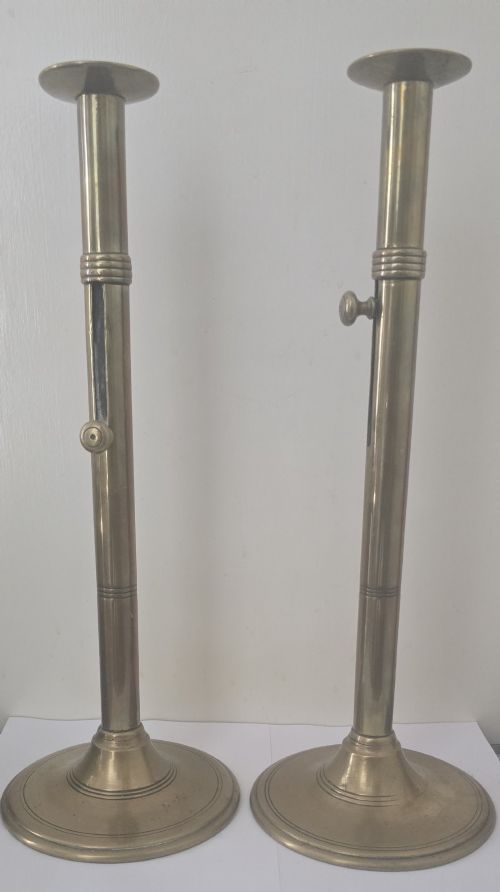
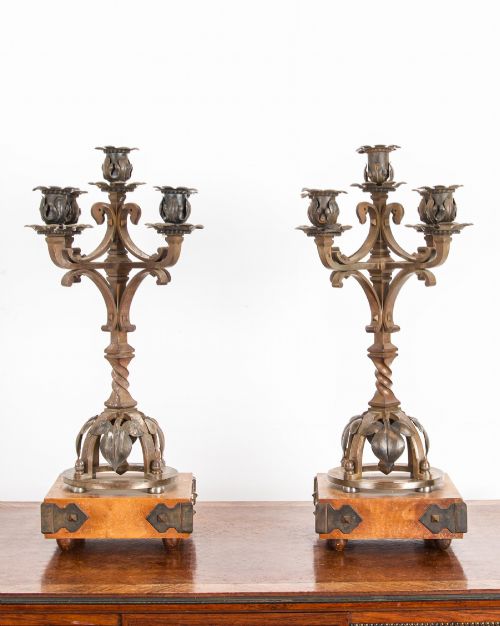
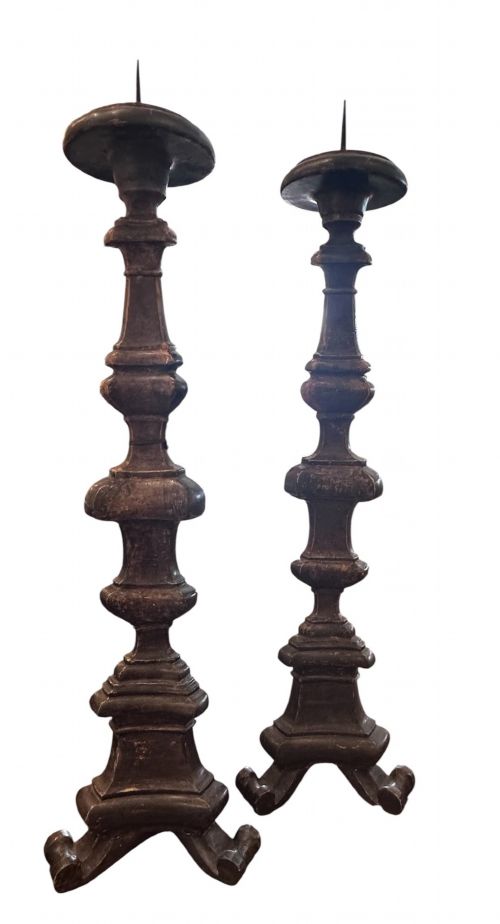
Pair ecclesiastical candlesticks bring heavy brass, bronze and carved wood into rooms that need solid presence and centuries of church ritual.
Pair Ecclesiastical Candlesticks
When you search for pair ecclesiastical candlesticks, you encounter heavy metal and carved timber altar wares designed for liturgical spaces. Most examples met here date from the nineteenth century, reflecting the fervent church building and restoration movements of the Victorian era.
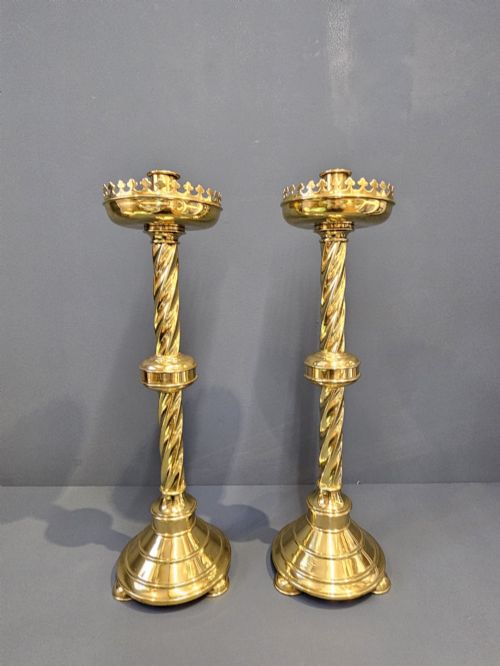
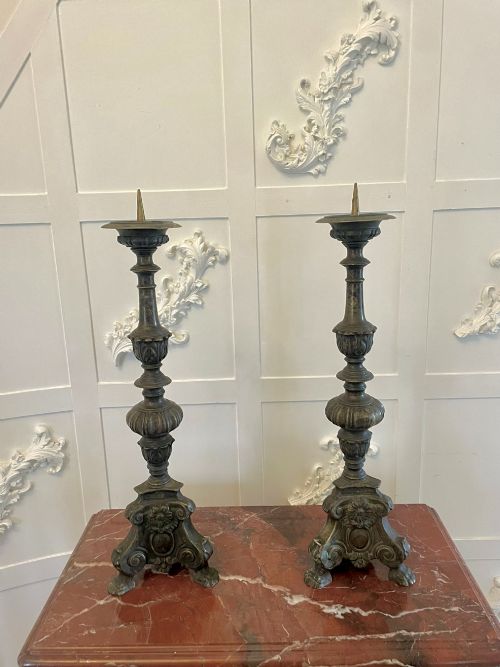
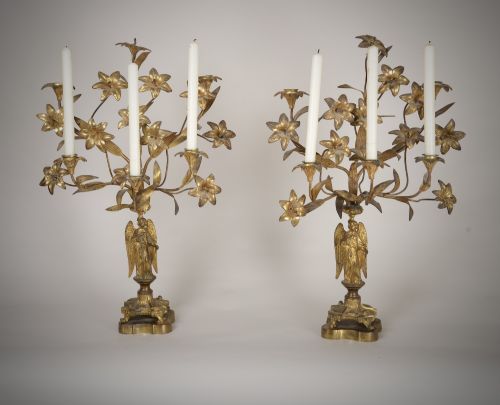
The dominant forms are tall brass pricket candlesticks and altar sticks, alongside multi-branched candelabra and occasional conversions into table lamps. These objects carry the severe architectural lines of the Gothic Revival, marked by trefoils, knops and stepped bases.
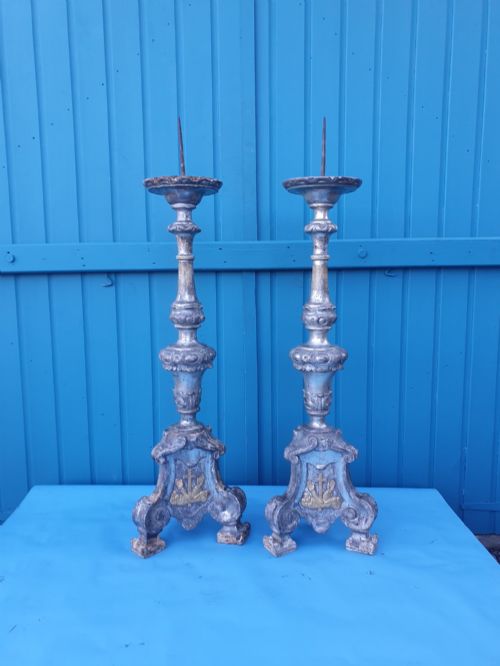
Origins stretch across English, French, Italian and wider continental workshops, moving from Georgian restraint into ornate late Victorian Gothic designs. Alongside heavy cast brass, you find carved wood finished with silver leaf or gesso, recording the diverse materials commissioned for period sanctuaries.
How they were made
Foundry work dominates the metal wares, utilising cast brass and bronze to create rigid shafts, heavy weighted bases and decorated drip pans. Metal components are frequently threaded or bolted together to support the considerable height demanded by church altars.
Wooden alternatives rely on solid timber, carved meticulously by hand before receiving layers of gesso and silver leaf to mimic precious metal or create reflective liturgical surfaces. Wrought iron appears in structural elements and scrollwork, forged by hand to provide stable foundations for taller floor and table pieces.
Pair Ecclesiastical Candlesticks Retail Price Guide 2026
Typical asking prices for pair ecclesiastical candlesticks among the pieces listed under this phrase on Sellingantiques today, from the lower quarter to the upper quarter. They describe what is for sale here now, not the wider market.
Some heavy altar sticks still carry faint wax drips from Victorian Christmas services that no amount of polishing could ever displace.
What varies in quality
Substance and proportion dictate the hierarchy of these objects, separating thick-walled foundry castings and dense hand-carved timber from lighter, hollow commercial productions. Superior examples retain their original structural integrity, with deep chasing and sharp architectural detailing that survive decades of polishing and handling.
The distinction often lies in the fidelity of the period style, where crisply defined Gothic Revival ornament outperforms generic cast decoration. Original surface patination, uncompromised by aggressive cleaning, marks the distinction between a piece preserved with care and one stripped of its age.
T Thomason & Co
The Pair Ecclesiastical Candlesticks Glossary
- Pricket candlestick
- A candlestick featuring a sharp metal spike at the top designed to impale a pillar candle. This form predates socket holders and remains standard on traditional altar candlesticks.
- Gothic Revival
- An architectural and decorative style reviving medieval pointed arches, tracery and vertical lines. It dominates nineteenth-century church metalwork.
- Knop
- A decorative knob or swelling on the stem of a candlestick. It provides a secure grip for moving tall altar sticks during service preparations.
- Altar-style
- Descriptive of furniture and metalwork proportioned and styled specifically for ecclesiastical sanctuary use. These items are taller and heavier than domestic lighting.
- Silver leaf
- Thin beaten silver applied to wood or gesso surfaces to simulate solid silver. It requires a protective varnish layer to prevent tarnishing.
Pair Ecclesiastical Candlesticks: Frequently Asked Questions
How were pair ecclesiastical candlesticks used?
These objects stood upon church altars to hold candles during religious services and liturgical ceremonies. Their impressive height ensured the light remained visible across large sanctuaries and stone naves.
Over time, many pairs moved from consecrated spaces into domestic interiors, where their heavy construction and formal dignity suited grand dining rooms and hallways.
Are these candlesticks safe for modern candles?
Pricket candlesticks require candles with a base hole drilled to accept the central metal spike securely. Ensuring the candle sits level on the spike prevents dripping wax and instability.
For daily domestic use, many owners place traditional candles carefully or convert the items safely into table lamps to avoid open flames.
How do I date a pair of ecclesiastical candlesticks?
Dating relies on examining the manufacturing marks, casting seams, and stylistic indicators such as Georgian proportions versus Victorian Gothic Revival ornamentation. Heavy cast brass components and screw threads often point towards nineteenth-century industrial foundry methods.
Earlier eighteenth-century examples display hand-turned elements and softer contours, while Edwardian and later pieces adopt cleaner, standardised commercial profiles.
Can I polish antique brass candlesticks?
Polishing brass removes accumulated tarnish and brightens the metal, but excessive cleaning can erase historical patination and soften crisp cast details. Many collectors prefer to leave a warm, aged oxidation undisturbed.
If cleaning is necessary, use a mild non-abrasive metal cleaner and a soft cloth, avoiding harsh scrubbing around intricate Gothic mouldings.