
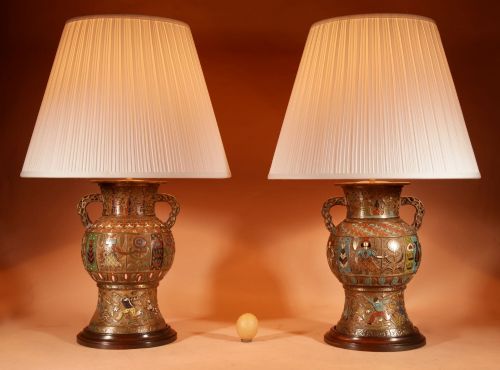
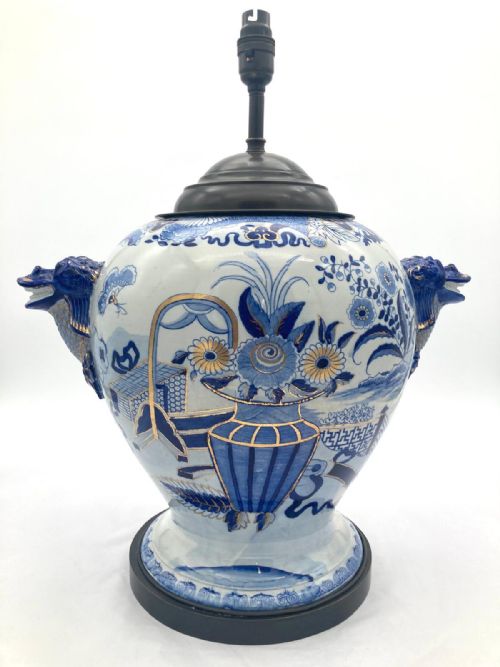
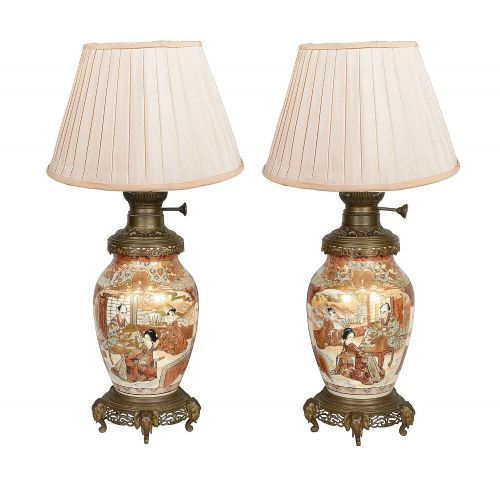


Pair Converted Vase Lamps
These pair converted vase lamps bring height and symmetry to a room, turning decorative porcelain and bronze vessels into functional lighting.
Pair Converted Vase Lamps
A pair converted vase lamps search reveals decorative vessels adapted for illumination, most frequently originating from nineteenth century Japan and China alongside European manufactories. You will encounter Satsuma, Kutani, Cloisonne, and Imari Japanese wares alongside Chinese porcelain, French Sevres, and English ironstone.
The bodies of these pieces retain their original decorative schemes, whether painted in blue and white, enamelled in polychrome, or cast in bronze. Makers adapted these vessels by mounting electrical fittings to the top while preserving the historic ceramic or metal body below.
Table lamps dominate this category, providing matching pairs that suit sideboards, console tables, and mantlepieces. The periods span from the eighteenth century through the Regency era and into the late nineteenth century.
How they were made
Potters and bronze founders shaped the original vessels using ceramic bodies like ironstone and porcelain, or metal foundations in bronze and brass. Artisans decorated these surfaces with hand-painted glazes, champleve enamel, or cloisonne wirework before later conversion work added electrical hardware.
Metal mounts in ormolu and gilt bronze often frame the base and neck of the ceramic bodies, adding structural support and ornamental weight. These mounts anchor the electrical fittings while respecting the original proportions of the antique vase.
Listings feature ceramics and bronzes spanning the eighteenth century, the Regency era, and the late nineteenth century.
What varies in quality
Quality rests in the harmony of the conversion and the artistic merit of the underlying vessel. Superior examples preserve the integrity of the antique vase without damaging the primary decoration during the adaptation for wiring.
The fineness of the hand-painting, the weight of the bronze or ormolu mounts, and the crispness of the enamel work set the finer pieces apart. Matching symmetry between the two lamps in a pair determines the visual balance in a room.
Hicks and Meigh·Masons Ironstone
The Pair Converted Vase Lamps Glossary
- Cloisonne
- Enamelwork created by soldering metal wires to a metal base to form compartments filled with paste and fired. This technique produces intricate patterns across the surface of nineteenth century vases.
- Imari
- Japanese porcelain decorated in underglaze blue and overglaze red, gold, and green. This style gained immense popularity for export markets during the historic periods.
- Ormolu
- Gilded bronze used for decorative mounts and bases. It provides a bright metallic contrast to the ceramic body of the lamp.
- Ironstone
- A heavy durable type of earthenware patented in the nineteenth century. Makers such as Hicks and Meigh utilised this robust material for large decorative vessels.
- Kutani
- Japanese painted porcelain known for its rich colour palette, frequently featuring reds and golds. These wares appear often in nineteenth century decorative arts.
Pair Converted Vase Lamps: Frequently Asked Questions
What are pair converted vase lamps?
These pieces are historic decorative vessels that have been adapted to hold electrical lamp fittings for interior lighting.
They combine antique ceramic or bronze bodies with modern wiring to function as matching table lamps.
How do I style pair converted vase lamps?
Place them symmetrically on matching sideboards, console tables, or bedside cabinets to create balanced illumination.
Their decorative motifs and coloured glazes provide a focal point while introducing height and warmth to a room.
Are the shades original?
The fabric shades on these pieces are usually later additions chosen to complement the proportions and colours of the antique bases.
Original shades from the nineteenth or eighteenth centuries rarely survive intact on converted lighting.
How can I tell the period?
Dating relies on examining the ceramic paste, the style of the hand-painted decoration, and the construction of any metal mounts.
Japanese Meiji pieces, Chinese export wares, and Regency ironstone each carry distinct stylistic markers from their eras.