
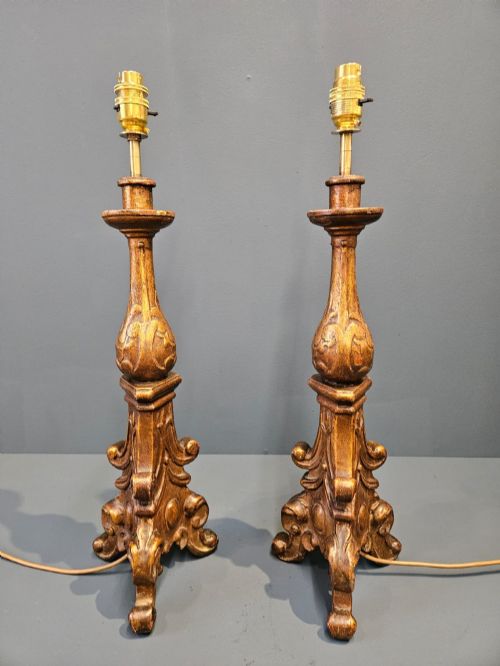


Pair Classical Lamp Bases
Pair classical lamp bases bring architectural dignity and balanced illumination to a room, formed primarily from bronze, brass, marble and gilt metal.
Pair Classical Lamp Bases
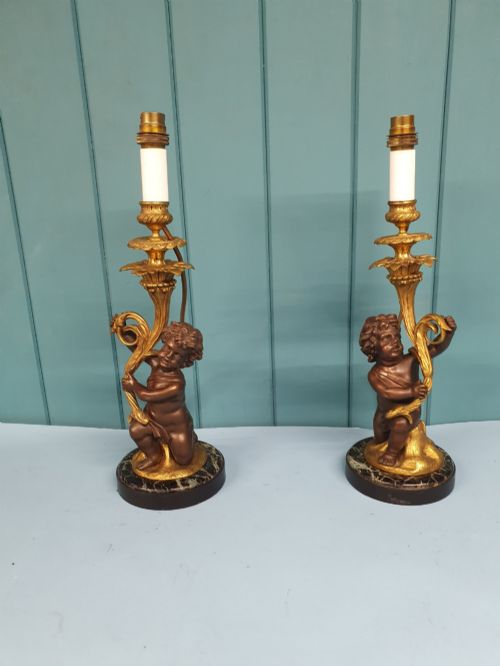
Pair classical lamp bases encompass matched sets designed for balanced placement on side tables and surfaces. These objects draw inspiration from classical antiquity, often taking the form of architectural columns or figural compositions.
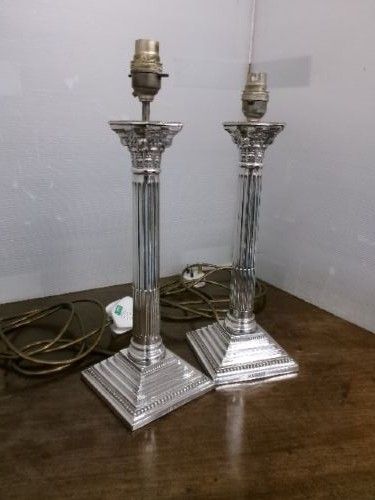
Buyers encounter table lamps alongside converted candlesticks and candelabra adapted for modern electrical use. Common configurations pair bronze or brass columns with heavy marble bases to ensure stability.
How they were made
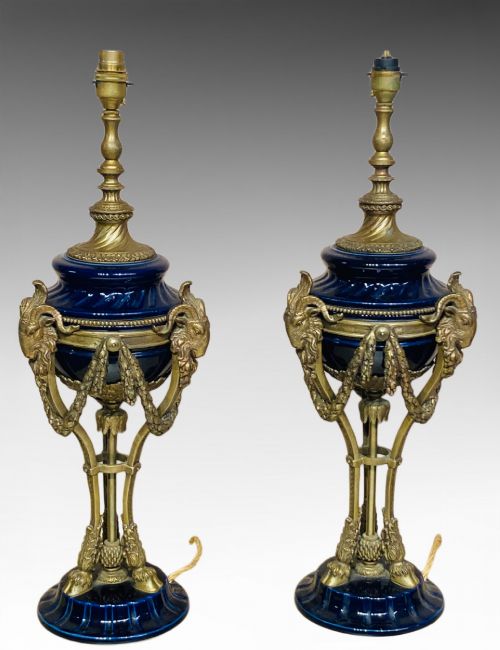
Foundry work forms the basis of these items, employing cast bronze, brass, spelter and silver plate to shape structural elements and decorative mounts. Gilding and ormolu finishes are frequently applied to metal components to provide rich surface contrast.
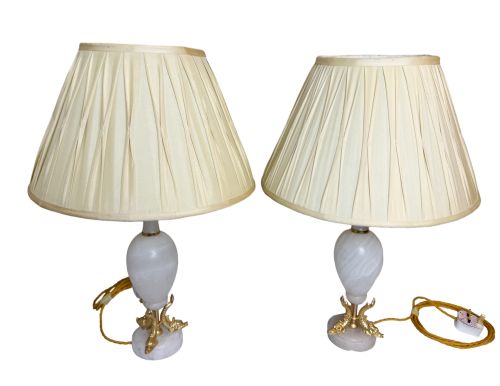
Natural stone forms an integral part of the construction, with white and green marble or onyx utilised for heavy plinths and column shafts. Carved timber and glazed ceramic also appear as structural bodies in specific regional variants.
Many of these lighting fixtures began life as traditional candlesticks or pricket sticks before undergoing conversion into table lamps. This adaptation preserves original patination while accommodating modern wiring through hollowed channels.
Listings span from the early nineteenth century through the 1940s, encompassing Victorian and Edwardian periods alongside French revival movements.
What varies in quality
The choice and density of supporting stone dictate the physical presence and stability of the pair. Solid marble and onyx plinths with harmonious veining elevate the architectural weight compared to lighter composition materials.
Coherence within the matching pair establishes the success of the ensemble, ensuring that casting uniformity and patination align evenly across both items. Slight variations in height or base dimensions indicate hand-assembled or repurposed elements.
The Pair Classical Lamp Bases Glossary
- Corinthian Column
- A classical column style featuring an ornate capital decorated with acanthus leaves. This motif appears frequently on nineteenth-century brass and silver-plated lamp shafts.
- Ormolu
- Gilded bronze ornamentation applied to furniture and decorative objects during the eighteenth and nineteenth centuries. The technique involves creating a mercury amalgam before firing to leave a rich gold layer.
- Spelter
- A zinc alloy frequently used in nineteenth-century decorative casting as a lower-cost alternative to bronze. It is often painted or bronzed to simulate heavier metalwork.
- Pricket Candlestick
- A candlestick featuring a central spike to secure a wax candle rather than a socket. When converted, these form striking tall lamp bases.
- Neoclassical
- A style reviving classical Greek and Roman artistic forms, prominent in furniture and decorative arts from the eighteenth century onward. It prioritises symmetry, straight lines and architectural motifs.
Pair Classical Lamp Bases: Frequently Asked Questions
Are these converted from old candlesticks?
Many examples originate as nineteenth-century candlesticks or altar pieces that have been adapted to hold electrical fittings.
This conversion process preserves the antique metalwork and heavy stone bases while allowing them to function as modern table lamps.
How do I clean bronze and marble bases?
Dust bronze surfaces gently with a soft dry cloth and avoid harsh chemical polishes that can strip the historic patination. Marble and onyx parts tolerate a damp cloth followed by immediate drying to protect the polished stone.
Care should be taken around electrical components and vintage wiring during any maintenance.
What styles are represented here?
The selection covers Neoclassical, French Empire, Regency revival and Victorian designs.
These styles share an emphasis on classical symmetry, columns and figural elements drawn from ancient architecture.
How do I match lamp shades to these bases?
Proportion dictates shade selection, balancing the heavy mass of marble and bronze columns with appropriate fabric weight. Simple drum or empire shades in neutral tones usually complement the architectural lines without overpowering the metalwork.