


French Empire Lamp Bases
These French empire lamp bases bring classical dignity and heavy cast metals to a room, offering the grandeur of nineteenth-century design.
French Empire Lamp Bases
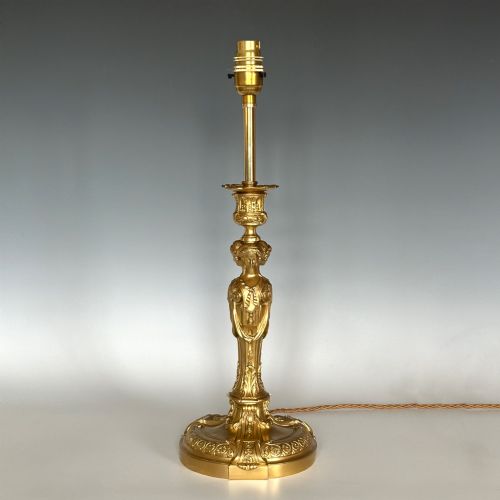
Most examples you meet on this page date from the nineteenth century or employ nineteenth-century French Empire style revival aesthetics. They incorporate architectural motifs such as rams heads, laurels, and classical deities mounted upon solid plinths.
Alongside dedicated lamp bases, the inventory includes converted items and candlesticks adapted for modern lighting. These pieces span patinated metals and gilded finishes, reflecting the enduring taste for Napoleonic grandeur in domestic interiors.
How they were made
The makers of these items relied heavily on cast bronze, brass, and ormolu combined with natural stone plinths. Craftsmen used detailed casting techniques to render classical figures, cherubs, and crisp foliate mounts.
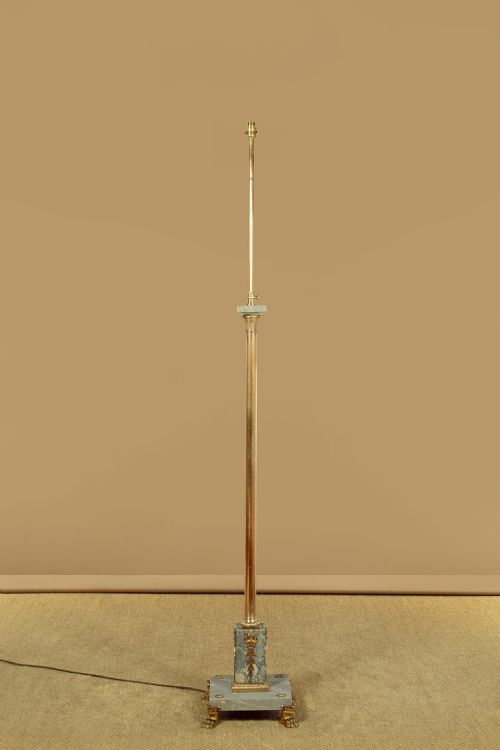
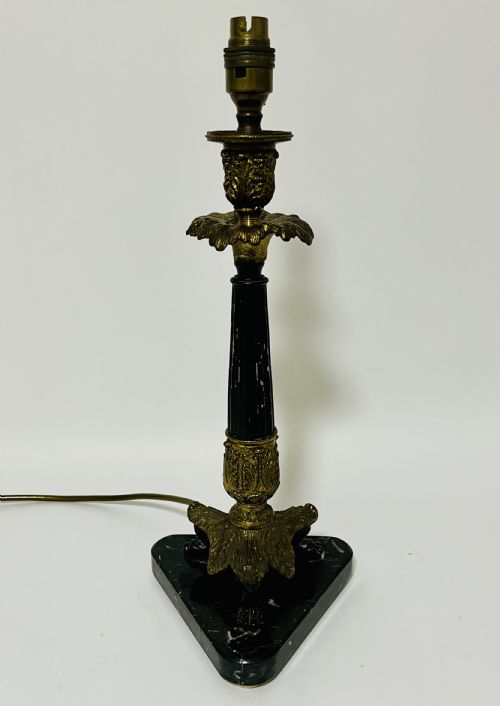
Marble and patinated metal feature prominently in the construction, providing a heavy, stable foundation for the vertical shaft. Surface decoration often pairs gilded sections with dark patinated bronze or black toleware to create strong visual contrast.
Listings combine nineteenth-century originals with later revivals, utilising materials such as marble, ormolu, patinated metal, and brass.
What varies in quality
The distinction between ordinary and superior pieces lies in the crispness of the metal casting and the depth of the gilding. Finer examples display sharp, hand-chased details on figures and mounts rather than soft, mass-produced edges.
The choice of base materials also elevates a piece, particularly the use of heavy statuary marble and genuine ormolu over plain brass. Superior construction shows in the solid integration of the classical urns, columns, and plinths without loose joints.
The French Empire Lamp Bases Glossary
- Ormolu
- A technique of applying finely ground high-carat gold to an object of bronze. It creates a rich, warm yellow surface finish seen on classical mounts.
- Toleware
- Enamelled or lacquered sheet metal used for decorative vessels and lamp bodies. It provides a durable painted surface often rendered in deep black.
- Guéridon
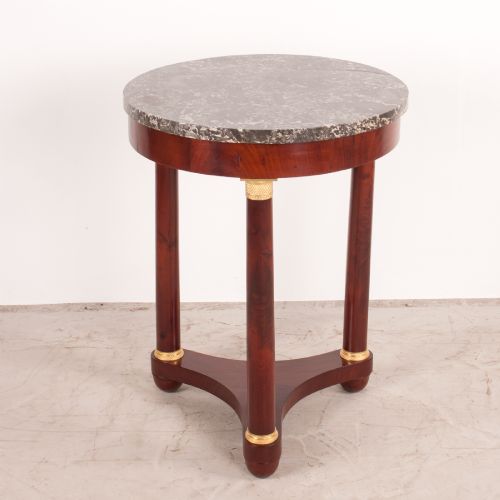
- A small round table on a central pillar, occasionally sharing decorative vocabularies with heavy lamp bases of the period. It reflects the same neoclassical taste.
- Patinated metal
- Metal surfaces altered by age, chemical treatment, or deliberate darkening. This finish highlights the sculptural contours of figural bases.
- Neoclassical
- A style reviving the art and architecture of ancient Greece and Rome. It defines the architectural columns, urns, and laurel motifs on these bases.
French Empire Lamp Bases: Frequently Asked Questions
What are french empire lamp bases?
These are heavy nineteenth-century lighting fixtures and converted oil lamps styled after classical antiquity. They incorporate bronze, ormolu, and marble.
Many feature figures, urns, and columns reflecting Napoleonic and neoclassical interior design.
How do I wire an old lamp base?
Rewiring requires running modern flexible cable through the central hollow channel of the metal shaft. A qualified electrician should handle the internal fittings.
Ensure the heavy marble or bronze base remains stable and balanced with the chosen shade.
Are these lamps converted oil lamps?
Several examples originate as nineteenth-century oil lamps or candlesticks subsequently adapted for electricity. These retain their original burners, fonts, or reservoirs.
Conversion allows historical metalwork to function safely with contemporary electrical standards.
How do I clean ormolu and bronze?
Dust gently with a soft, dry brush to prevent accumulation in the cast crevices. Avoid abrasive cleaners that strip the delicate gilding.
Patinated surfaces require minimal intervention to preserve their historical character and appearance.