
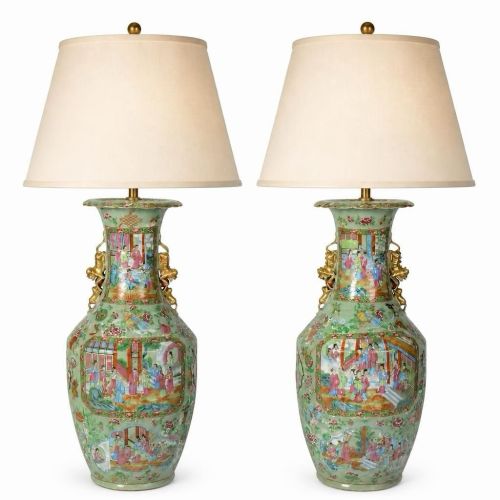
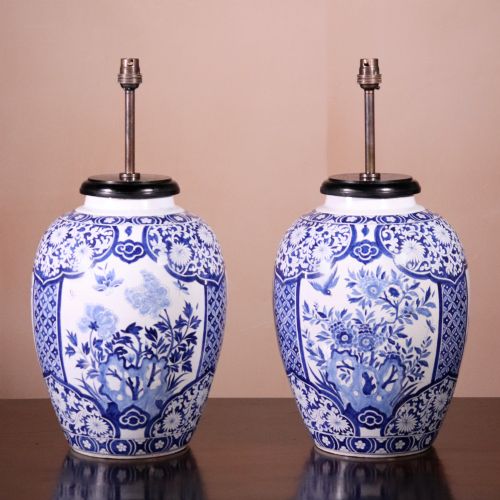


Pair Chinese Vase Lamps
A pair chinese vase lamps brings together balanced porcelain bodies and period lighting, offering symmetry and decorative presence for an interior.
Pair Chinese Vase Lamps
When searching for a pair chinese vase lamps, buyers encounter symmetrical pairs of imported porcelain vessels adapted into electric or oil light fixtures. These objects span from the eighteenth century through the early twentieth century, reflecting shifting tastes for Asian porcelain in European interiors. The majority of pieces seen here originate in the nineteenth century, often bearing the rich palettes of Cantonese or Famille Rose workshops.
The body of each lamp typically began as a decorative vase, ginger jar, or baluster vessel before receiving electrical wiring and mounts. Workshops often selected jars and vases with balanced motifs so that matching pairs maintained visual harmony when placed upon sideboards or mantelpieces. These conversions preserve the original hand-painted glaze work while serving a functional domestic purpose.
Materials and construction
Potters shaped the ceramic bodies from high-fired porcelain, applying underglaze cobalt or rich overglaze enamel colours by hand. Artisans then utilised brass, gilt bronze, or ormolu mounts to secure the bases and collars, providing structural stability for the lighting components. Fabric shades frequently complete the assembly, casting a warm diffusion across the hand-painted surfaces.
Conversion techniques varied from simple drilled bases to elaborate cast metal collars designed to hold burner fittings or lamp holders without damaging the ceramic body. Ormolu mounts were frequently cast and chased in European workshops to elevate the status of the imported porcelain jars. These combined elements create substantial table fixtures requiring sturdy placement.
Pair Chinese Vase Lamps Retail Price Guide 2026
Typical asking prices for pair chinese vase lamps among the pieces listed under this phrase on Sellingantiques today, from the lower quarter to the upper quarter. They describe what is for sale here now, not the wider market.
Many a Victorian parlour gained its exotic atmosphere simply because an importer decided a ginger jar made a brilliant reading light.
Markers of distinction
The fineness of the hand-painted enamel work dictates the visual tier of the piece, with complex figural scenes or dense floral medallions demanding greater skill. The quality of the metal mounts also separates standard conversions from high-status examples, as heavy chased ormolu requires superior metalworking craft. Symmetry between the two vessels remains paramount for pairs, ensuring the decorative panels align harmoniously.
Condition of the ceramic glaze and the preservation of the original gilt highlights influence the desirability of the lighting pair. Subtle crackleware textures or deep powder blue grounds must show uniformity across both bodies to maintain an integrated aesthetic. The discretion of the electrical conversion further affects the overall integrity of the antique vessel.
The Pair Chinese Vase Lamps Glossary
- Famille Rose
- A palette of opaque overglaze enamel colours dominated by pink or rose shades, introduced during the Qing dynasty. This palette allows for nuanced shading on floral and figural compositions.
- Ormolu
- Gilded bronze mounts cast and finished by hand, frequently applied to the bases and necks of imported porcelain vessels. The technique adds weight and decorative richness to the finished object.
- Ginger Jar
- A wide-shouldered ceramic vessel with a domed lid, originally made for storage and later adapted as a lamp base. These jars provide a stable, balanced silhouette for interior lighting.
- Crackleware
- A type of ceramic glaze characterised by a network of fine intentional cracks across the surface. This finish mimics ancient ceramic styles prized by collectors for its tactile depth.
- Rose Medallion
- A distinct Cantonese decorative style featuring alternating panels of figures, birds, and flowers enclosed within gilt borders. This colourful pattern appears frequently on nineteenth-century export porcelain.
Pair Chinese Vase Lamps: Frequently Asked Questions
How do I clean these porcelain lamps?
Dust the ceramic bodies gently with a dry, soft cloth to prevent accumulation within the incised or painted details. Avoid harsh chemical cleaners that might compromise the delicate overglaze enamels or gilt highlights.
Ensure the lamp is unplugged before undertaking any maintenance near the wiring or mounts. Professional advice should be sought if the metal mounts require deeper restoration or polishing.
Can the original wiring be replaced safely?
Modern rewiring is commonly undertaken by specialists to ensure compliance with current electrical safety standards. This process generally preserves the historic ceramic body while updating the internal fittings.
Qualified electricians can thread new cord through existing channels without altering the outer structure of the vase. This maintains the decorative integrity of the antique while offering reliable daily operation.
How do I match shades to these lamps?
Select fabric shades that complement the dominant tones within the porcelain glaze, such as soft whites or colours pulled from the enamel palette. Proportion is essential, ensuring the diameter of the shade balances the width of the vase body.
Consider the height of the lamp when choosing shade depth to maintain a harmonious silhouette. Neutral silk or linen textures allow the hand-painted motifs on the ceramic to remain the primary focus.