




Pair Chinese Ceramic Lamps
Pair chinese ceramic lamps bring centuries of hand-painted porcelain and decorative presence into a room.
Pair Chinese Ceramic Lamps
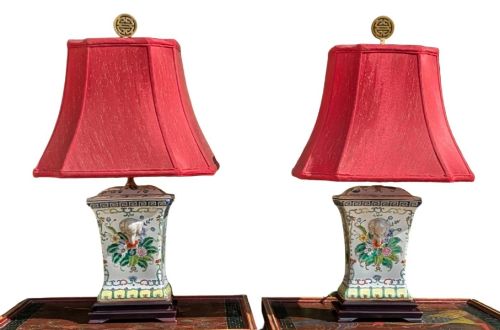
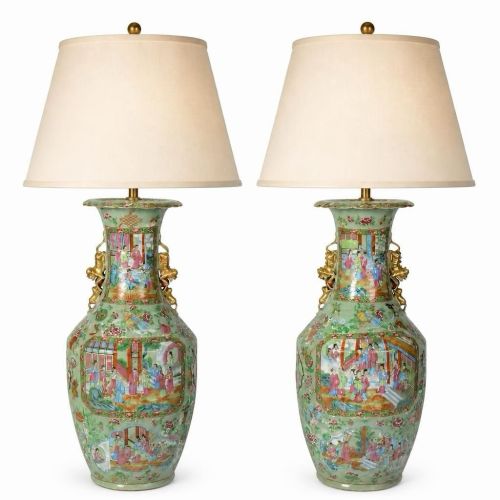
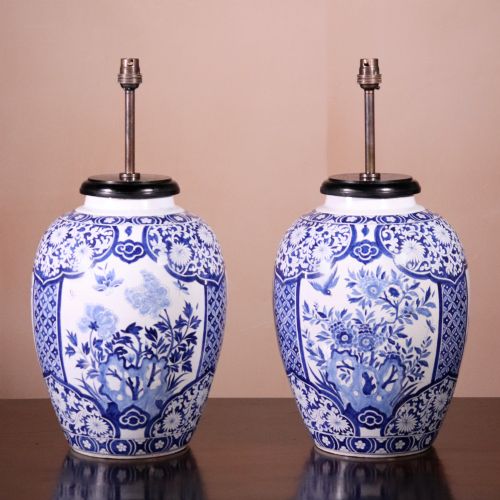
Pair chinese ceramic lamps comprise matched sets of vases, ginger jars, and decorative vessels converted into table lighting. The pieces span the nineteenth century and the early twentieth century, drawing on traditional forms including Canton, Rose Medallion, and blue and white designs.
Buyers encounter forms derived from nineteenth century Chinese porcelain alongside early twentieth century adaptations. Many examples incorporate ginger jars and baluster vases bearing polychrome enamel palettes, famille rose, and crackleware glazes.
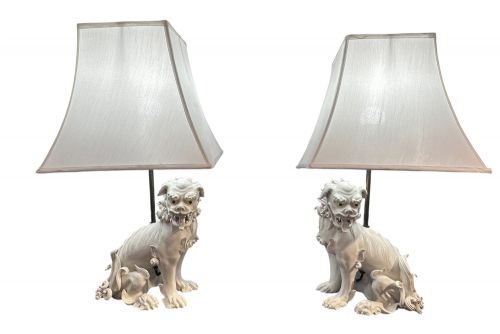
Originating primarily from nineteenth century workshops and later Chinese export production, these matched pairs frequently utilise converted vases mounted for electrical use. The selection also includes Japanese Yokohama porcelain and Blanc de Chine figural groups such as Shi Lion or Dog of Fo lamps.
How they were made
Potters shaped ceramic bodies from fine porcelain and earthenware, applying cobalt blue underglazes or rich enamel palettes like famille verte and famille rose before firing. Artisans frequently integrated metal mounts, brass fittings, and gilded ormolu collars to secure the electrical components and elevate the decorative vases.
Makers utilised intricate hand-painted techniques across diverse grounds, including turquoise glaze, powder blue, and yellow and green grounds. Fabric shades and wooden bases complete the construction, supporting the conversion of antique jars and vases into functional table lamps.
Several pairs feature mythical Shi Lions guarding the sideboard, ready to illuminate the room with nineteenth-century porcelain charm.
What varies in quality
Quality rests in the precision and detail of the hand-painted enamels, the depth of the porcelain glaze, and the crispness of the moulded decoration. Finer examples display meticulous brushwork on Rose Medallion or famille rose panels, whereas simpler versions rely on standard transfer printing or heavier crackleware textures.
The integration of metalwork distinguishes superior pieces, particularly those finished with chased ormolu mounts and solid brass fittings rather than basic electrical adaptations. The symmetry of the matched pair and the preservation of the original ceramic body further define the upper tier of the range.
The Pair Chinese Ceramic Lamps Glossary
- Famille Rose
- A prominent palette of opaque enamel colours dominated by pink or rose hues, introduced during the Qing dynasty. This technique allowed for delicate shading on floral and figural scenes.
- Ormolu
- Gilded bronze or brass used for decorative mounts and fittings, frequently seen securing the upper and lower collars of nineteenth-century lamp conversions.
- Crackleware
- A ceramic glaze characterised by a network of fine decorative cracks intentionally formed during the cooling process. It appears frequently on nineteenth-century blue and white porcelain.
- Ginger Jar
- A broad-shouldered ceramic storage vessel lacking handles, commonly adapted into a table lamp. These jars often feature intricate famille rose or blue and white designs.
- Blanc de Chine
- A white porcelain produced in Dehua, Fujian province, known for its milky glaze. Pieces often take figural forms such as Shi Lion or Dog of Fo.
Pair Chinese Ceramic Lamps: Frequently Asked Questions
How do I clean antique ceramic lamp bases?
Dust the porcelain gently with a dry, soft cloth to prevent accumulation in textured areas like crackleware or raised enamel work.
Avoid chemical cleaning agents and water, which can damage aged glazes, exposed metal mounts, and historic wiring.
Are these lamps converted from old vases?
Many examples began life as nineteenth-century ginger jars, decorative vases, or temple vessels before receiving professional electrical conversion.
The original ceramic body remains intact, often mounted with brass or ormolu hardware to support modern lamp fittings and shades.
What does Rose Medallion mean?
Rose Medallion describes a distinct style of Cantonese porcelain decorated with alternating panels of birds, butterflies, and figures.
The design scheme is united by vibrant pink enamel accents and gilt detailing across the ceramic surface.
How can I date a ceramic lamp?
Dating relies on examining the porcelain body, glaze characteristics, enamel colours, and the style of any associated metal mounts.
Nineteenth-century pieces often exhibit hand-potted irregularities and distinct underglaze tones compared to later twentieth-century productions.