

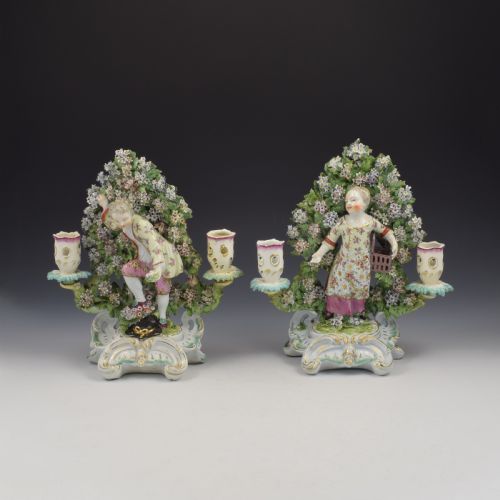


Pair Ceramic Candle Holders
These pair ceramic candle holders bring functional light and sculptural elegance to a mantelpiece, offering symmetry and period charm.
Pair Ceramic Candle Holders
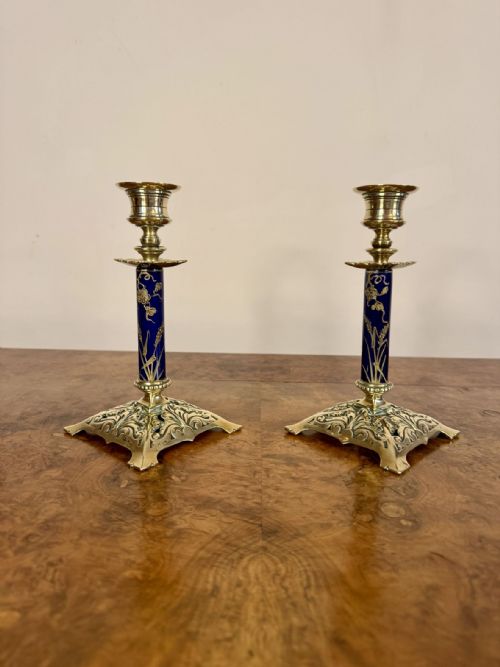
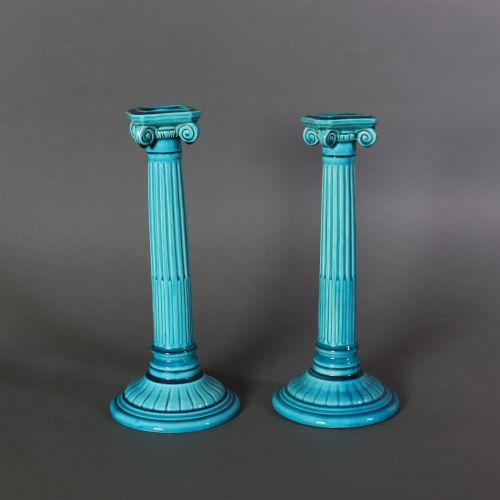
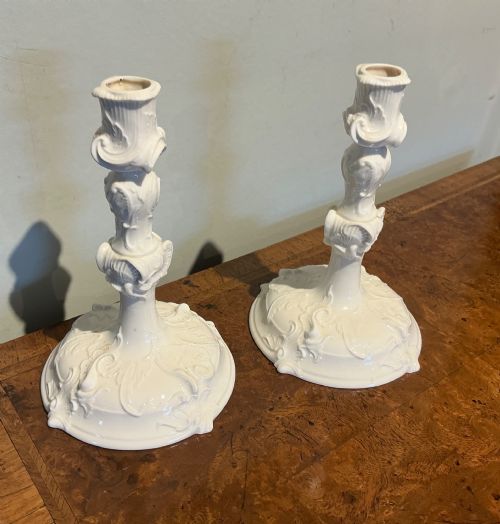
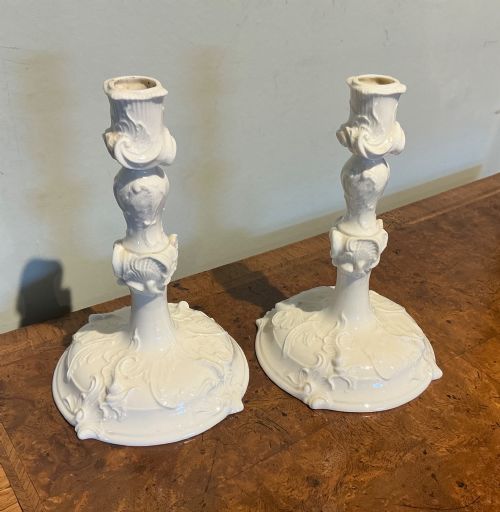
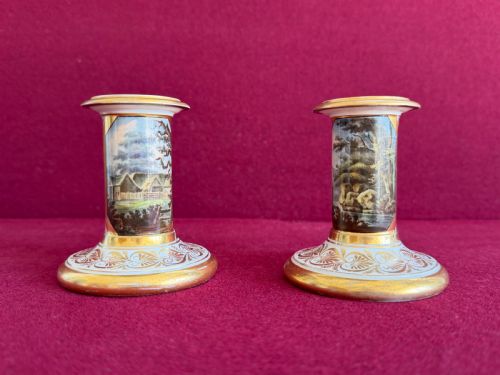
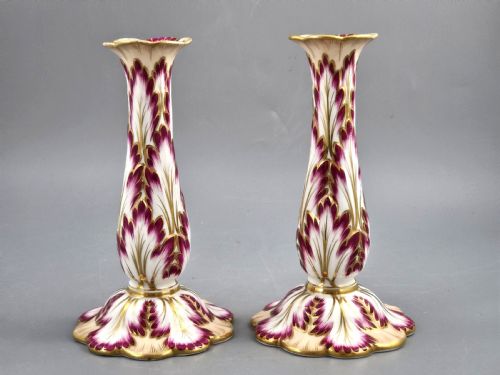
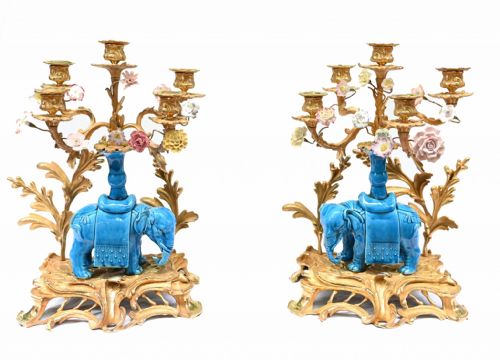
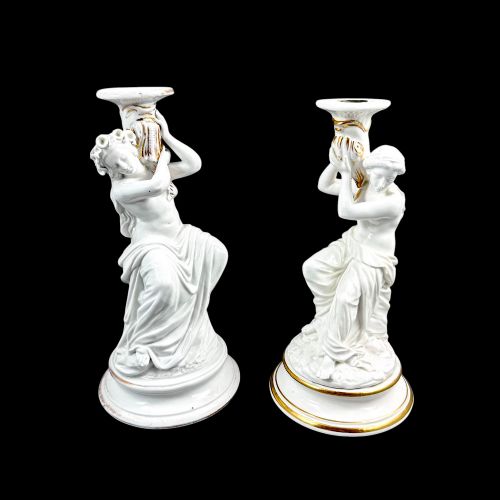
When you search for pair ceramic candle holders, you are looking at matched pairs of candlesticks and candelabra formed from glazed porcelain, hard paste porcelain, and ironstone. These pieces span the eighteenth, nineteenth, and early twentieth centuries, capturing shifts in design from Georgian rococo to Victorian revival styles.
The most common examples on this page are porcelain figural candlesticks and classical columns originating from English and continental European factories. You will regularly encounter figures set against leafy bocage backgrounds, alongside simpler foliage patterns and gilt-accented Regency designs.
How they were made
Potters shaped these ceramics using moulds or by hand, applying vitreous glazes and enamels before firing the clay at high temperatures. Many examples incorporate intricate applied details such as floral bocage, leaves, and miniature figures attached to the main body.
Makers finished the pieces with hand-painting, gilding, and gold leaf highlights applied to the sconces and bases. Combinations of brass mounts and ceramic bodies appear on several nineteenth-century pieces to provide structural support.
Pair Ceramic Candle Holders Retail Price Guide 2026
Typical asking prices for pair ceramic candle holders among the pieces listed under this phrase on Sellingantiques today, from the lower quarter to the upper quarter. They describe what is for sale here now, not the wider market.
Putti and hunting foxes keep watch from the mantelpiece.
What varies in quality
The preservation of the original gilding and the integrity of fragile elements like porcelain foliage distinguish superior examples. Pieces with intact factory marks and uniform glaze coverage represent the higher tier of production.
Ridgway·Barr Flight And Barr·Derby·Chelsea·Minton·Sitzendorf·Bow·Doulton Lambeth·Royal Worcester·James Hadley·Wedgwood·Meissen·Decoro England·Mason·Dresden·Royal Bayreuth
The Pair Ceramic Candle Holders Glossary
- Bocage
- An applied background of leaves and flowers modelled around ceramic figures. This Staffordshire and porcelain technique creates a lush, naturalistic frame for the central subject.
- Hard paste porcelain
- A durable ceramic composition fired at high temperatures using kaolin and petuntse. It produces a dense, bright white body that resists scratching.
- Jasperware
- A fine-grained stoneware developed by Wedgwood featuring contrasting coloured reliefs applied to a solid-coloured background. This ceramic body appears in yellow and multi-coloured designs.
- Ironstone
- A heavy earthenware patented in the nineteenth century for its durability and resistance to chipping. Mason's utilised this dense material for patterned tableware and candlesticks.
- Sconce
- The uppermost cup or nozzle of a candlestick designed to hold the base of a candle. These metal or ceramic sockets catch dripping wax during use.
Pair Ceramic Candle Holders: Frequently Asked Questions
How can I tell eighteenth century figures apart from later copies?
Eighteenth-century figures rely on hand-modelled details, patch marks from kiln supports, and softer enamel palettes applied directly to the paste. The clay and glaze interaction shows subtle irregularities unique to early firing methods.
Later Victorian and twentieth-century reproductions often feature mechanical precision in the moulding and brighter, more uniform machine-applied colours. Factory marks and impressed ciphers help confirm the period of production.
Were these holders used for dining or display?
Pairs of ceramic candle holders served both practical lighting purposes and ornamental display in period interiors. Placed on mantelpieces, sideboards, and pier tables, they reflected candlelight to brighten dimly lit rooms.
Go-to-bed candlesticks were smaller variants kept in bedrooms for lighting the way down corridors at night. Larger figural groups acted primarily as decorative centrepieces.
How do I care for antique ceramic candle holders?
Keep ceramic candle holders away from direct sunlight and sudden temperature changes to protect the glaze and enamel decoration. Dust them gently with a soft, dry brush and avoid submerging pieces with exposed metal mounts or delicate applied bocage in water.
If wax accumulates in the sconce, soften it with warm water rather than scraping with metal tools to preserve the underlying ceramic surface.