


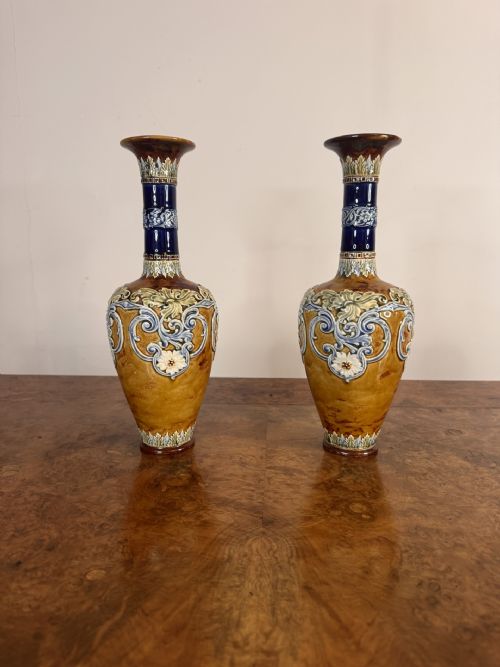
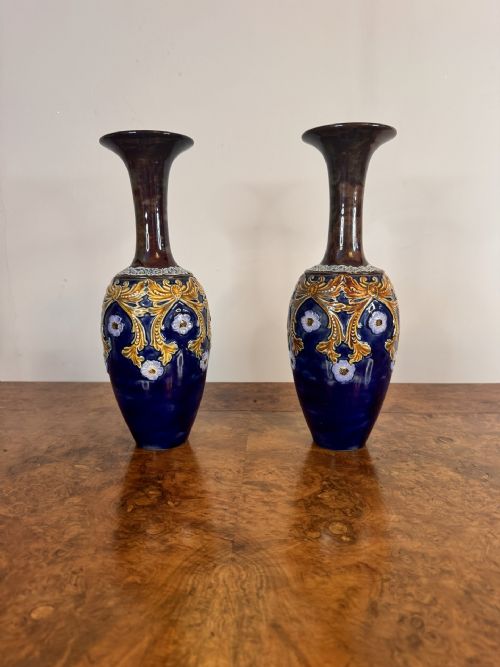
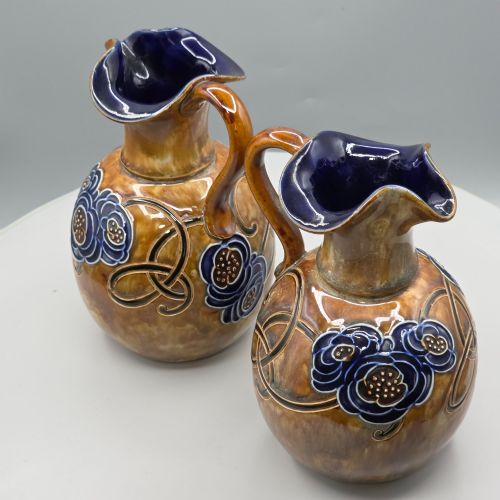
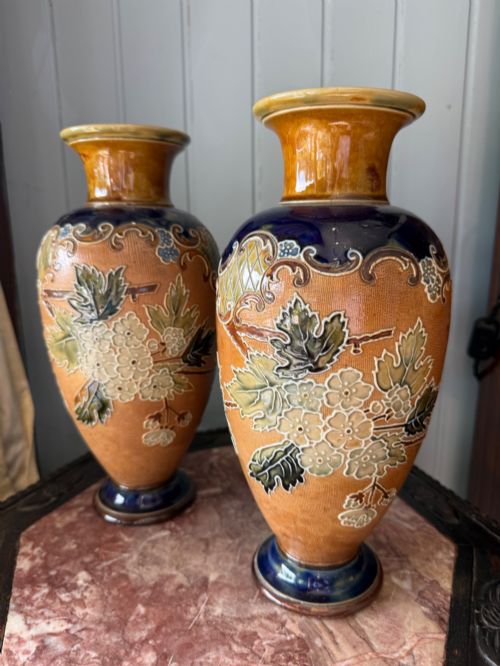


Doulton Lambeth Pottery Pair
These doulton lambeth pottery pair selections are matched groups of Victorian and Edwardian art pottery built for symmetry and shelf presence.
Doulton Lambeth Pottery Pair
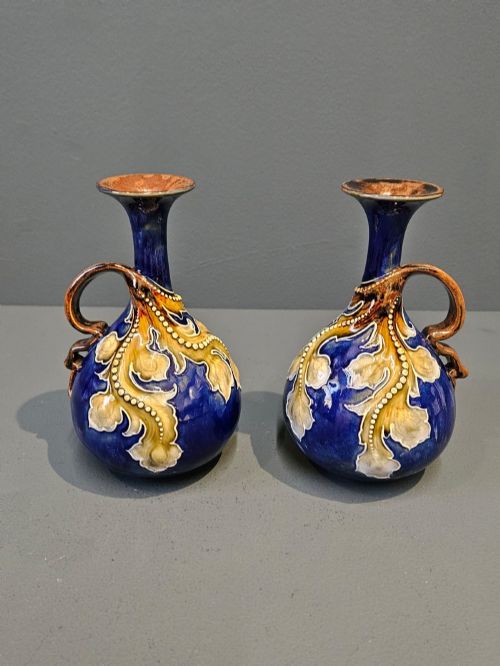
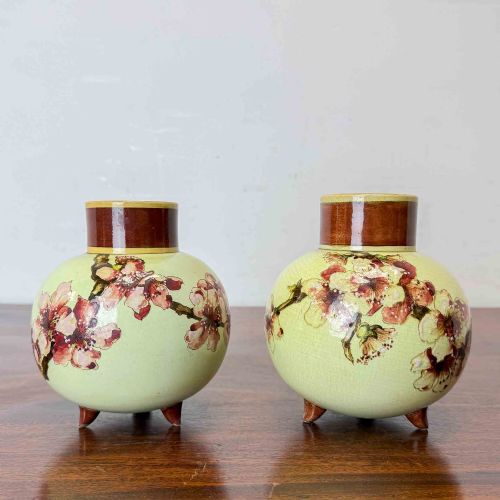
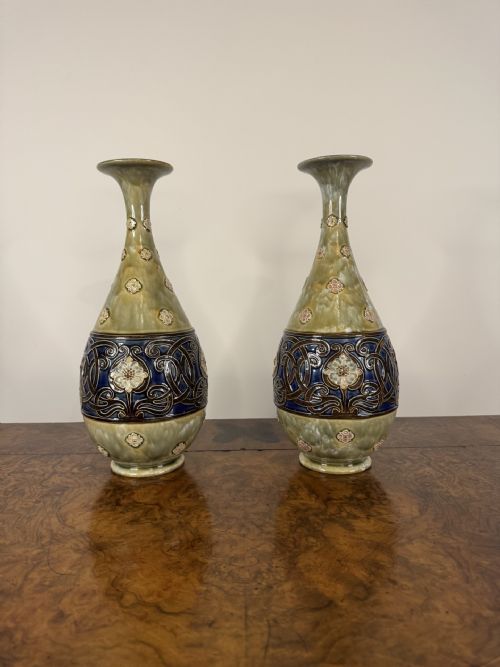
A doulton lambeth pottery pair brings together two matching vessels created during the late nineteenth and early twentieth centuries, spanning periods from the Victorian era through Art Nouveau and Arts and Crafts movements. Buyers seeking these items will find matching sets of vases, jugs, candlesticks, and loving cups designed to sit symmetrically on a mantelpiece or sideboard.
The most common formats on this page are matched pairs of stoneware and ceramic vases, often decorated with floral motifs, leaf patterns, or enamel details. These items originate from the notable Lambeth studios, capturing the shifting aesthetic tastes of the 1880s, 1900s, 1910s, and 1920s.
Pairs range from small cabinet vessels to large baluster shapes, reflecting the varied domestic uses intended by the studio and its makers. Each matched set demonstrates the workshop practice of producing balanced decorative objects for the home.
Materials and Manufacture
The pieces are primarily shaped from stoneware and earthenware, utilising durable ceramic bodies capable of holding detailed incised and relief decoration. Makers applied glazes and enamel floral decor directly to the clay surface before firing, creating rich textures and varied surface sheens.
Certain functional forms, such as harvest jugs, incorporate fitted silver rims onto the ceramic body, combining metalwork with traditional pottery techniques. The combination of stoneware potting, specialised glazes, and hand-painted or impasto decoration defines the physical makeup of these works.
Doulton Lambeth Pottery Pair Retail Price Guide 2026
Typical asking prices for doulton lambeth pottery pair among the pieces listed under this phrase on Sellingantiques today, from the lower quarter to the upper quarter. They describe what is for sale here now, not the wider market.
Listings feature pieces from the 1880s, 1900s, 1910s, and 1920s, employing stoneware, earthenware, and specialised glazes.
Assessing Quality
Quality in these pairs rests on the crispness of the incised patterns, the depth and control of the glaze, and the precision with which the two objects match in height and form. Superior examples display confident hand-applied decoration by named artists and well-balanced proportions across both items in the set.
The presence of specialised techniques, such as Slater's Patent texturing or intricate enamel floral work, distinguishes standard production items from more ambitious studio pieces. Consistency between the two companion pieces remains central to their status as a matched pair.
Louisa Wakely·Emily Edwards·Ethel Beard
The Doulton Lambeth Pottery Pair Glossary
- Stoneware
- A dense, hard ceramic fired at high temperatures until vitrified, making it impermeable to liquids without requiring a glaze. It forms the robust body for the majority of Lambeth studio vessels.
- Baluster
- A tall vase or vessel shape that swells toward the bottom and tapers near the top. This silhouette provides a stable base for detailed surface ornamentation.
- Faience
- Earthenware decorated with coloured glazes over an opaque white tin-glaze. This technique allowed for vibrant pictorial and botanical surface designs.
- Slater's Patent
- A decorative method utilising lace or textiles pressed into damp clay to create textured surfaces. It produced patterned backgrounds that were often accented with enamel colours.
- Loving Cup
- A large communal drinking vessel featuring two or three handles. These pieces were typically manufactured for special occasions or commemorative display.
Doulton Lambeth Pottery Pair: Frequently Asked Questions
How do I identify a true pair?
Examine the dimensions, glaze tones, and decorative motifs of both items side by side to ensure they were produced as companion pieces. True pairs share matching factory stamps and artist signatures where applicable.
Studio output often involved individual hand-finishing, so minor variations in height or pattern placement can occur while maintaining a unified aesthetic.
What periods do these pieces span?
The inventory covers late Victorian production through the Edwardian era, extending into the 1920s. Stylistic shifts move from traditional Victorian ornamentation toward Art Nouveau and Arts and Crafts designs.
Dates are generally indicated by impressed factory marks on the underside of the ceramic body.
Were these items meant for display or use?
Most surviving examples functioned primarily as decorative items for domestic interiors, such as mantelpieces or display cabinets. Jugs and loving cups also served ceremonial or commemorative functions.
The inclusion of delicate enamel work and fine silver rims suggests careful handling rather than heavy everyday service.
How should I clean glazed stoneware?
Dust the surface gently with a dry, soft cloth to remove everyday particles. Avoid harsh chemical cleaners or abrasive scouring pads that can damage surface glazes and enamel details.
Water washing should be kept minimal, particularly for pieces with applied metal rims or delicate painted elements.