


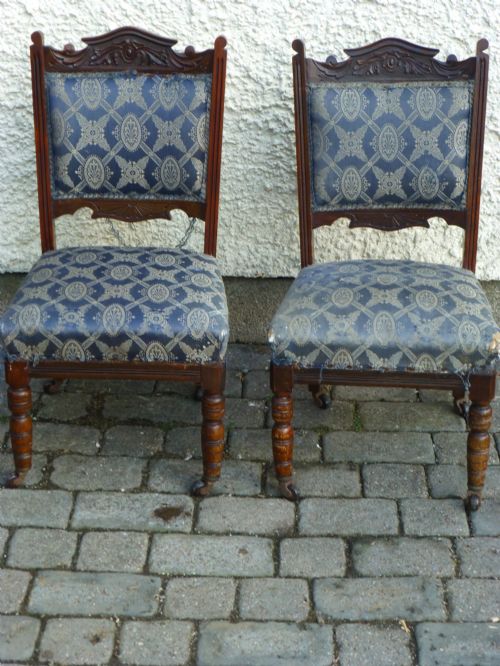
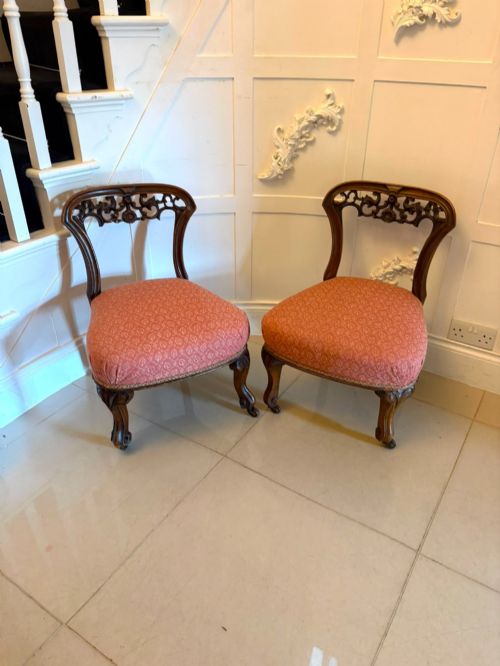
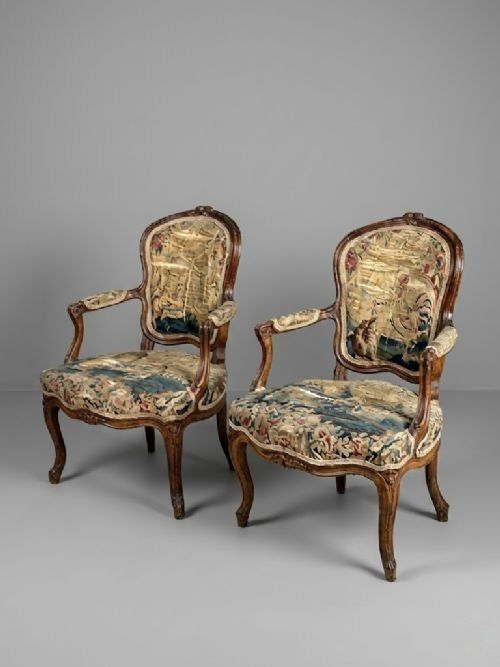
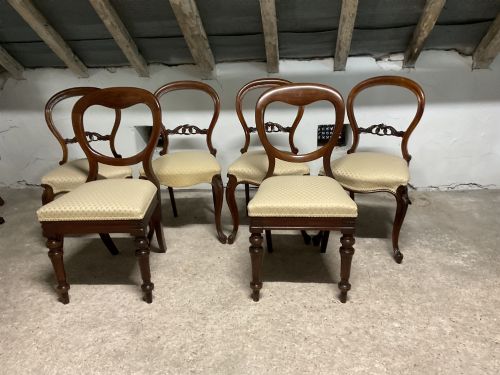
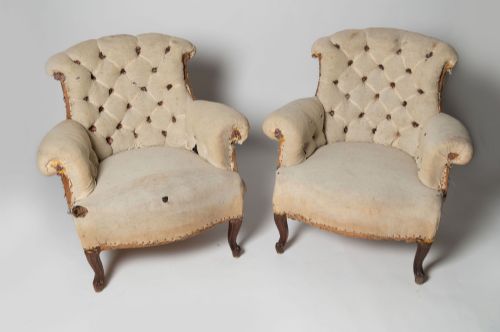
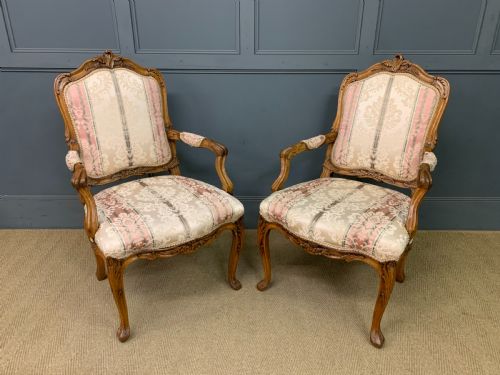
Pair Carved Walnut Chairs
Pair carved walnut chairs unite formal presence with rich timber grain, offering symmetry and enduring seating for traditional and revived interiors.
Pair Carved Walnut Chairs
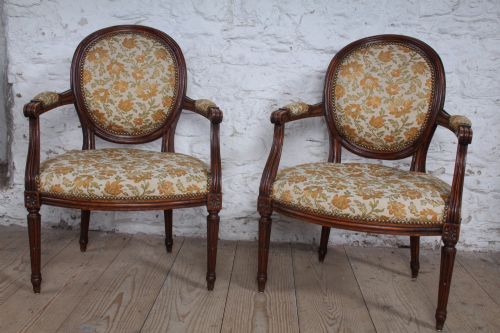
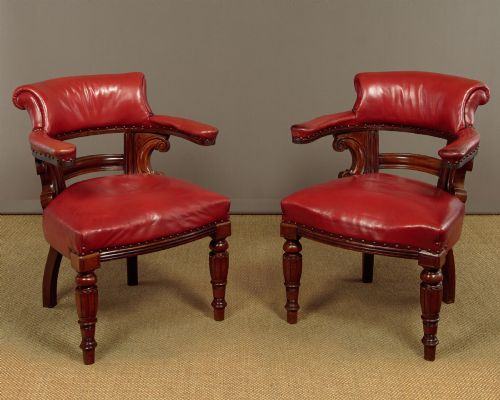
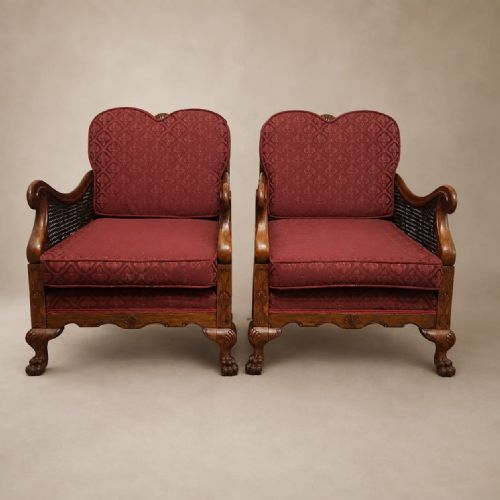
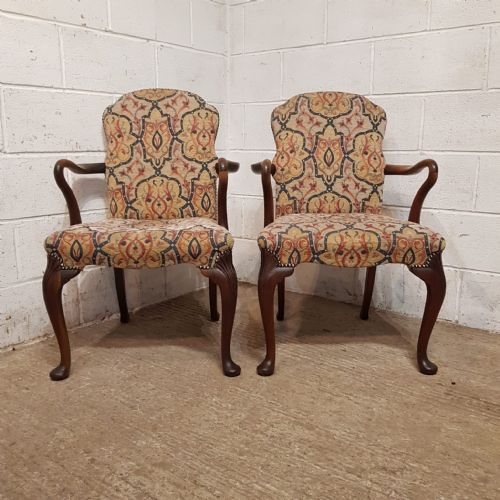
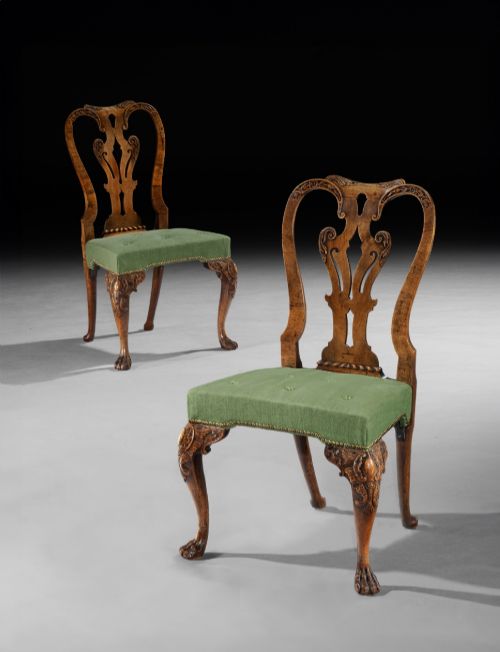
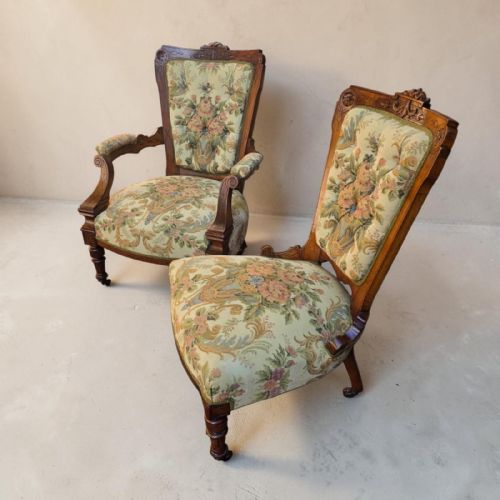
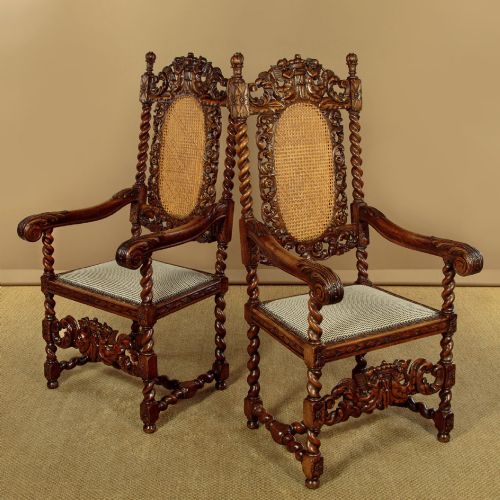
The assortment reflects diverse stylistic revivals, including Louis XV, Queen Anne, George II, and Renaissance Revival designs alongside simpler vernacular forms. Many examples integrate period upholstery fabrics, leather, needlepoint, cane, or silk to complement the dark timber frames.
How they were made
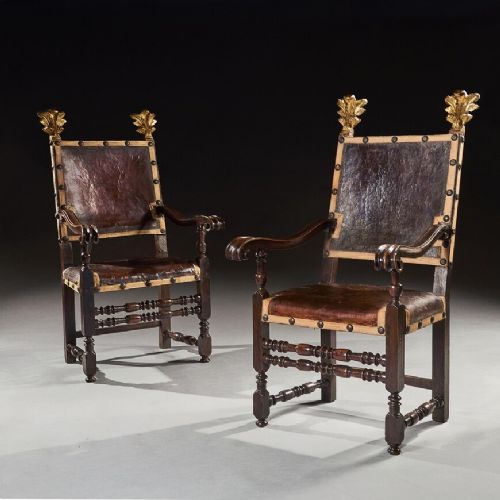
The foundational frames utilise solid walnut, chosen for its durability and rich, figured grain that responds well to deep hand-carving. Craftsmen shaped structural elements using traditional joinery before applying decorative surface details such as parcel-gilding.
Seating portions incorporate secondary materials including leather, brass tacks, split cane, and textile coverings such as velvet, damask, or needlepoint. Many historic frames support later re-upholstery to preserve the functional integrity of the seating.
Listings feature walnut frames paired with diverse textiles, including silk, damask, needlepoint, velvet, and leather.
What varies in quality
Quality in these seating items depends heavily on the depth and crispness of the carved ornamentation upon the walnut frame. Fine examples exhibit spirited, hand-chiseled botanical or scroll motifs rather than shallow or mechanical stamping.
The integrity of the structural timber and the retention of original surface patination distinguish superior specimens from altered or heavily restored pieces. Cohesiveness within the pair remains vital, ensuring matching timber tones, proportions, and corresponding joinery methods.
Charles Tozer
The Pair Carved Walnut Chairs Glossary
- Bergere
- An enclosed upholstered armchair featuring wooden framing around the sides and back, frequently fitted with cane panelling. This French form offers a deep, comfortable seat.
- Balloon back
- A rounded, oval-shaped chair back resembling a hot air balloon, popular during the Victorian era. This curved profile provides ergonomic support for dining and parlour seating.
- Parcel-gilt
- Partially gilded with thin gold leaf applied to specific raised carved details on a walnut surface. This technique highlights ornamental highlights against the dark timber.
- Needlepoint
- Stitched textile work executed on canvas using wool or silk yarn in various decorative patterns. Historic examples often retain original hand-worked needlepoint upholstery.
- Spoonback
- An upholstered chair back curved in three dimensions to echo the contour of a spoon. This nineteenth-century form cradles the sitter's spine.
- Side chair
- An upright chair without arms designed primarily for dining or occasional placement around a room. These lighter chairs move easily between spaces.
Pair Carved Walnut Chairs: Frequently Asked Questions
How do I date walnut chairs?
Dating relies on examining the timber construction methods, tool marks left on concealed surfaces, and stylistic cues characteristic of specific revivals like Queen Anne or Louis XV. Comparing the turning, joinery, and stretcher placement helps align the piece with documented manufacturing periods.
Changes in upholstery techniques and internal stuffings also offer clues to whether a piece originates from the seventeenth century, the Victorian era, or later twentieth-century revivals.
Are these chairs suitable for daily use?
Many solid walnut frames provide robust structural support suitable for everyday seating when the joints remain sound and tight. Evaluating the internal stability ensures the timber bears weight safely.
For antique examples with delicate carving or historic cane work, placing them in low-traffic areas or utilising them as occasional salon seating preserves their condition over time.
What is the difference between salon and dining chairs?
Salon chairs are typically lower, wider, and more decorative, designed for comfort and leisure in a reception room rather than formal dining. They often feature elaborate carving, exposed wood frames, and upholstered arms.
Dining chairs are taller and upright without arms, engineered to fit neatly beneath a table and withstand the active movement associated with meals.
How should I care for walnut and leather?
Maintaining walnut involves keeping the timber away from direct heat sources and sudden humidity shifts to prevent wood splitting or warping. Gentle dusting with a dry cloth preserves the natural sheen of the grain.
Leather elements benefit from occasional specialist conditioning to keep the hide supple and prevent cracking, while fabric portions require careful vacuuming using low suction.