



Pair Carved Putti
Pair carved putti bring lively classical character to an interior, rendered in timber and gilded surfaces by craftsmen across several centuries.
Pair Carved Putti
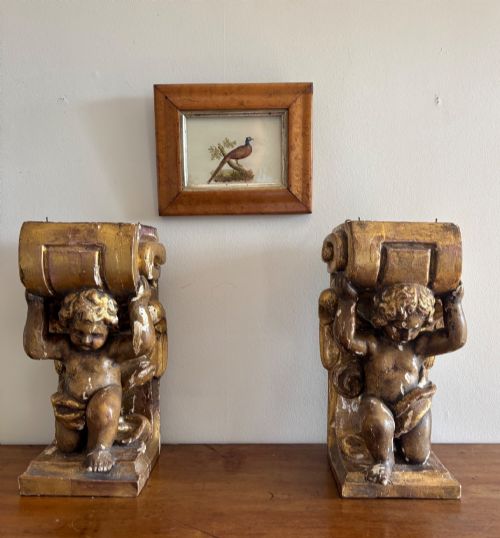
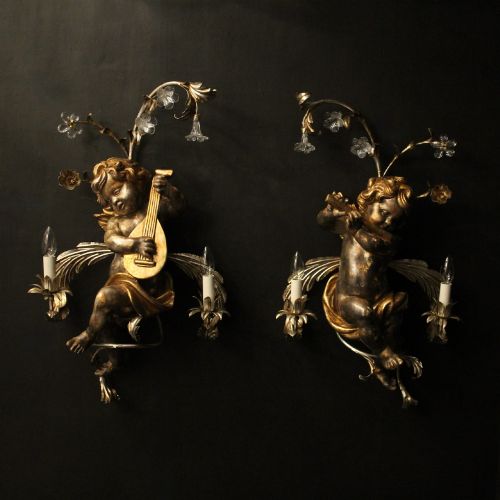
When you search for pair carved putti, you encounter sculptural figures taking the form of winged cherubs, angels, and playful mythological infants derived from continental church art and domestic decoration. These objects appear frequently as wall brackets, candelabra, wall lights, and architectural fragments originating from periods spanning the seventeenth century through to the Victorian era.
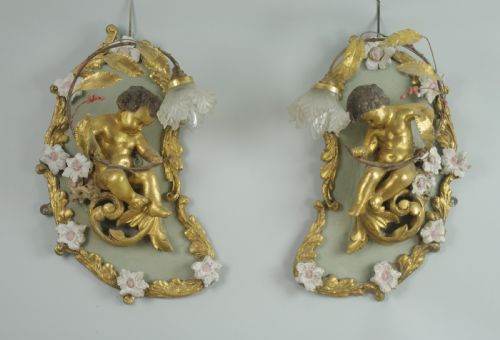
The items found here range from Italian Baroque church fragments and giltwood wall brackets to French Rococo lighting fixtures and carved oak figures. You are most likely to meet nineteenth-century giltwood or polychrome examples designed to support lights or mount directly onto walls as sculptural ornaments.
Sculptural forms dominate the selection, though variations include bookends, table lamps, and architectural panels incorporating cherub heads or full figures. Their geographic origins lean heavily toward Italian and French workshops working within Baroque, Rococo, and Neoclassical revival idioms.
Materials and construction methods
Makers shaped these pieces primarily from carved wood, utilising timbers such as limewood and oak to achieve complex anatomical detail and fluid drapery. Artisans then finished these wooden substrates with layers of gesso, gold leaf, and silver gilt to create reflective, opulent surfaces suited to grand interiors.
Listings feature works from the seventeenth, eighteenth, and nineteenth centuries, alongside items dated to nineteen-thirty.
Factors of quality and execution
The distinction between ordinary and exceptional examples rests on the vitality and depth of the carver's hand in rendering facial expressions and musculature. Finer pieces demonstrate precise undercutting and anatomical rhythm, whereas lesser items rely on rigid symmetry and heavy, uniform gesso coats that obscure the wood underneath.
The integrity of the original surface finish dictates much of the visual merit, distinguishing original gilding or polychrome from unsympathetic later overpainting. Pieces that retain their structural context, such as functioning wall brackets or integrated lighting arms, hold greater cohesion than altered fragments.
The Pair Carved Putti Glossary
- Putto
- A plump, naked male infant figure frequently found in classical and religious art, often depicted with wings. They represent secular derivatives of classical cupids and Christian angels.
- Giltwood
- Timber that has been coated with a thin layer of gold leaf or gold paint over a prepared gesso ground. This technique creates a luminous, reflective surface characteristic of Baroque and Rococo furnishings.
- Polychrome
- The practice of decorating architectural elements, sculptures, or woodwork in multiple colours. It provides lifelike skin tones and tinted drapery on carved wooden figures.
- Gesso
- A plaster mix applied to wood surfaces as a smooth base for gilding or paint. It allows craftsmen to crisp up fine details before applying gold leaf.
- Caryatid
- A sculpted female or cherubic figure serving as an architectural support taking the place of a column or pier. These figures carry the weight of a shelf, cornice, or wall bracket on their heads or shoulders.
Pair Carved Putti: Frequently Asked Questions
How do I identify seventeenth-century putti?
Seventeenth-century pieces typically display deep, vigorous carving in dense timbers like limewood, showing distinct tool marks beneath the surface layers. The anatomical proportions often reflect a more robust, naturalistic sculptural style compared to later revival periods.
Surface patination on older items reveals age through craquelure in the gesso and natural oxidation of underlying metals or wood. Examining the back of wall brackets and panels often uncovers primitive joinery and mounting fixings consistent with early workshop practices.
Are these figures religious or secular?
The origins span both categories, as putti emerged from classical mythology before being adopted extensively into Christian ecclesiastical art. Many earlier examples functioned as church fragments, altarpiece components, or architectural supports in monastic and cathedral settings.
By the nineteenth century, revival movements brought these motifs firmly into domestic interior design for purely decorative purposes. Lighting fixtures and wall brackets from later periods repurposed sacred iconography to suit opulent drawing rooms and libraries.
How should I clean carved giltwood?
Dusting requires a very soft, dry brush to prevent abrasive particles from scratching the delicate gold leaf or gesso ground. Avoid all liquid cleaners, moisture, and chemical solvents, which easily dissolve water-gilding and antique finishes.
Professional conservation is necessary if flaking or structural instability occurs within the wood or surface layers. Maintaining a stable indoor humidity prevents timber from expanding and causing the gesso to crack.