
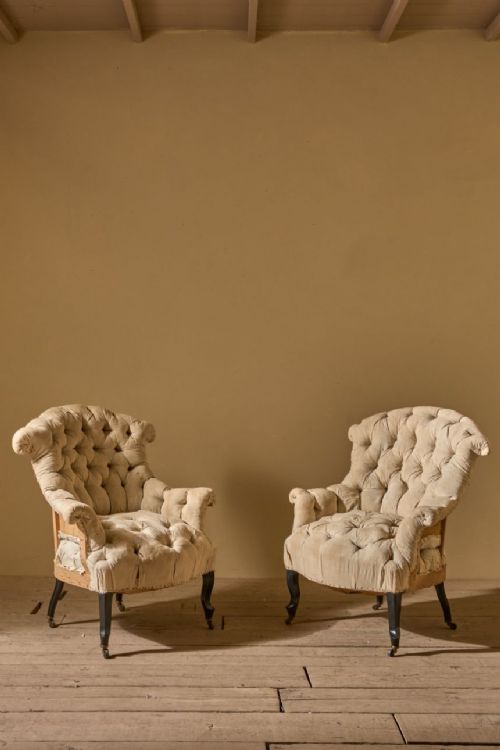
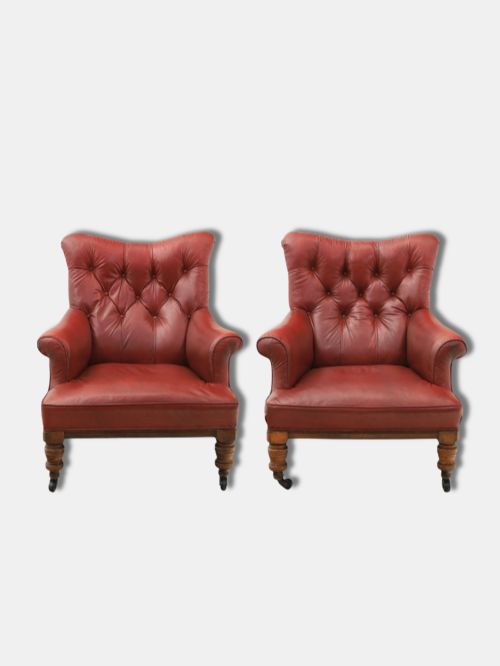
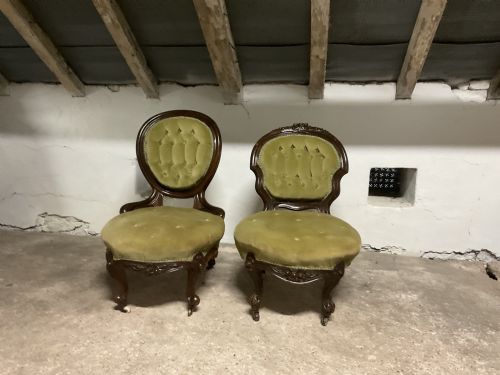
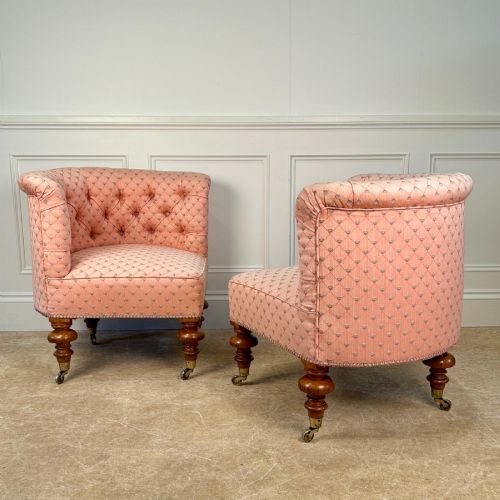
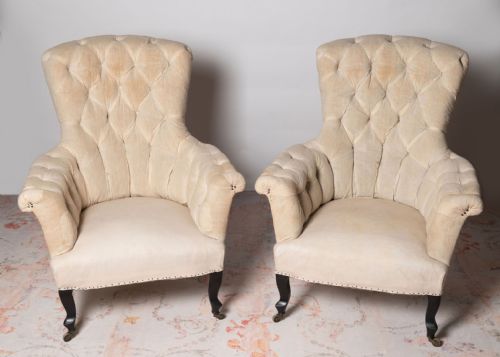
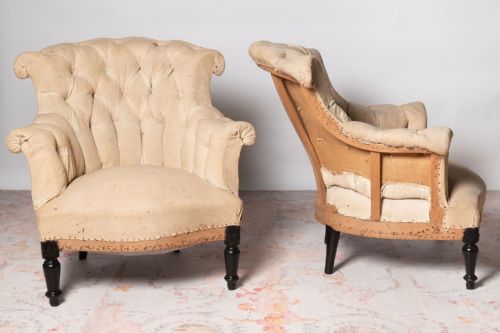
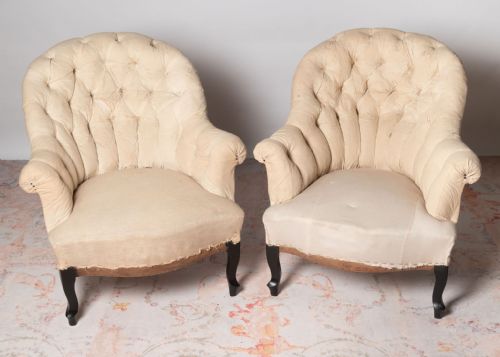
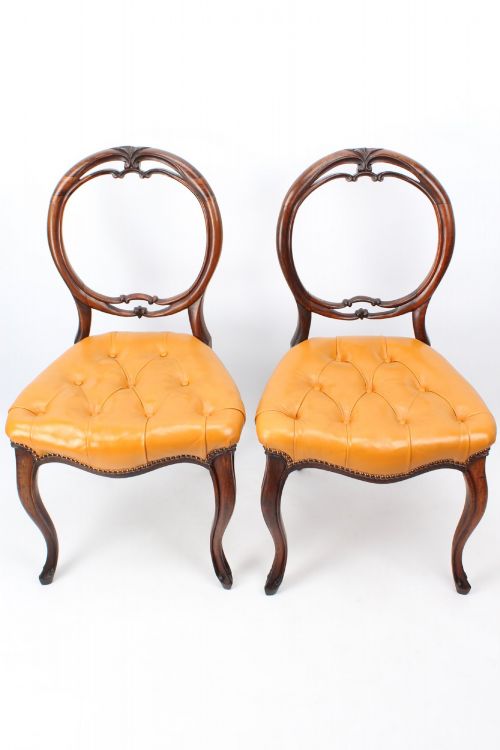
Pair Button Back Chairs
These pair button back chairs combine deep upholstery with traditional buttoning to create matched seating for any room.
Pair Button Back Chairs
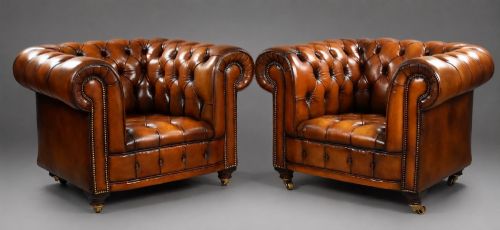
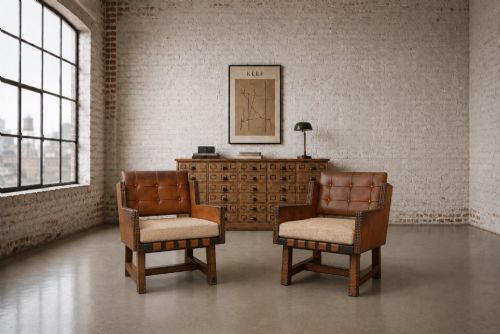
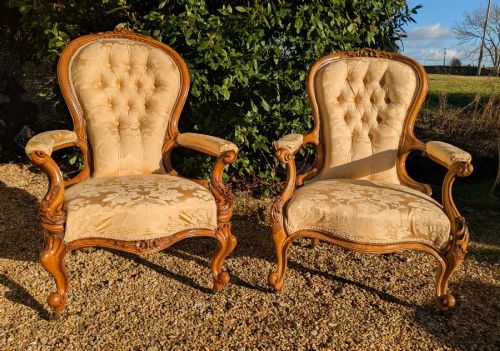
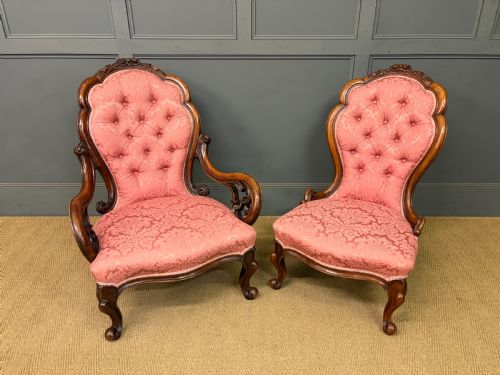
Originating largely from English and French workshops, these items serve functional and decorative roles in domestic interiors. Buyers frequently find matching pairs upholstered in leather, velvet, rexine, or traditional fabric.
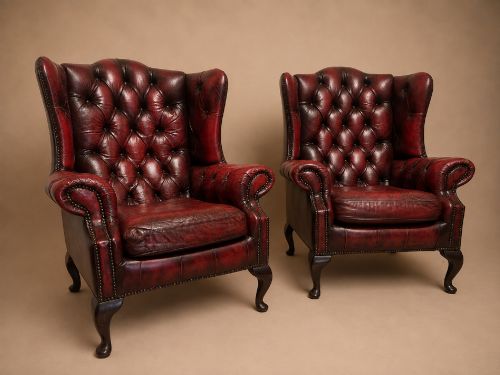
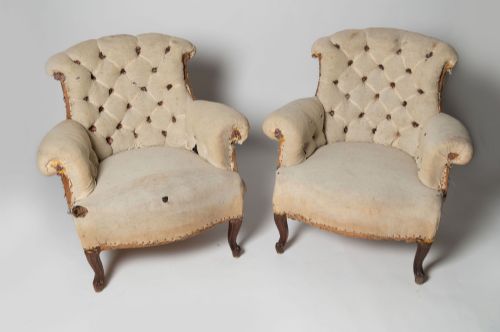
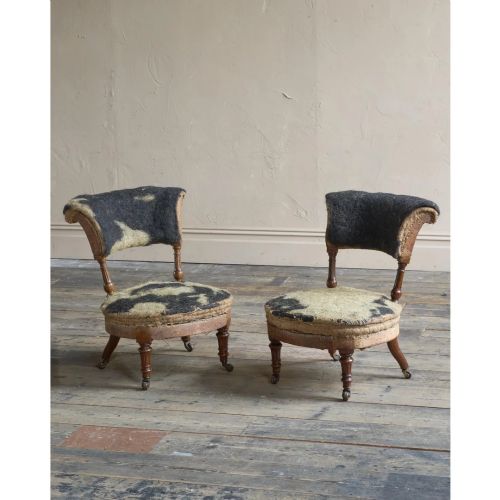
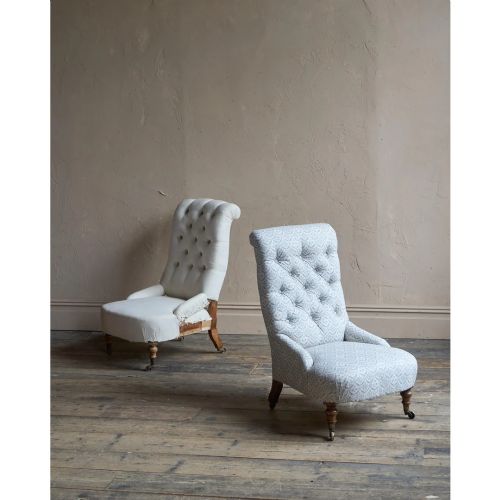
The configurations vary from low bedroom seats to high-backed library chairs and deep-seated club chairs. Each piece relies on the characteristic tufted upholstery technique to define its profile and comfort.
Materials and construction
Makers constructed the frames using durable timbers such as mahogany, walnut, rosewood, oak, and general hardwood or timber. These structural woods often received elaborate carving, gilding, or brass inlay depending on the stylistic period.
Upholstery formed the core of the manufacturing process, employing materials like leather, velvet, fabric, and rexine pulled tight over internal stuffing. Deep buttoning secured the textiles firmly to the padding, creating symmetrical indentations across the backrests and seats.
Listings demonstrate that nineteenth-century French and Victorian periods dominate the available supply of button-backed seating.
Assessing quality
The caliber of a matched pair rests upon the integrity of the timber frame and the precision of the upholstery work. Superior examples exhibit evenly spaced, deep tufting that maintains tension across the entire backrest without sagging.
Makers known for exceptional craftsmanship, such as Howard and Sons or Gillows, utilised finer woods and robust internal webbing that survived decades of use. The harmony between the two matched chairs, including consistent wood grain and uniform fading, dictates the overall standing of the set.
Howard and Sons·Holland and Sons·Gillows
The Pair Button Back Chairs Glossary
- Button-back
- An upholstery style where buttons are sewn deeply through the padding to create a quilted, patterned indent effect. This technique secures the internal filling and provides structured lumbar support.
- Spoonback
- A chair back shaped distinctly like an oval spoon, curving inward to cradle the sitter. This profile is frequently seen on Victorian walnut parlour and nursing seats.
- Fauteuil
- An open-armed French armchair with upholstered back and arm pads over an exposed wooden frame. These chairs typically date from the nineteenth century and showcase ornate carvings.
- Rexine
- A leathercloth material made from cotton fabric coated with nitrocellulose, often utilised on mid-century or 1920s club and Chesterfield chairs. It offered a durable, wipe-clean alternative to genuine hide.
- Barley twist
- A wooden furniture leg or support carved into a spiral resembling a twisted rope. This decorative turning appears frequently on nineteenth-century British seating.
Pair Button Back Chairs: Frequently Asked Questions
How are pair button back chairs cleaned?
Leather and rexine surfaces require gentle wiping with a damp cloth and occasional treatment with appropriate conditioning creams to prevent cracking.
Fabric and velvet upholstery benefit from regular light vacuuming with a soft brush attachment to lift dust from the button indentations.
Where should I place these chairs?
Low nursing chairs and slipper chairs suit bedrooms or dressing rooms due to their compact height and comfortable, deep-seated proportions.
Larger library armchairs and Chesterfield models anchor living spaces, studies, or drawing rooms when arranged opposite a fireplace.
How do I spot Victorian pieces?
Victorian examples frequently utilise dark woods like walnut, rosewood, and mahogany paired with heavy ceramic castors or intricate wood carvings.
Look for traditional construction methods such as hand-tied springs and sturdy horsehair stuffing visible beneath the upholstery.
What defines Napoleon III style?
Napoleon III pieces originate from the French Second Empire and often feature gilt frames, curved lines, and plush velvet or buttoned silk upholstery.
These salon and boudoir chairs prioritise decorative elegance, frequently incorporating matching footstools or elaborate exposed woodwork.