
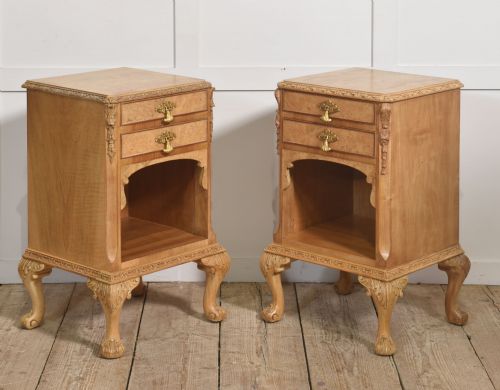
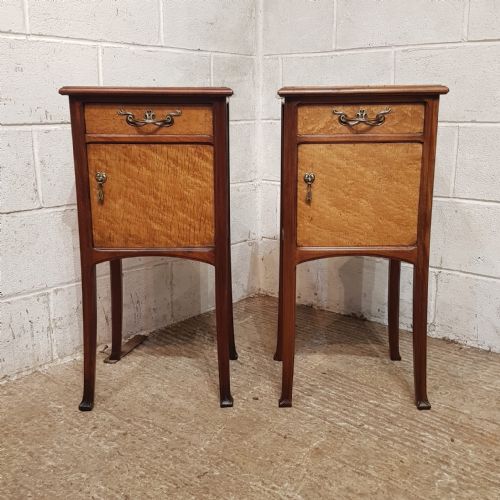
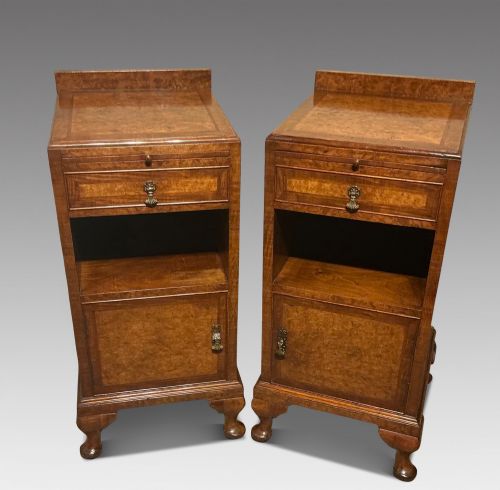
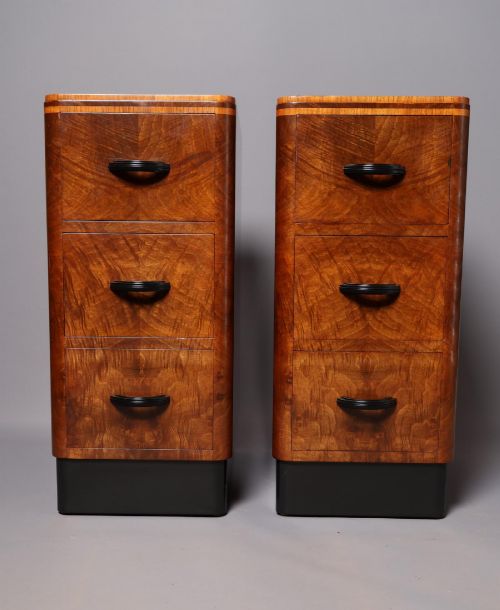


Pair Burr Walnut Nightstands
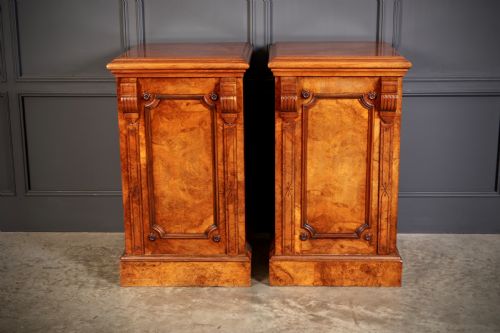
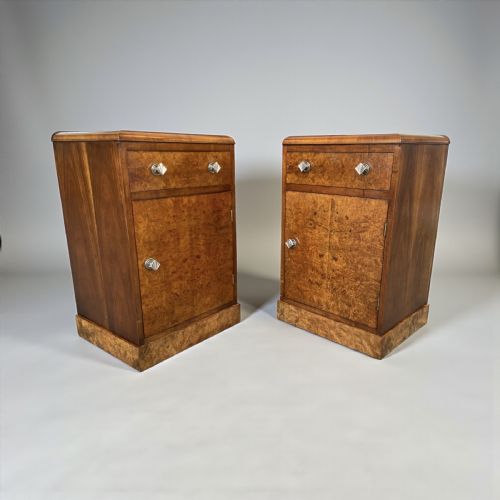
When you search for pair burr walnut nightstands, you are looking at matched bedside pieces defined by striking timber figures.
Pair Burr Walnut Nightstands
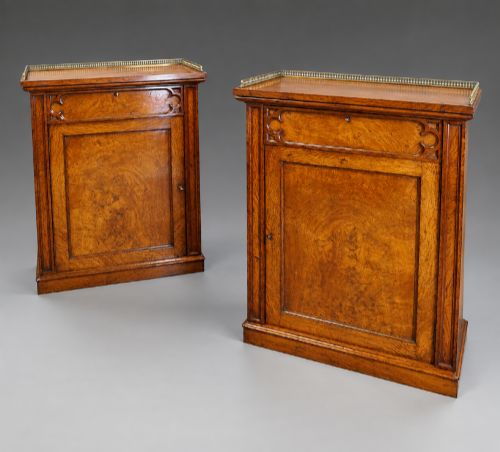
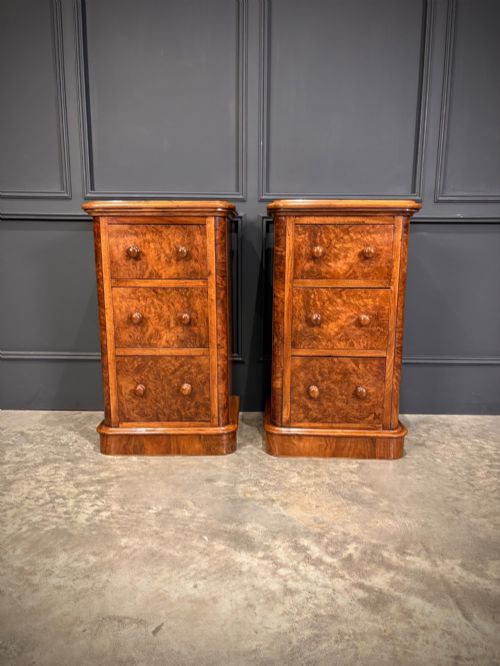
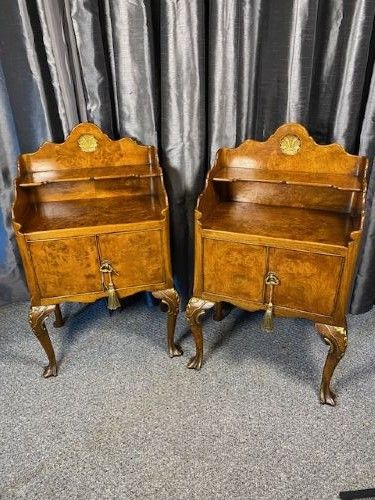
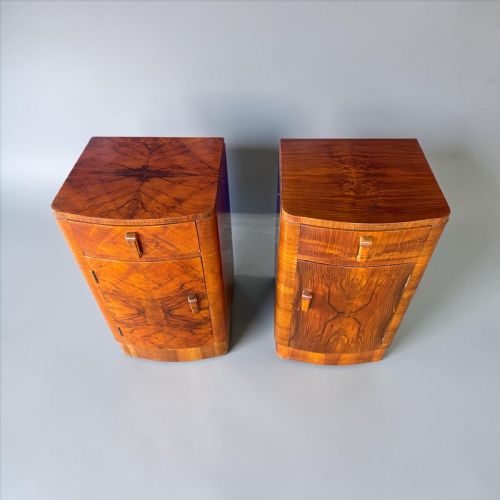
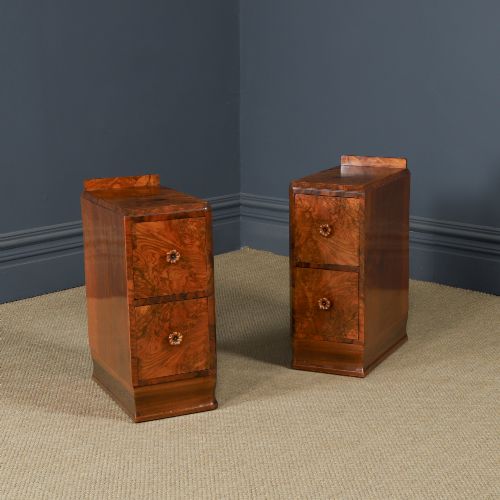
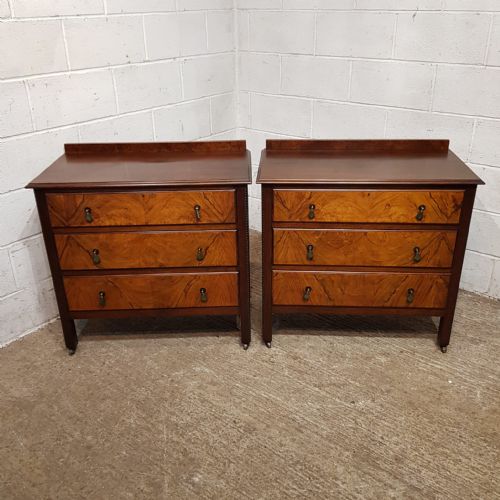
Pair burr walnut nightstands bring matched bedside storage and display surfaces into a bedroom, appearing in forms from pedestal cupboards to small chests of drawers. Buyers searching this phrase encounter matching sets designed to sit symmetrically on either side of a bed.
The selection spans periods from the Victorian era through the Art Deco movement, incorporating revival styles like Queen Anne and Georgian alongside Italian Rococo and French designs. Common formats include bedside tables, pedestal cabinets, and low chests with two or three drawers.
Makers and workshops from England, France, and Italy produced these matched pieces using timber and wood veneer over solid carcases of pine or other secondary woods. Surviving examples demonstrate how bedside furniture evolved from utilitarian pot cupboards into decorative focal points.
How they were made
Cabinet makers utilised burr walnut veneer applied over solid timber carcases, such as pine, to achieve rich, swirling grain patterns across the exterior surfaces. This technique required skill in cutting thin slices from walnut burls and arranging them symmetrically to create mirrored patterns on matched doors and drawer fronts.
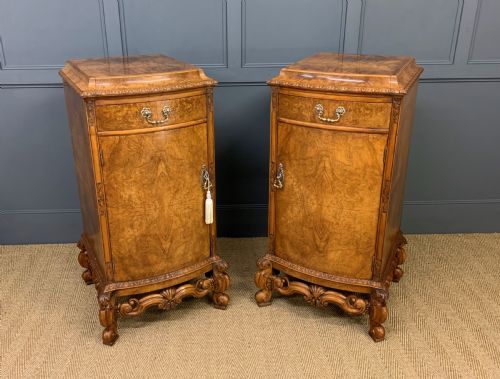
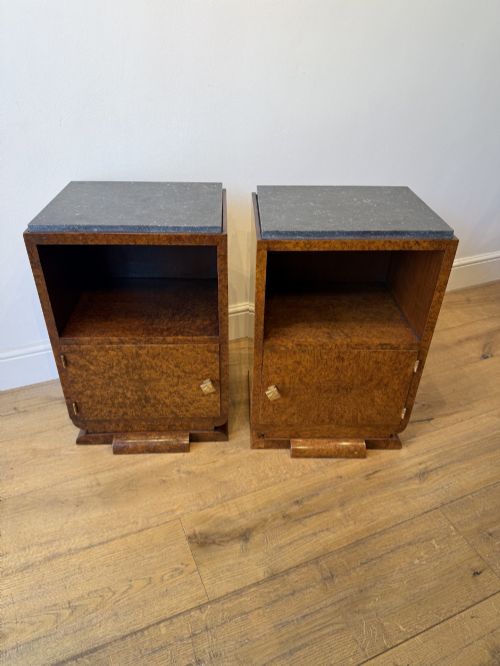
Construction methods combined traditional joinery with applied mouldings, brass hardware, and occasionally marble tops on continental pieces. French and Italian examples often incorporated serpentine fronts or bombe shapes, while Art Deco items relied on clean geometric lines that allowed the natural wood figure to dominate.
Listings feature periods spanning from the Victorian era through the 1940s, with Art Deco designs heavily represented alongside nineteenth-century pieces.
What varies in quality
The visual impact of a pair burr walnut nightstands depends heavily on the selection and matching of the veneer figures across both cabinets. Superior examples display balanced, highly figured swirling grain patterns that mirror each other precisely between the left and right pieces.
Construction depth and proportion also separate standard production from superior craftsmanship, visible in the weight of the timber, the integration of brass fittings, and the smoothness of drawer operation. Matching consistency between the pair remains vital, as minor discrepancies in colour or scale disrupt the symmetry expected from such furniture.
Maurice Adams
The Pair Burr Walnut Nightstands Glossary
- Burr walnut
- A veneer sliced from the woody growths or burls on walnut trees, prized for its complex, swirling grain patterns. It provides the distinctive decorative surface seen on high-end Victorian and Art Deco bedside cabinets.
- Pedestal cupboard
- A tall, single-door bedside cabinet offering enclosed vertical storage. These pieces elevate the bedside surface while concealing interior shelves or compartments.
- Bombe
- A swelling, outward-curved furniture shape associated with continental European cabinet making. This flowing profile appears on select Italian nightstands.
- Serpentine
- A front edge shaped with a central convex curve flanked by concave sections, or vice versa. This contour adds dynamic movement to chest and cabinet designs.
- Pot cupboard
- A traditional nineteenth-century term for a bedside cabinet originally designed to house a chamber pot. Many surviving nightstands retain this compact, enclosed format.
Pair Burr Walnut Nightstands: Frequently Asked Questions
Were these always made as pairs?
Most examples were constructed as matched sets from the workshop, intended to flank a bed symmetrically. Artisans selected and cut veneers from the same log to ensure the grain patterns mirrored each other across both pieces.
Matching pairs hold greater utility and decorative harmony in a bedroom setting than assembled singles. Checking the internal construction helps confirm that both cabinets share identical period origins and build characteristics.
How do I tell Art Deco from Victorian pieces?
Victorian examples lean towards heavier proportions, rich carved details, and occasionally marble tops or raised panel doors. They reflect nineteenth-century revival styles and traditional cabinet-making traditions.
Art Deco items adopt streamlined silhouettes, geometric symmetry, and unadorned surfaces that showcase the burr walnut veneer itself. The lack of historic revival ornament defines this later twentieth-century aesthetic.
What is the difference between a nightstand and a pedestal cupboard?
A nightstand typically offers an open shelf or a combination of a small drawer and a compact surface suited for a lamp. They prioritise easy reach from the mattress.
Pedestal cupboards provide enclosed vertical storage behind a single tall door, often rising higher than standard bedside tables. They suit rooms requiring more concealed storage capacity.