



Art Deco Walnut Drawers
Art deco walnut drawers bring striking grain patterns and geometric forms into modern interiors through authentic twentieth-century bedroom pieces.
Art Deco Walnut Drawers
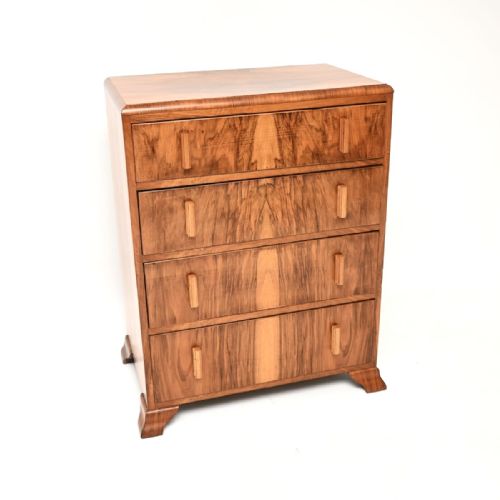
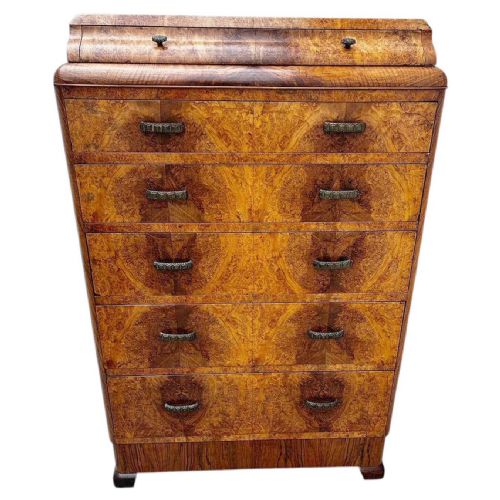
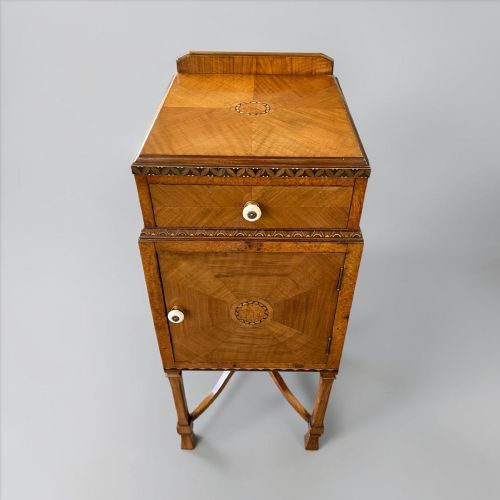
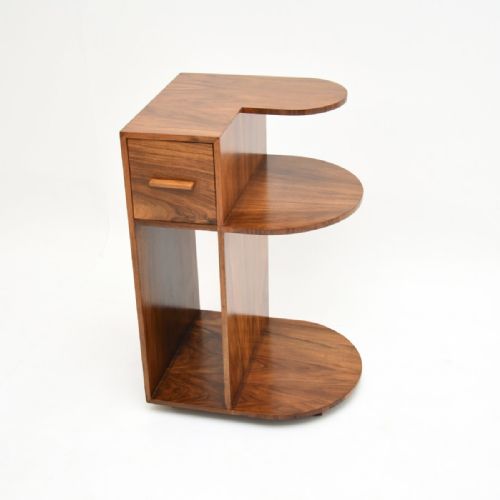
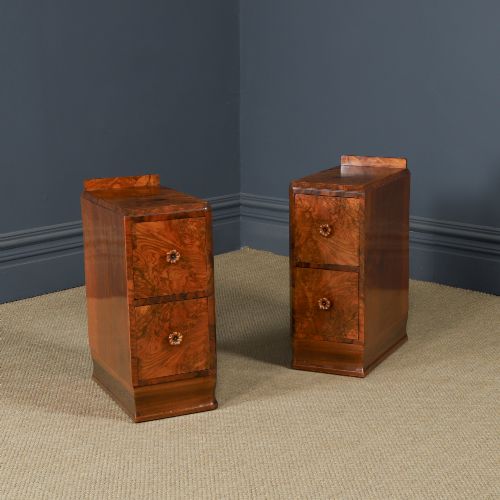
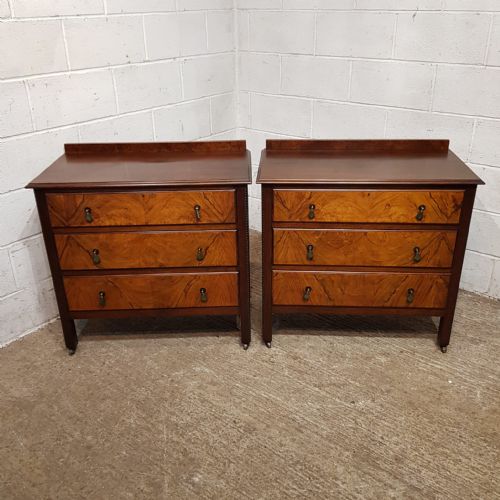
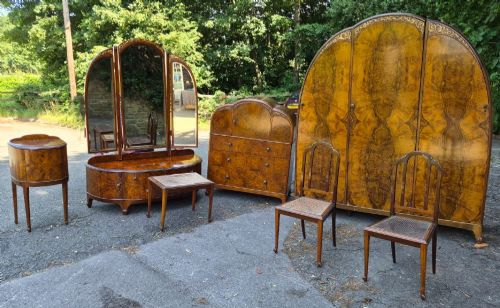
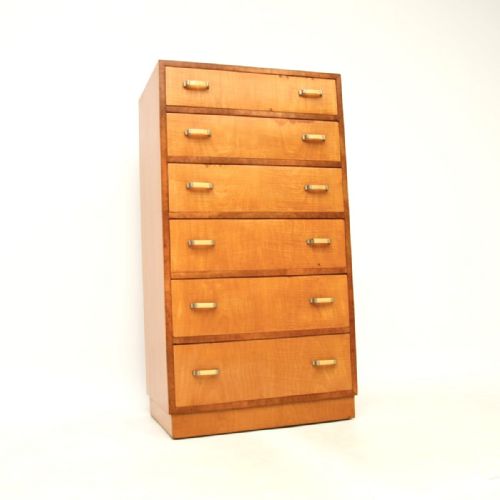
Art deco walnut drawers span horizontal chests, vertical tallboys, compact bedside cabinets, and matching bedroom suites produced primarily during the interwar decades. The search phrase covers both modest nightstands and large tall chests designed for domestic storage.
Most examples originate from the 1930s, though pieces surface from the 1920s and 1940s alongside occasional early French commodes. English workshops and French makers dominate the inventory, frequently pairing the primary timber with contrasting wood types.
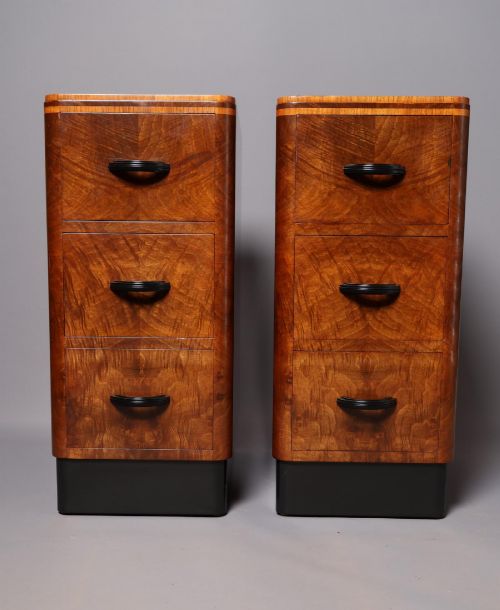
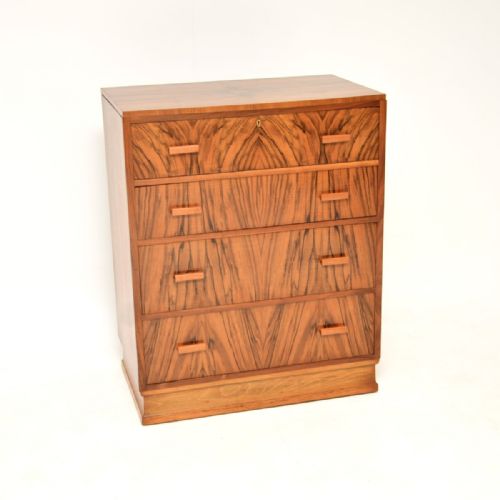
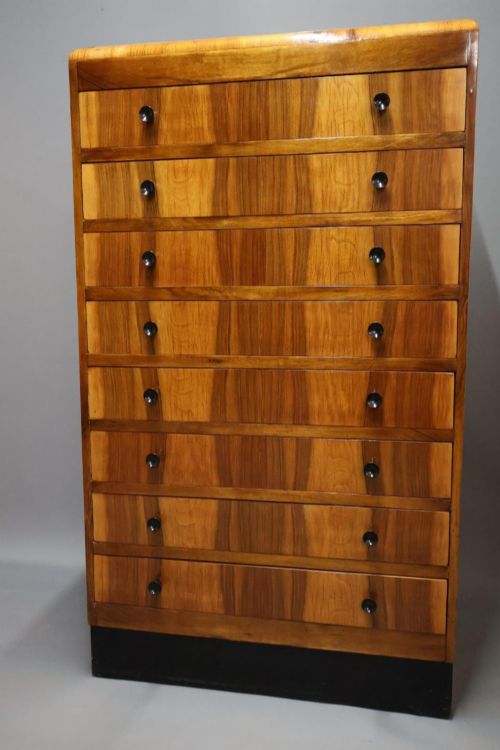
Chest of drawers and tallboy forms predominate, often accompanied by pairs of bedside tables or small lamp tables. Buyers encounter straightforward drawer banks as well as fitted compartments within compactum units and desks.
Materials and Construction
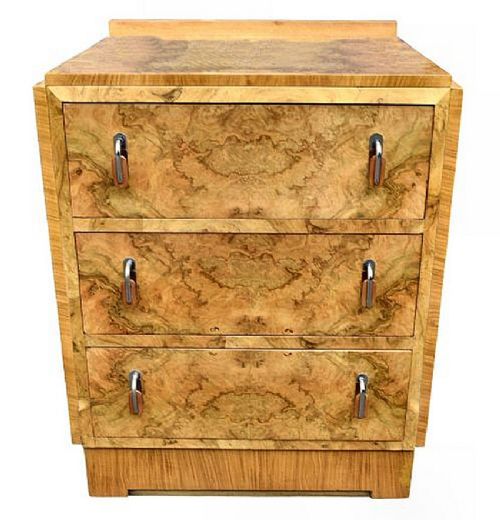
Makers applied figured walnut and burr walnut veneers over solid carcases to display dramatic, swirling grain patterns across drawer fronts and top panels. Satinwood, sycamore, and burr elm frequently appear as secondary contrasting timbers or banding details.
Hardware incorporates brass, chrome, metal, and moulded bakelite for handles, escutcheons, and structural trims. These metal and plastic elements define the period aesthetic alongside bleached blonde walnut and standard dark polished finishes.
Listings feature walnut, burr walnut, satinwood, sycamore, and burr elm alongside metal, brass, chrome, and bakelite.
Quality Factors
The choice of surface veneer largely dictates the visual impact, with highly figured burr walnut and book-matched patterns commanding attention above plain timber surfaces. Wood selection extends to secondary contrasting woods like satinwood or sycamore used for interior details or stringing.
Maker attribution elevates certain pieces, with documented works from established firms and designers carrying distinct construction standards. Structural proportions, integrated hardware materials like chrome and bakelite, and the execution of curved or stepped silhouettes separate standard production from superior examples.
Frank Taylor & Co.·Maurice Adams·Betty Joel·Bowman Brothers·Heal's·Waring and Gillow
The Art Deco Walnut Drawers Glossary
- Burr Walnut
- Timber harvested from the warted growths on walnut trees, yielding intricate, swirling grain patterns highly prized for veneer work. Cabinetmakers sliced these burls into thin leaves to cover large drawer fronts.
- Tallboy
- A tall chest of drawers standing higher than a standard chest, often combining drawer banks with a cupboard section. This vertical form maximises storage space while maintaining a compact floor footprint.
- Compactum
- A large multi-compartment wardrobe or storage unit combining drawers, hanging space, and shelving within a single piece of bedroom furniture. These units represent comprehensive storage solutions from the period.
- Book-matching
- A veneer technique where adjacent slices of wood grain are opened like the pages of a book to create symmetrical mirror-image patterns. This method highlights the natural movement in walnut surfaces.
Art Deco Walnut Drawers: Frequently Asked Questions
How do I clean walnut veneer?
Dust surfaces regularly with a soft, dry cloth to prevent particulate buildup on the delicate wood grain. Avoid chemical sprays and excessive moisture which can damage the historic polish.
Apply a quality beeswax periodically to nourish the timber and maintain a soft sheen. Buff gently along the direction of the grain rather than using circular motions.
Where should I place a tallboy?
Position tall pieces against sturdy walls in bedrooms or hallways where vertical storage is required without occupying excessive floor space. Ensure the location maintains stable humidity away from direct heat sources.
Keep these cabinets out of direct sunlight to prevent uneven fading of the walnut veneer and contrasting timber inlays. Adequate clearance allows drawer fronts and cabinet doors to open fully.
How do I date a chest?
Examine construction methods, hardware materials, and secondary timbers to establish the likely production era. Pieces from the 1920s and 1930s often display characteristic geometric silhouettes and specific veneer choices.
Compare drawer linings and handle styles against documented examples from known period makers. Bakelite and chrome elements strongly indicate interwar manufacture.
Can I mix these with modern furniture?
Pair these pieces with minimalist contemporary furnishings to let the dramatic wood grains become a focal point in the room. The clean geometric lines of the period blend naturally with modern interiors.
Balance dark walnut tones with lighter surrounding decor to maintain an open feel in smaller spaces. Metal accents in the hardware connect easily with modern brass or steel accessories.