





Georgian Revival Chest of Drawers
A georgian revival chest of drawers brings eighteenth-century proportion into a twentieth-century room, offering structured storage built with traditional cabinet-making skills.
Georgian Revival Chest of Drawers
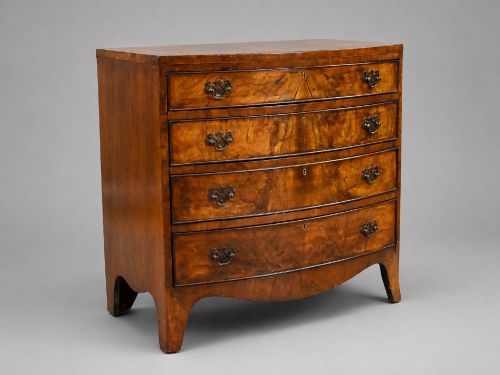
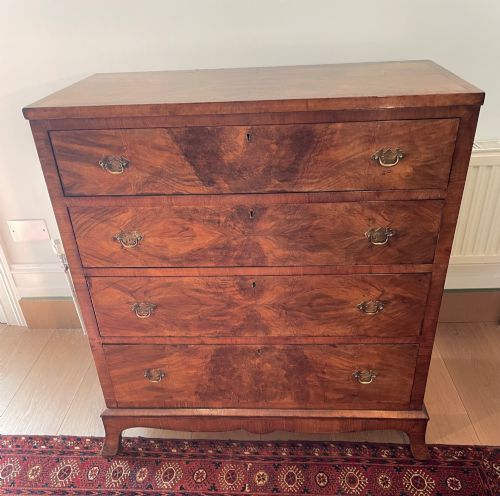
A georgian revival chest of drawers is a storage piece produced largely between the late nineteenth century and the interwar years, styled after earlier Georgian forms. These chests replicate the balanced proportions and classical details of eighteenth-century originals while serving contemporary domestic needs.
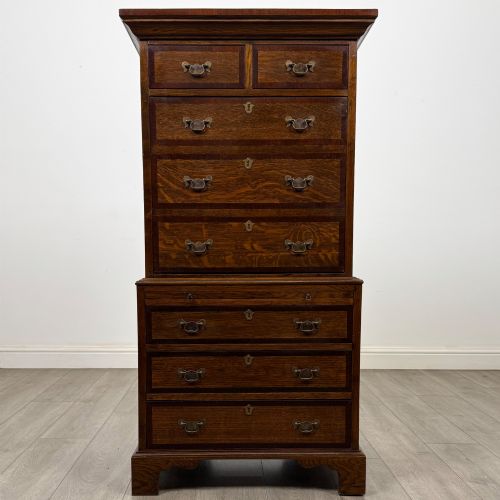
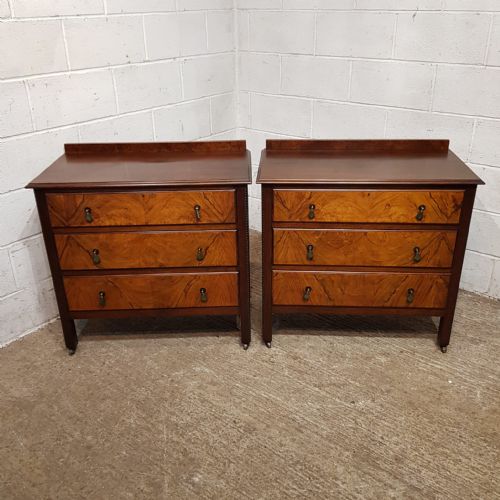
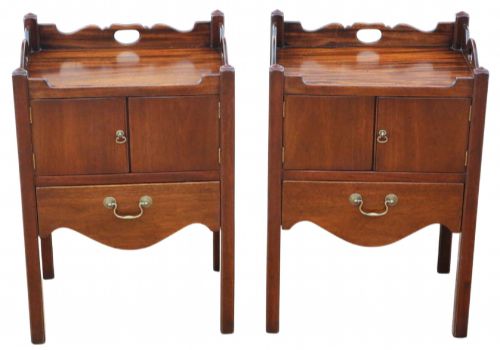
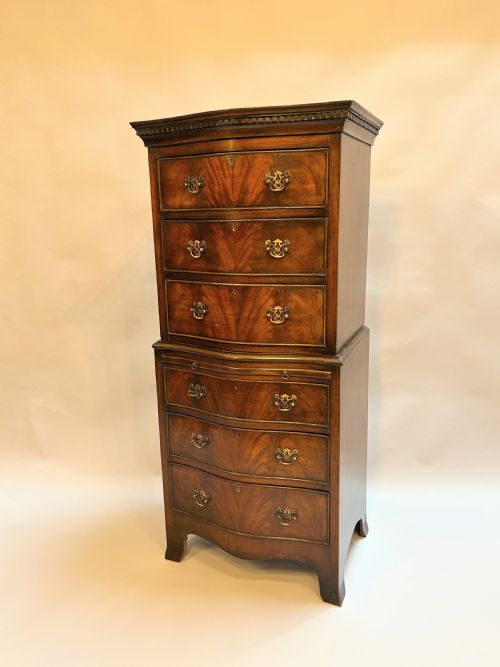
The pieces appearing most often in this category are compact chests, tallboys, and bedside tables. Makers produced these in varied scales, from narrow bedside cabinets to larger five-height storage units.
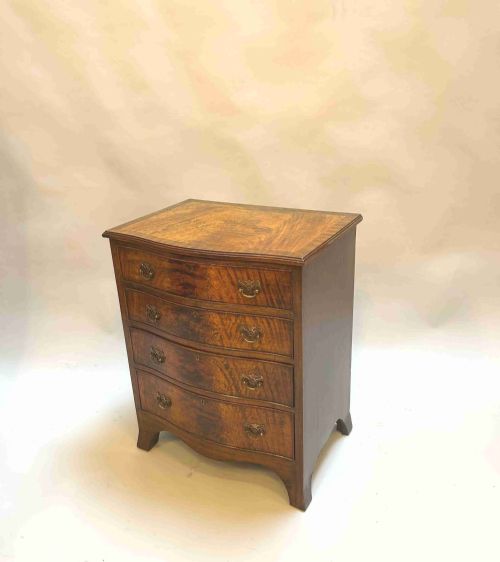
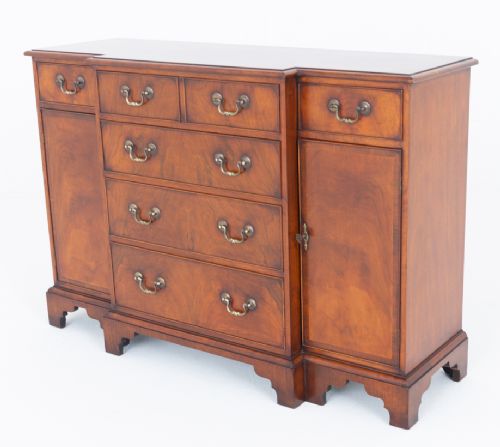
Forms span straight-fronted models, bow fronts, and serpentine shapes. Surviving examples often incorporate revival variations including Chippendale, Queen Anne, and Sheraton styles.
Materials and construction
Construction relies heavily on solid timber frameworks paired with decorative veneers. Mahogany and walnut serve as the primary woods, often selected for figured grains, flame patterns, and burr walnut surfaces.
Secondary elements include brass handles, key escutcheons, and occasional glass components. Carved details and shaped bracket feet define the structural silhouette.
Differentiating the range
Quality rests upon the selection of timber veneers and the precision of the cabinet work. Pieces featuring book-matched burr walnut or figured flame mahogany demonstrate superior material choice by the maker.
Construction details such as dovetailed drawer linings and well-executed brushing slides elevate certain pieces above standard commercial production.
Edwards and Roberts·Whytock and Reid
The Georgian Revival Chest of Drawers Glossary
- Tallboy
- A tall storage unit comprising a chest of drawers stacked upon another, or built as a single tall cabinet. It maximises vertical storage space in bedrooms.
- Serpentine
- A front contour characterised by a convex central section flanked by concave curves. This shaping requires skilled woodworking to achieve.
- Bachelors chest
- A compact chest of drawers featuring a pull-out brushing slide above the primary drawers. It originated as a multifunctional writing and storage surface.
- Caddy top
- A moulded tabletop design with raised or stepped edges resembling the lid of a tea caddy. It appears frequently on twentieth-century revival furniture.
- Block front
- A cabinet front divided vertically into three sections, with the outer sections projecting forward and the central section recessed. This creates a bold three-dimensional facade.
Georgian Revival Chest of Drawers: Frequently Asked Questions
How do I date a georgian revival chest?
Dating relies on timber characteristics, construction methods, and secondary woods visible within the drawers. Revival pieces typically date from 1890 to 1930 rather than the eighteenth century.
Hardware styles and finishing techniques provide further clues to the exact decade of manufacture.
What is a bachelors chest used for?
A bachelors chest provides compact bedside or dressing room storage with an integrated pull-out shelf. The sliding board served as a writing surface or a temporary place to lay garments.
These pieces suit smaller modern bedrooms where floor space is limited.
Are walnut and mahogany the only woods?
Mahogany and walnut dominate these listings, but oak and pine also appear in structural elements or secondary pieces. Burr walnut and flame mahogany provide decorative surface veneers.
Makers selected these woods to emulate the luxurious finishes of original Georgian furniture.
How do I care for burr walnut veneer?
Burr walnut requires stable indoor humidity and protection from direct sunlight to prevent veneer drying or fading. Regular dusting with a soft, dry cloth preserves the polished surface.
Avoid placing damp items or heavy heat sources directly on the wood.