

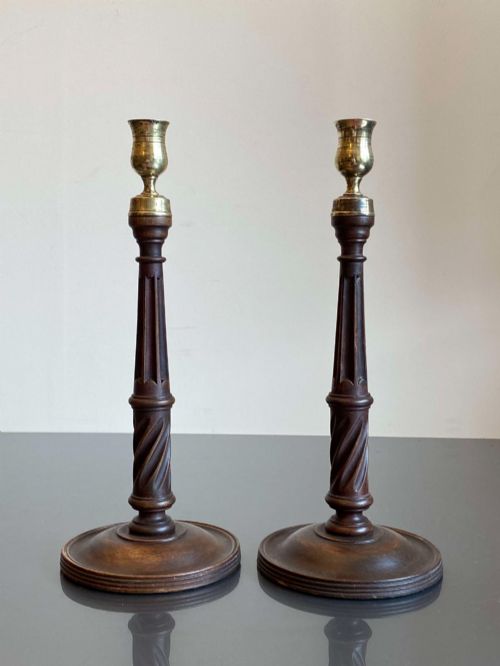
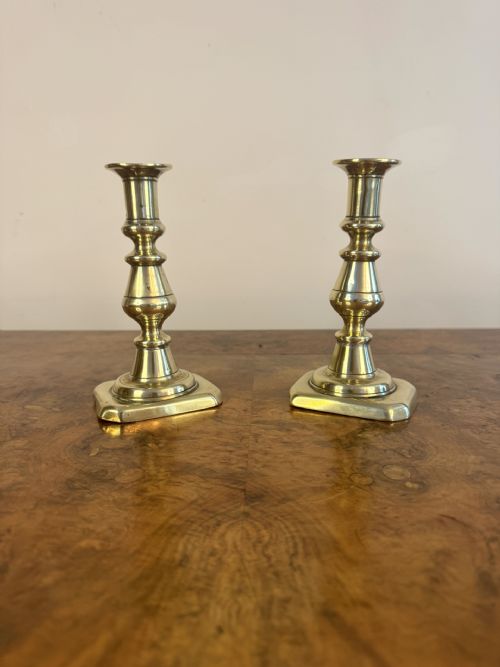
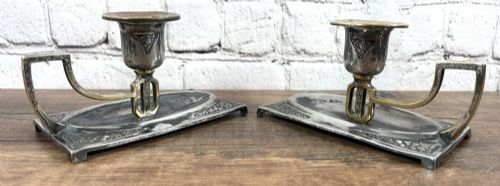
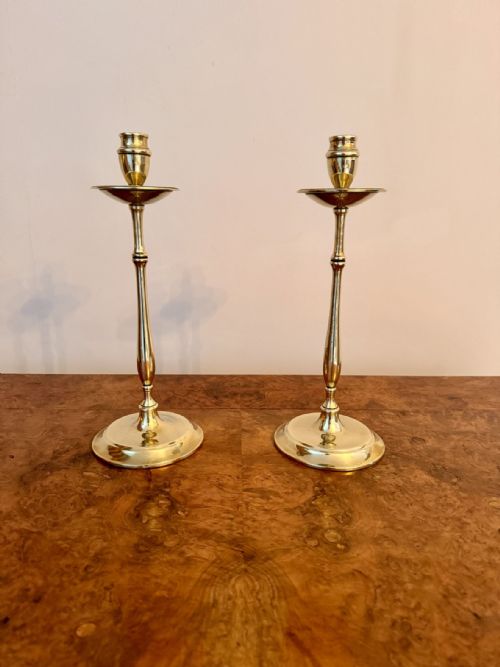
Pair Brass Tapered Holders
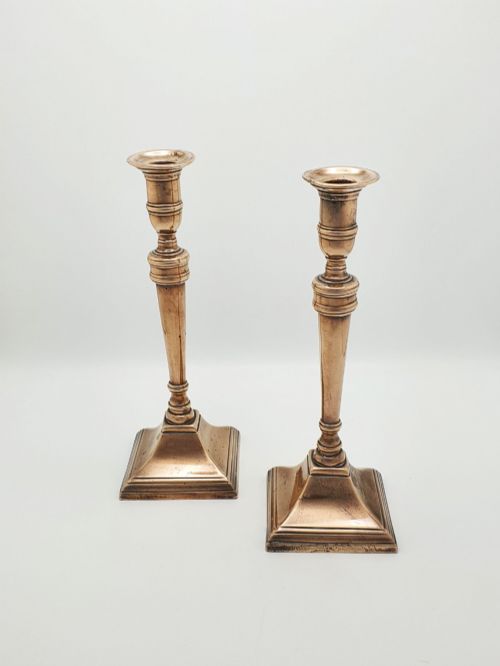
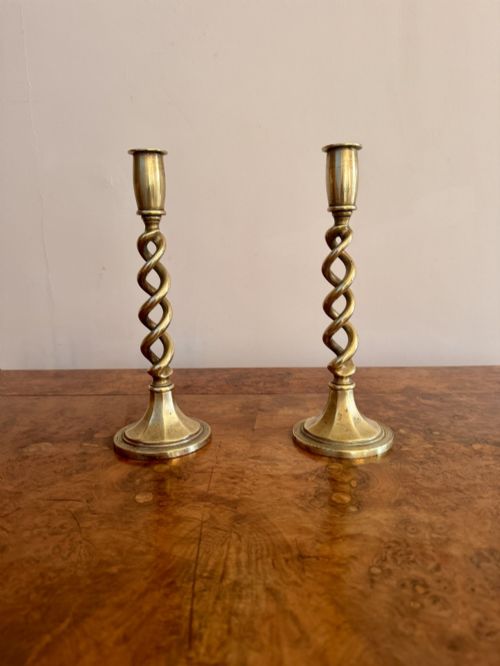
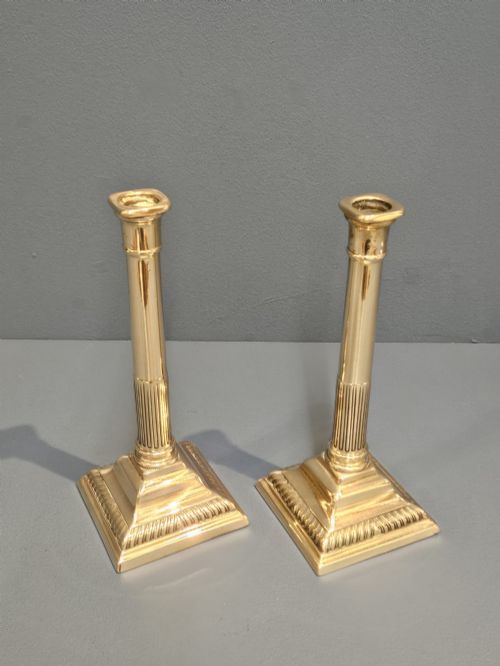
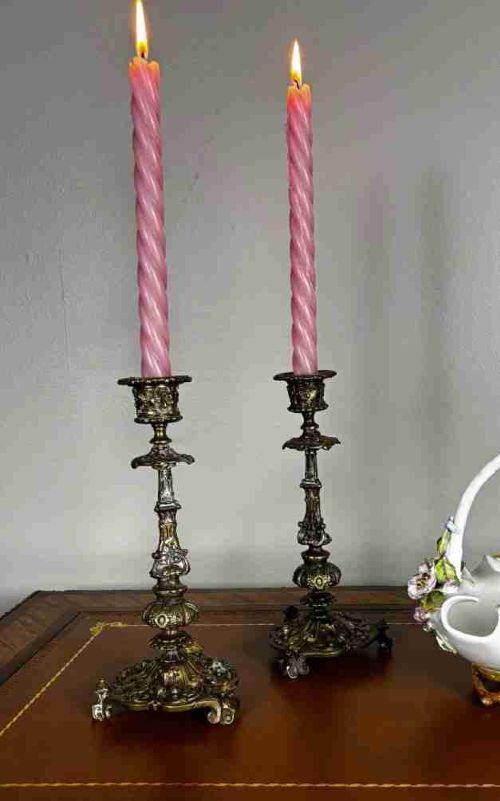
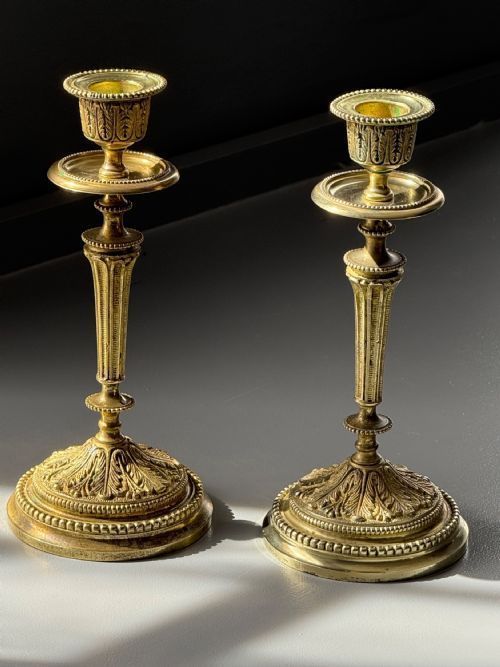
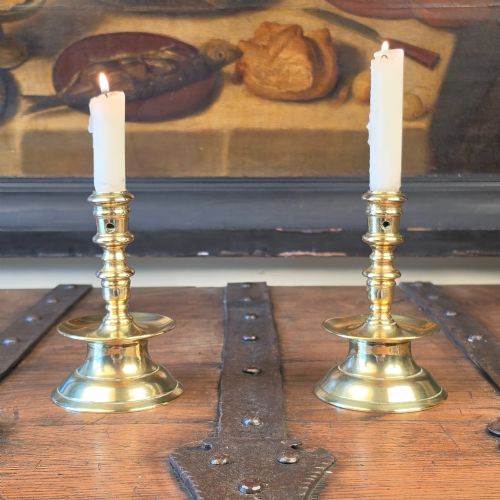
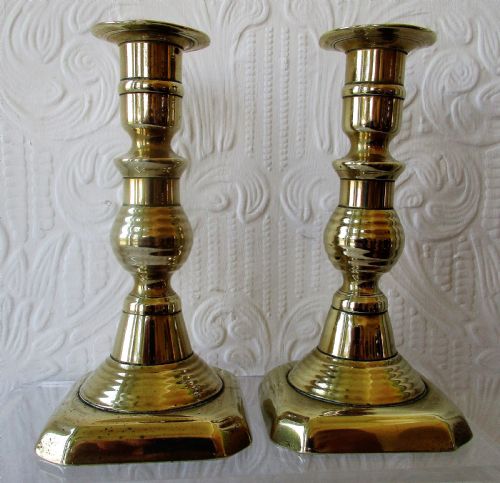
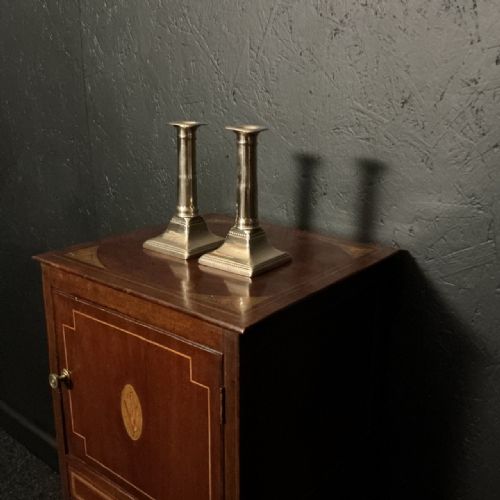
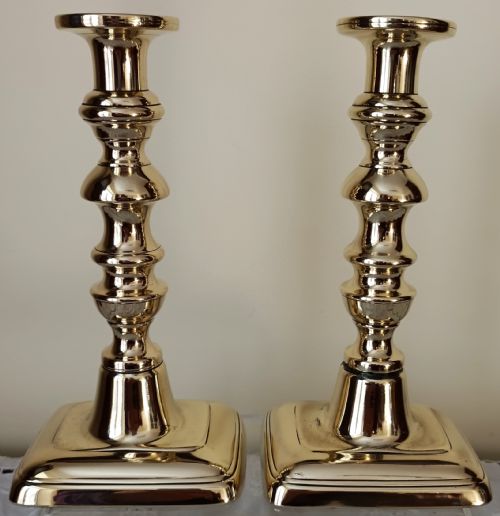
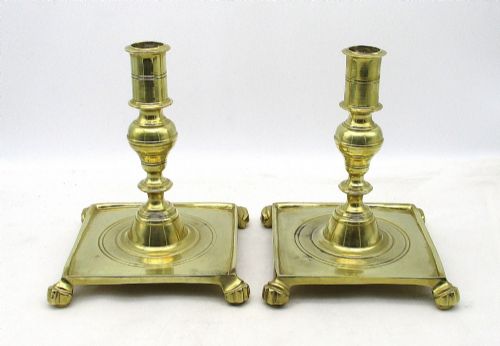
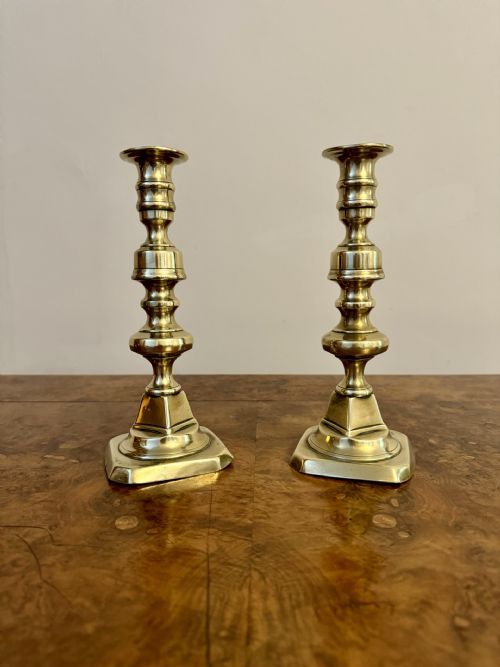
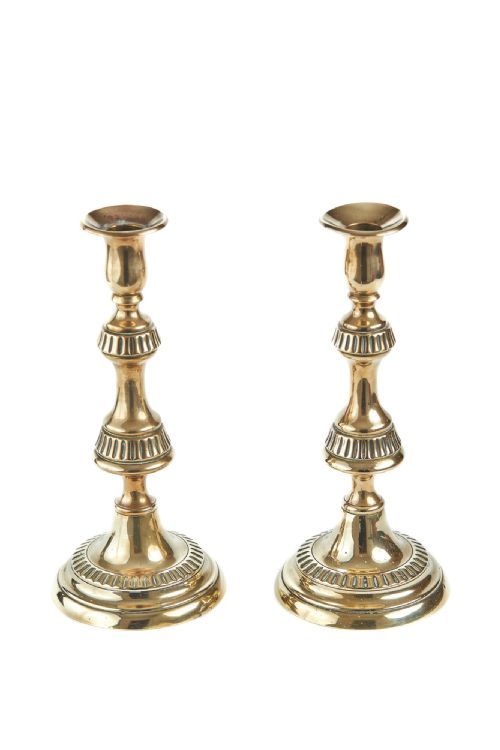
These pair brass tapered holders are lighting fixtures designed for narrow candles, offering period illumination and a balanced silhouette for a mantelpiece.
Pair Brass Tapered Holders
When you examine pair brass tapered holders, you are looking at domestic lighting accessories designed to secure wax tapers and candles securely. The examples gathered here span several centuries, including Georgian, Victorian, and Edwardian periods.
Makers and designers from the eighteenth, nineteenth, and early twentieth centuries produced these objects using robust metalworking traditions. You will encounter Georgian neoclassical forms alongside Victorian Gothic Revival and Arts and Crafts interpretations.
How they were made
Makers utilised brass casting and seaming techniques to form the hollow stems and stable bases of these holders. Molten metal poured into moulds created the foundational components, which were subsequently turned on lathes and finished by hand.
Secondary materials such as mahogany, oak, and porcelain appear in combination with metal elements on specific examples. Gilt bronze and ormolu surface treatments provide alternative finishes on French Louis-style pieces.
Pair Brass Tapered Holders Retail Price Guide 2026
Typical asking prices for pair brass tapered holders among the pieces listed under this phrase on Sellingantiques today, from the lower quarter to the upper quarter. They describe what is for sale here now, not the wider market.
The listings here demonstrate brass, gunmetal, and gilt bronze as the primary metallic materials across the 18th, 19th, and early 20th centuries.
What varies in quality
The distinction between standard production and superior examples rests in the crispness of the cast ornamentation and the weight of the metal. Heavier castings indicate a substantial gauge of brass utilised by the foundry.
Artisanal finishing separates ordinary objects from finer pieces, evident in the precision of the turned joints and the subtlety of the proportions. Clean lines on tapered shafts and well-balanced bases demonstrate superior workshop practice.
J.T. & Co·J. Miller·Frederick J Smith & Co·WMF
The Pair Brass Tapered Holders Glossary
- Ejector candlestick
- A domestic holder containing an internal mechanism or push-rod to lift the remaining candle stub from the socket. This device helped clean out hardened wax efficiently.
- Taper
- A slender candle or wax-coated wick utilised primarily for lighting fires, sealing letters, or fitting into specialised holders. These thin lights required narrower sockets than standard household candles.
- Ormolu
- Finely ground high-carat gold applied to a bronze base through a mercury amalgamation process. This French decorative technique creates a brilliant golden surface finish.
- Petal base
- A candlestick foot shaped to resemble overlapping flower petals, frequently seen on eighteenth-century examples. This scalloped form provides a wide stance for stability.
- Gunmetal
- An alloy of copper, tin, and zinc originally utilised for ordnance and subsequently adapted for decorative metalwork. It yields a dark, durable surface distinct from bright yellow brass.
Pair Brass Tapered Holders: Frequently Asked Questions
What are pair brass tapered holders used for?
These items held wax tapers and candles to illuminate domestic interiors before electric lighting became common. Today they serve decorative roles on dining tables and mantels.
Pairs were manufactured to sit symmetrically on either side of a mirror, clock, or fireplace hearth. Their tapered columns direct the eye upward toward the flame.
How do I date an old brass candlestick?
Dating relies on observing base construction, casting seams, and stylistic details associated with periods like the Georgian or Victorian eras. Earlier pieces often feature multi-part cast construction with heavy weighted bases.
Markings, punch stamps, or maker attributions carved into the metal also help narrow the chronology. Comparing the form against documented design shifts provides further context.
Are these holders made of solid brass?
The listings show items formed from solid brass, cast brass, and seamed brass components. Some French examples utilise gilt bronze or ormolu over base metals.
Weights vary depending on whether the maker filled the base with lead or pitch for stability. Mixed media pieces incorporate wooden elements like mahogany or oak.
How do I clean antique brass holders?
Careful dusting with a soft cloth preserves the historic patina accumulated over centuries of existence. Aggressive chemical polishing removes the surface oxidation that collectors value.
Avoid abrasive materials that might scratch the soft metal surfaces of Georgian or Victorian specimens. Gentle maintenance keeps the original character intact.