



Pair Brass Oil Lamps
Pair brass oil lamps bring weight, warmth and period character to a room, offering dual illumination through bright metal and tinted glass.
Pair Brass Oil Lamps
When you search for pair brass oil lamps, you encounter matching sets designed to burn liquid fuel before later conversion to electricity. These matched pairs balance a mantelpiece or sideboard with symmetrical proportions and reflective metal surfaces.
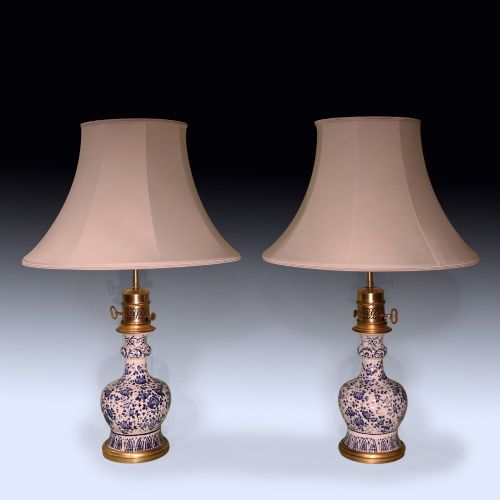
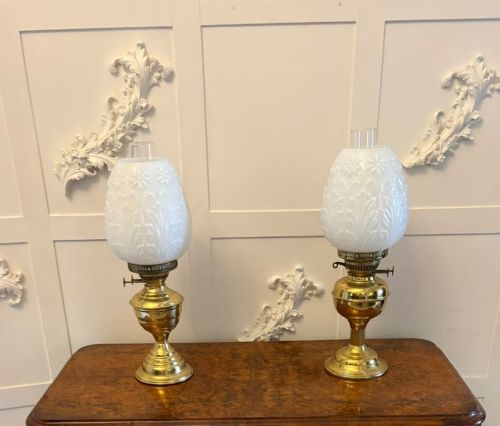
The pieces on this page span the nineteenth century into the early twentieth century, incorporating Victorian, Edwardian, Neoclassical and Meiji period aesthetics. You find sturdy columns alongside more ornate constructions featuring porcelain, opaline glass and cloisonne enamel.
Most examples function as table or desk lamps, though taller telescopic standard variants and miniature peg lamps appear among the mix. Brass forms the foundational material for the bases, frequently paired with contrasting glass reservoirs or ceramic bodies.
Distinctions in quality and execution
The refinement of the casting and the crispness of the chased brass details set superior examples apart from standard production items. Better weighted bases provide stability, while heavier gauge brass resists denting and holds a richer natural patina.
The integration of secondary materials dictates overall worth, with hand-painted porcelain bodies and finely layered cloisonne enamel representing higher artistic effort. Matching within the pair matters greatly, as true original symmetry commands more attention than assembled matches.
The quality of the glass components, particularly cut or layered opaline glass shades, contributes significantly to the visual weight and desirability of the set.
Pair Brass Oil Lamps Retail Price Guide 2026
Typical asking prices for pair brass oil lamps among the pieces listed under this phrase on Sellingantiques today, from the lower quarter to the upper quarter. They describe what is for sale here now, not the wider market.
The selection spans the nineteenth century to the early twentieth century, featuring brass, porcelain, and various forms of glass.
Wild & Wessel·Meissen Porcelain
The Pair Brass Oil Lamps Glossary
- Opaline glass
- Opaque or translucent glass popular in nineteenth century lighting. It diffuses light gently and appears in shades of white or soft pastel colours.
- Cloisonne
- An ancient technique for decorating metalwork objects with coloured material. Artisans apply vitreous enamel to compartments created by soldering flat metal wire onto the brass base.
- Corinthian column
- A classical architectural order featuring an ornate capital decorated with acanthus leaves. This style frequently informed the design of Victorian brass lamp stems.
- Peg lamp
- A small oil lamp fitted with a narrow lower stem or peg designed to drop directly into the top of a candlestick or vase base.
- Famille Rose
- A palette of Chinese ceramic glazes featuring opaque pink enamel. Pieces decorated in this style were frequently exported to Europe and later mounted as lamps.
Pair Brass Oil Lamps: Frequently Asked Questions
Are these lamps still wired for oil?
Most surviving examples have been converted to electricity over the decades for modern domestic use. This conversion preserves the decorative base while allowing safe plug-in operation.
Some retain their original burners and mechanisms, though collectors often inspect the wiring to ensure it meets contemporary safety standards.
How do I clean brass lamp bases?
Gentle dusting with a soft cloth preserves the aged surface and prevents the accumulation of grime in chased recesses. Harsh chemical polishes can strip away desirable historical patination accumulated over generations.
If cleaning is necessary, use a mild soapy solution and dry thoroughly immediately afterwards to protect the metal.
What styles are common among these pairs?
Victorian and Edwardian designs dominate the selection, often drawing on Neoclassical architecture with Corinthian columns and stepped bases. Other pieces reflect international influences through Chinese Canton vases and Japanese cloisonne enamel.
French Napoleon III and Rococo Revival styles also appear, bringing decorative curves and gilt highlights to the metalwork.
How do I identify a matched pair?
True matched pairs share identical casting marks, consistent height dimensions, and matching wear patterns on both the brass and glass elements. Assembled pairs may show slight variations in shade colour or base weight upon close inspection.
Examine the mounting hardware underneath to check for consistency in construction methods and screw threads.