



Opaline Glass Oil Lamps
Opaline glass oil lamps bring soft, diffused illumination and rich Victorian character to a room through their distinctive opaque bodies and sturdy metal mounts.
Opaline Glass Oil Lamps
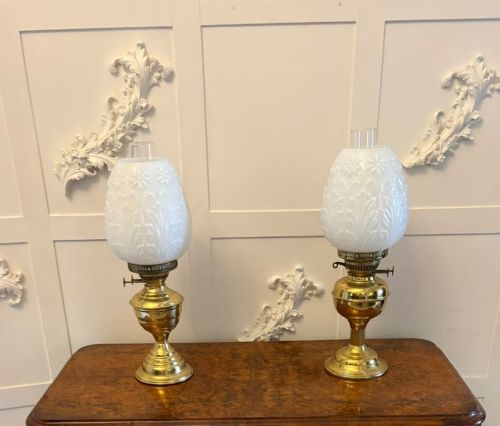
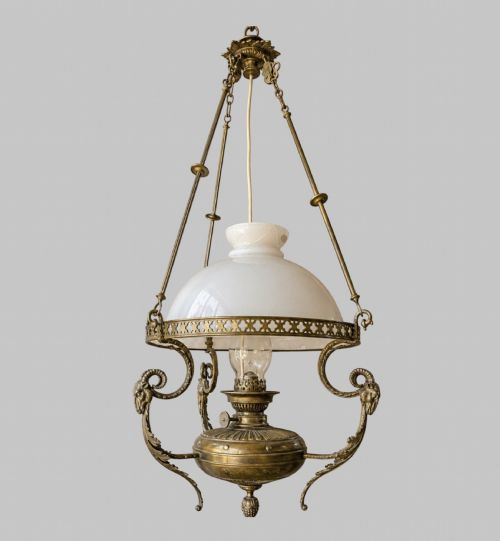
Opaline glass oil lamps are functional lighting pieces combining opaque glass reservoirs or shades with durable metal bases, originating primarily from the Victorian and Edwardian eras. These domestic lighting fixtures range from small desk lamps to large hanging paraffin lights and stately column lamps.
Most examples encountered on this page date from the nineteenth and early twentieth centuries, featuring styling influenced by the Victorian, Edwardian, Rococo Revival, and Neoclassical movements. They frequently combine opaline glass with brass or bronze mounts, sometimes incorporating painted decoration or gilding.
How they were made
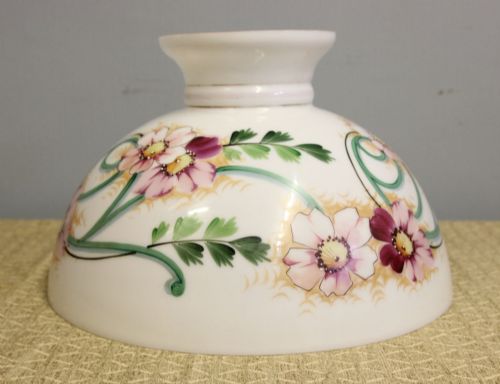
The construction relies heavily on blown opaline glass paired with cast brass or bronze components, utilising metal collars and burners to secure the glass reservoirs. Makers often decorated the glass surfaces with hand-painted enamel designs or gilt detailing to enhance visual depth.
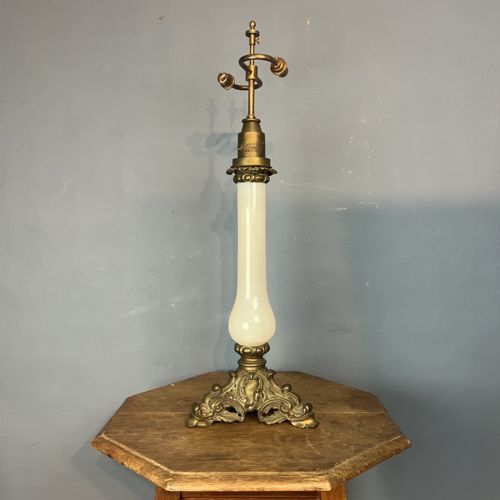
Support structures range from simple turned wooden bases to elaborate neoclassical metal columns and cut glass elements, reflecting the distinct manufacturing standards of nineteenth-century workshops.
Opaline Glass Oil Lamps Retail Price Guide 2026
Typical asking prices for opaline glass oil lamps among the pieces listed under this phrase on Sellingantiques today, from the lower quarter to the upper quarter. They describe what is for sale here now, not the wider market.
Listings feature items spanning the Victorian, Edwardian, and early twentieth-century periods, utilising brass, bronze, and opaline glass.
What varies in quality
Quality rests upon the weight and clarity of the opaline glass, the crispness of the cast brass or bronze mountings, and the presence of original maker components like burners or patents. Superior pieces display substantial metal casting with well-defined chased details rather than lightweight stamped replacements.
The sophistication of the hand painting or enamel work distinguishes standard production items from finer examples, as does the structural integrity of the joint between the glass reservoir and its metal base.
JOSEPH HINKS·Mc Gary·Wild & Wessel
The Opaline Glass Oil Lamps Glossary
- Opaline glass
- An opaque or translucent glass, often pastel in colour, used extensively for Victorian lamps and shades to soften the glare of the flame. It provides an even, milky diffusion of light.
- Paraffin lamp
- A lighting device designed to burn liquid paraffin or kerosene, typically fitted with a specialised burner mechanism such as a Hinks or Wild & Wessel system. These burners controlled the flame height using a wick.
- Rococo Revival
- A nineteenth-century design style characterised by ornate, asymmetrical scrolls, naturalistic floral motifs, and lavish ornamentation. It frequently appears on mid-century lamp bases and mounts.
- Neoclassical
- An artistic movement drawing inspiration from classical antiquity, featuring formal symmetry, architectural columns, and restrained ornamentation. Lamps in this style often use bronze or brass columns.
- Hinks burner
- A prominent nineteenth-century dual-wick burner system engineered for improved combustion and steady illumination. Its presence indicates a quality British lighting assembly.
Opaline Glass Oil Lamps: Frequently Asked Questions
How do I date an opaline glass oil lamp?
Dating relies on examining the burner mechanism, the style of the brass or bronze mountings, and the manufacturing characteristics of the glass reservoir. Victorian examples often display patent markings on the metal burner collars or heavier cast bronze bases.
Later Edwardian pieces tend toward lighter brass mounts and simpler silhouettes, whilst mid-nineteenth-century items frequently incorporate neoclassical columns or elaborate Rococo Revival scrollwork.
Are these lamps safe to convert to electricity?
Many of these pieces have already been converted from oil to electric operation, while others retain their original paraffin burners. Professional conversion allows them to function safely as table or desk lamps without altering the external antique appearance.
When evaluating a conversion, look for wiring that respects the original structure of the brass, bronze, or glass body without causing structural damage.
What is the difference between opaline and frosted glass?
Opaline glass is an opaque or translucent material created by adding opacifiers to the molten batch, resulting in a milky appearance that diffuses light evenly. Frosted glass achieves its translucent quality through acid etching or sandblasting the surface.
While both materials soften the glare of a lamp, opaline glass has a denser, solid body with a distinctive porcelain-like finish.
How should I clean opaline glass and brass?
Opaline glass benefits from gentle cleaning using warm water and mild soap, avoiding harsh abrasives that could damage hand-painted enamel or gilt decoration. Brass and bronze components require targeted metal cleaning to preserve their aged patina.
Careful maintenance ensures the painted motifs remain intact while keeping the metal mountings free from active tarnish.