



Pair Bombe Bedside Chests
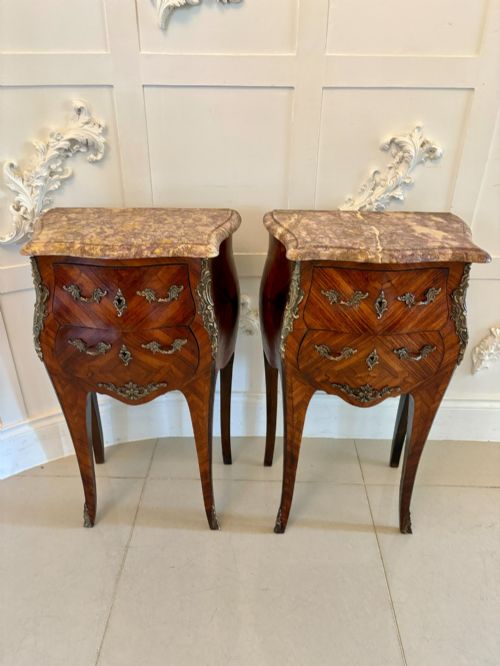
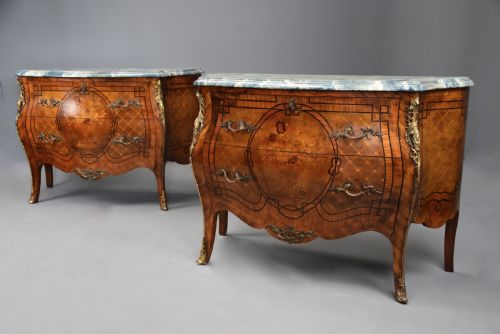
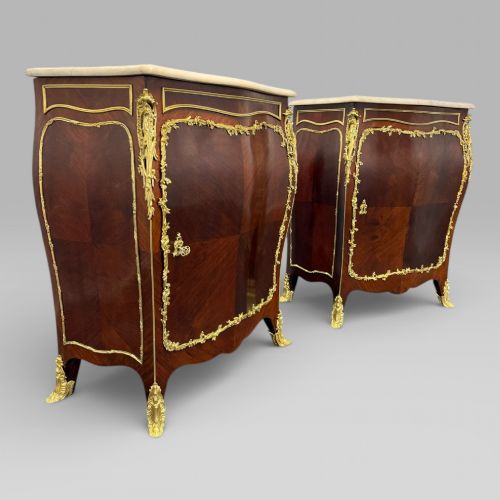
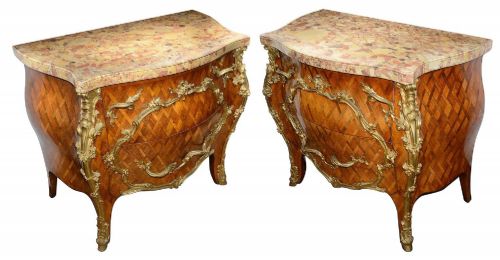
These pair bombe bedside chests bring distinct French and Italian serpentine curves and rich veneers into the bedroom.
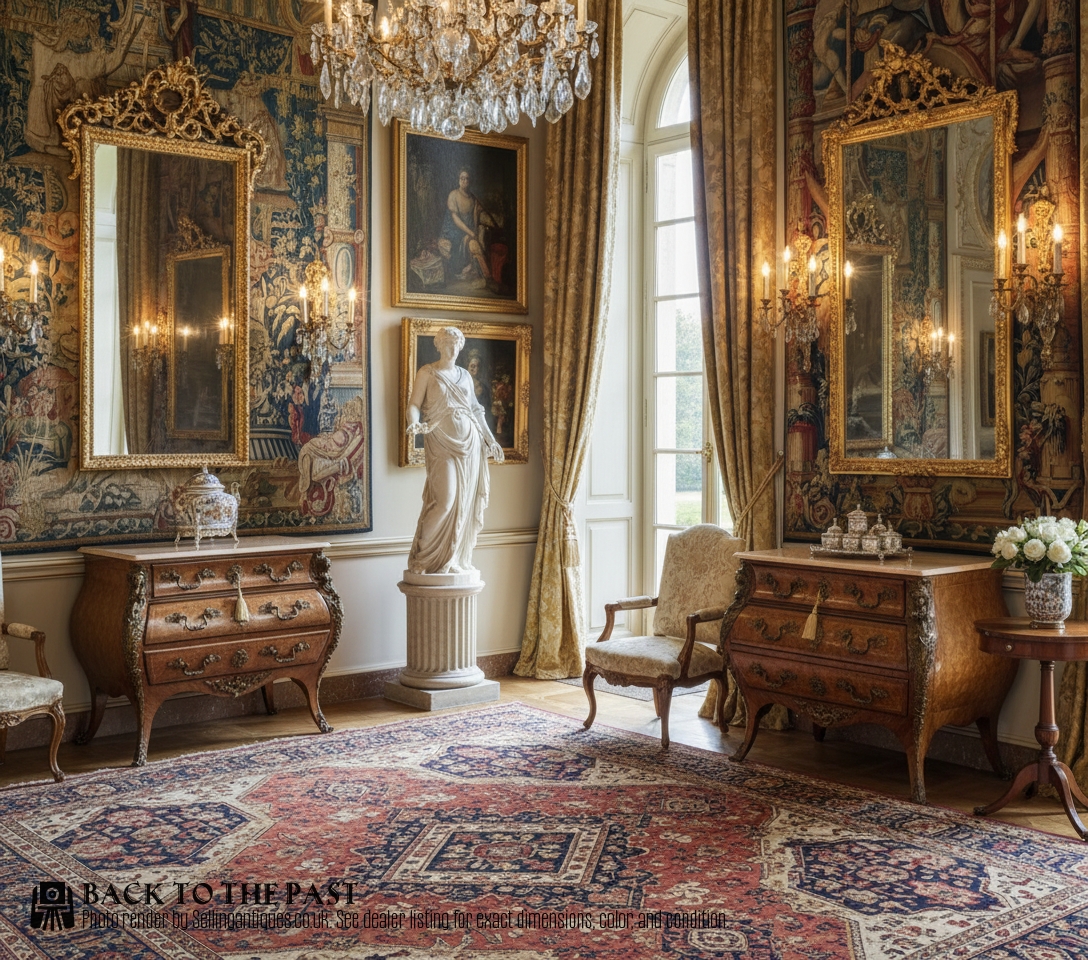
Pair Bombe Bedside Chests
A search for pair bombe bedside chests leads directly to matched pairs of swelling, convex-fronted cabinets intended for bedroom use. These pieces primarily date from the nineteenth and early twentieth centuries, drawing heavily upon French Rococo, Louis XV, and Italian decorative traditions.
Buyers are most likely to encounter compact commodes, bedside tables, and small cabinets finished with elaborate veneers and ornamental mounts. The forms range from French chateau-style commodes to Venetian walnut designs and refined marquetry night chests.
Originating largely from continental workshops, these matched furnishings served both practical storage and high-status decorative functions in period sleeping quarters. Their characteristic outward-curving sides define the distinctive silhouette that collectors seek today.
How they were made
Cabinetmakers constructed the carcasses of these chests using substantial hardwoods like walnut, mahogany, and kingwood, often laid over with intricate floral marquetry and parquetry patterns. Veneers of burr walnut and tulipwood were carefully matched across the swelling drawer fronts to create symmetrical visual interest.
Ormolu and gilt bronze mounts were cast and chased to highlight the exuberant curves of the corners, aprons, and feet. Marble tops, frequently shaped to follow the undulating contours of the commode beneath, were fitted as a durable and decorative upper surface.
Pair Bombe Bedside Chests Retail Price Guide 2026
Typical asking prices for pair bombe bedside chests among the pieces listed under this phrase on Sellingantiques today, from the lower quarter to the upper quarter. They describe what is for sale here now, not the wider market.
Some nineteenth-century makers sized their bedside chests specifically to hold chamber pots behind curving, deceptive drawer fronts.
What varies in quality
The sophistication of the timber work and the precision of the parquetry set superior examples apart from simpler commercial productions. Finer pieces display continuous, balanced grain patterns across multiple drawers rather than mismatched panels of timber.
The weight, crispness, and hand-chasing of the gilt bronze or ormolu mounts indicate the original workshop investment. Heavy, sharply detailed metalwork signifies a higher standard of manufacture than thin, pressed brass alternatives.
E. Kahn
The Pair Bombe Bedside Chests Glossary
- Bombe
- A French term describing furniture with outward-swelling, convex sides and fronts. This undulating form requires advanced cabinetmaking skill to construct.
- Ormolu
- Gilt bronze ornamentation applied to furniture mounts and hardware. It provides a bright golden contrast against dark cabinet timbers.
- Marquetry
- Inlays of various decorative woods assembled to form pictorial or geometric patterns. Craftsmen cut contrasting veneers to create detailed surface designs.
- Parquetry
- Geometric wood inlay patterns such as lozenges, cubes, or herringbone. It creates a structured, repeating surface texture across drawer fronts.
- Commode
- A low chest of drawers or cabinet on legs. In continental usage, it often serves as the primary storage chest in a bedroom.
Pair Bombe Bedside Chests: Frequently Asked Questions
How are pair bombe bedside chests used?
These cabinets serve as bedside storage units for personal items while anchoring the decor of a traditional bedroom scheme. Their surface provides ample room for lamps and nighttime accessories.
Matching pairs frame a bed symmetrically, adding balance and traditional continental presence to the sleeping space.
Are these chests all from the eighteenth century?
Most pieces found on the market date from the nineteenth and early twentieth centuries. Makers during this period produced frequent revivals of earlier Louis XV and Rococo styles.
True eighteenth-century examples are exceptionally scarce, while nineteenth-century revival pieces display the same ornamental ambition and cabinetmaking techniques.
What woods appear most frequently?
Kingwood, walnut, and mahogany form the structural foundation and primary visible surfaces for the majority of these cabinets. Burr walnut and tulipwood frequently appear in decorative veneer panels.
Inlayers used these contrasting timbers to accentuate the dramatic curves of the bombe silhouette.
How do I care for marble-topped chests?
Marble surfaces require simple wiping with a damp cloth and mild soap to remove dust and daily marks. Avoid acidic liquids and harsh chemical cleaners that can etch the polished stone.
Waxing the wooden carcasses periodically helps preserve the sheen of the veneer and protects the underlying timber.