



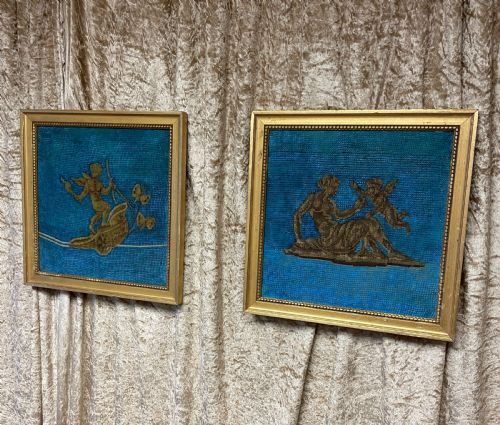

Pair Needleworks
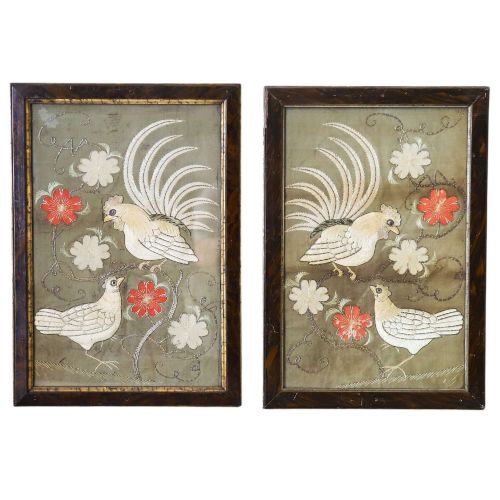
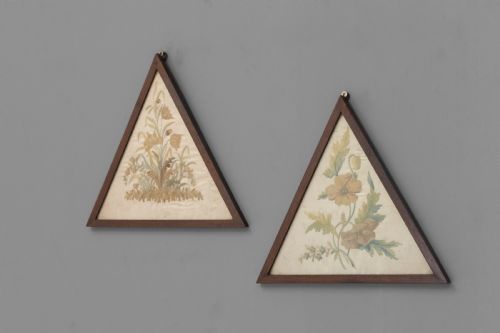
Pair antique needleworks bring together matched textile artistry and period framing, offering symmetrical decoration designed to balance a formal interior.
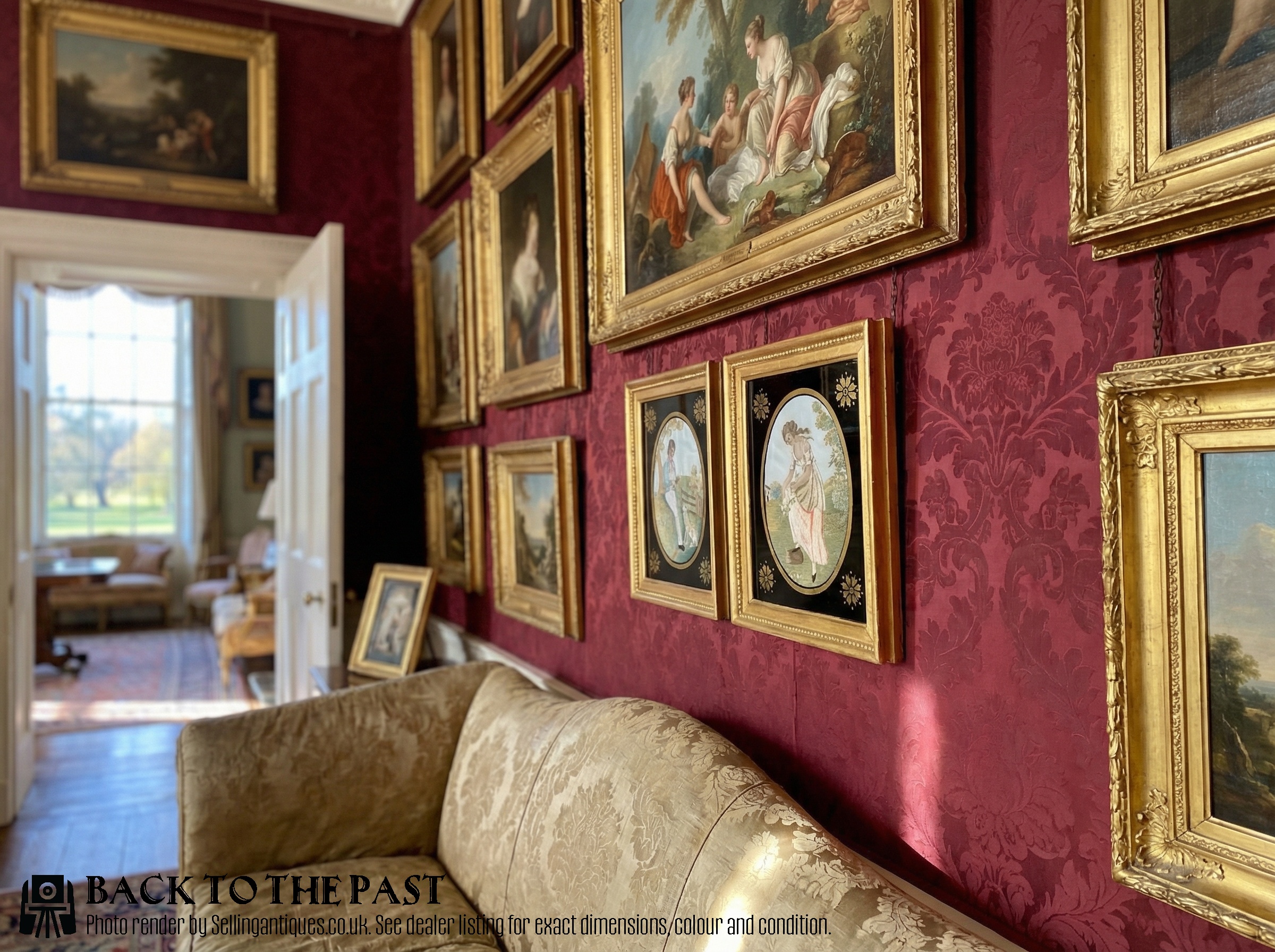
Pair Needleworks
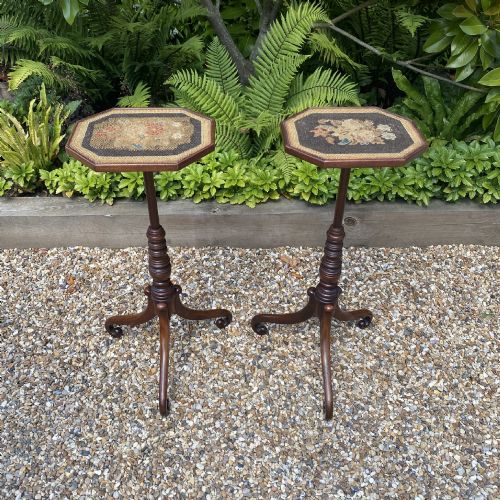
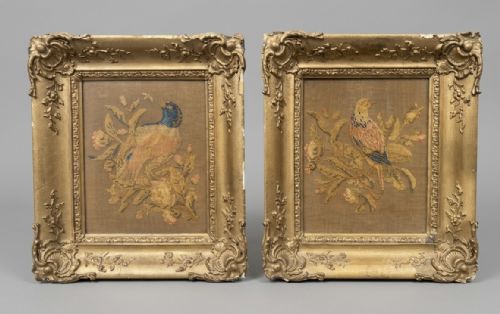
Pair antique needleworks encompass matched textile wall art, cushions, upholstery and pole screens created across the seventeenth, eighteenth, nineteenth and early twentieth centuries. These textile works frequently depict birds, floral arrangements, figural scenes and classical motifs executed in wool, silk and long stitch.
The selections encountered here range from Georgian silkwork pictures framed in gilt wood and black glass to French painted armchairs retaining original needlework upholstery. Buyers frequently encounter framed silk embroideries designed as matching pairs to hang on either side of a mantelpiece or architectural doorway.
Origins span English country houses, French workshops, Italian studios and Chinese ateliers, reflecting diverse regional stitching traditions. Formats vary widely between wall-hung framed pictures, structural seating and fire screens designed to shield the complexion from hearth heat.
Materials and construction
Makers stitched fine silk and wool threads onto taut foundation fabrics such as linen or canvas, employing specialised techniques like long stitch and carpet mosaic. Silk embroideries often incorporate delicate threadwork to render plumage and flora with painterly depth.
Frames and supports utilise traditional cabinet timbers including mahogany, walnut and giltwood, alongside water gilded oval mouldings and faux tortoiseshell finishes. Glazing with black glass mezzotint frames protects fragile silk surfaces from light and atmospheric degradation.
Certain silk pictures capture theatrical scenes, preserving miniature stage dramas stitched by candlelight centuries ago.
Judging quality in matched textile pairs
Quality rests in the survival of the textile surface, where tight, even stitching and vibrant thread colours remain intact without extensive fading or splitting. The skill of the needlework execution dictates whether avian subjects and floral sprays display anatomical precision and fine shading.
The integrity of the pairing matters significantly, as matched items must share identical scale, matching frames and consistent handwork rather than being assembled later. Original frames, particularly period gilt wood or black glass settings, elevate the historical completeness of the pairing.
Charles Tozer·Richard Ansdell John Crossley
The Pair Needleworks Glossary
- Needlework
- A general term for decorative stitching executed by hand on a textile ground. This encompasses various embroidery styles using wool or silk threads.
- Silkwork picture
- An embroidery executed primarily in silk threads, often depicting pictorial scenes popular during the Georgian and Regency periods. These works frequently utilised specialised stitches to simulate painted art.
- Long stitch
- An embroidery technique utilising stitches of varying lengths to create smooth tonal gradations and pictorial depth. It is characteristic of Regency silk pictures.
- Mezzotint glass
- Dark or black glass used in framing historical prints and embroideries to provide contrast. It creates a rich backdrop that complements gilt wood mouldings.
- Pole screen
- A freestanding fireplace screen featuring an adjustable vertical panel mounted on a turned wooden shaft and tripod base. The panel protected sitters from radiant hearth heat.
Pair Needleworks: Frequently Asked Questions
How should I hang pair antique needleworks?
Hang these matched pieces at eye level on either side of a central architectural feature such as a fireplace or window to preserve visual symmetry. Ensure they are positioned away from direct sunlight to protect delicate silk and wool threads from fading.
Use professional picture hangers suited to the weight of the timber and glass frames. Maintain stable indoor humidity to prevent the antique backing fabrics and wooden structures from warping.
Are these needleworks handmade?
Historical textile works of this period are entirely handmade by skilled stitchers using traditional needles and frames. Each piece demonstrates individual hand pressure and minor variations that distinguish them from mechanized production.
The supporting frames and furniture elements are likewise hand-carved and assembled using period cabinetmaking techniques.
How can I tell the period of a needlework?
Dating relies on examining the framing materials, backing woods, stitch types and stylistic conventions of the depicted subjects. Georgian and Regency works often feature specific silk thread techniques and particular gilt frame profiles.
Accompanying upholstery structures or furniture forms like wine tables and pole screens provide additional chronological markers based on prevailing cabinetmaking styles.