


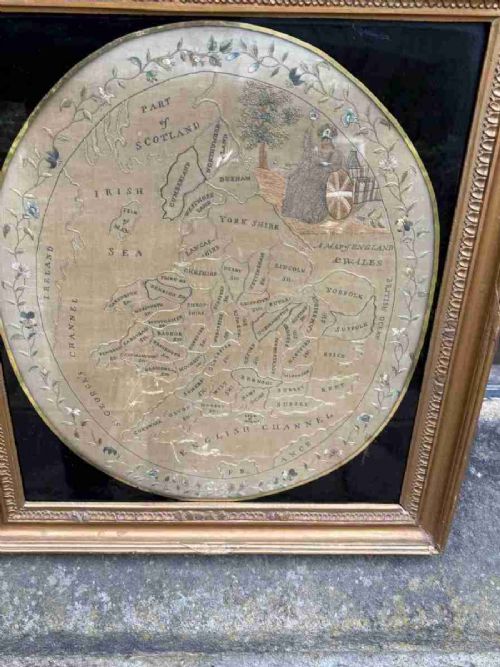


Oval Silk Embroidery
These oval silk embroidery pieces bring needlework pictures and map samplers into interiors within giltwood and Verre Églomisé frames.
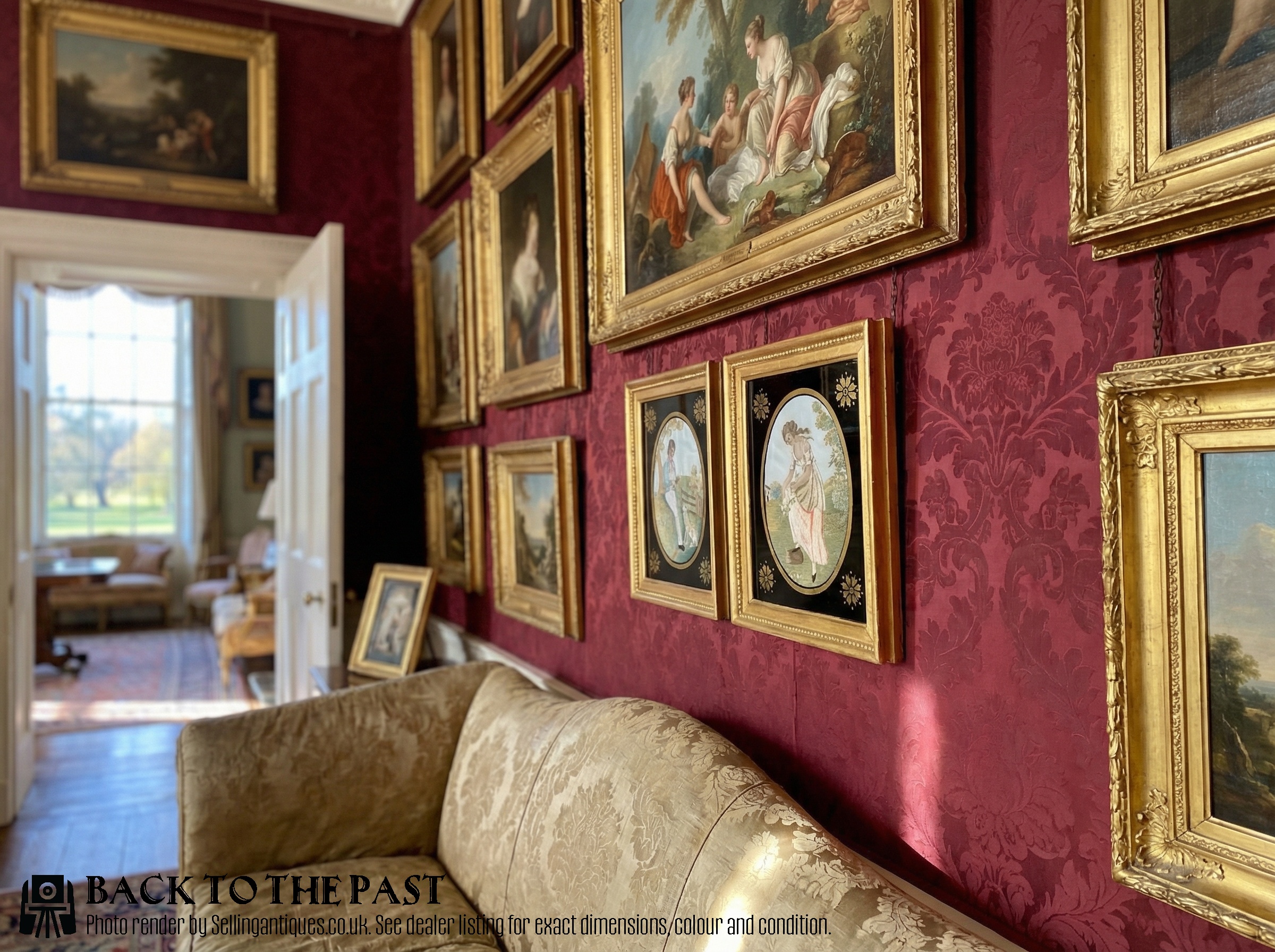
Oval Silk Embroidery
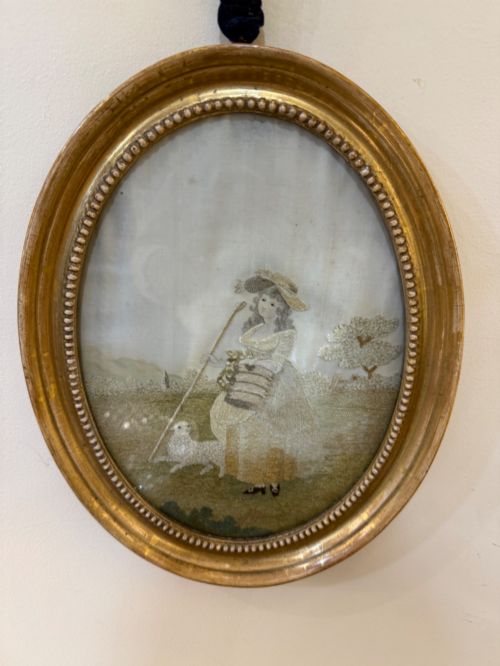
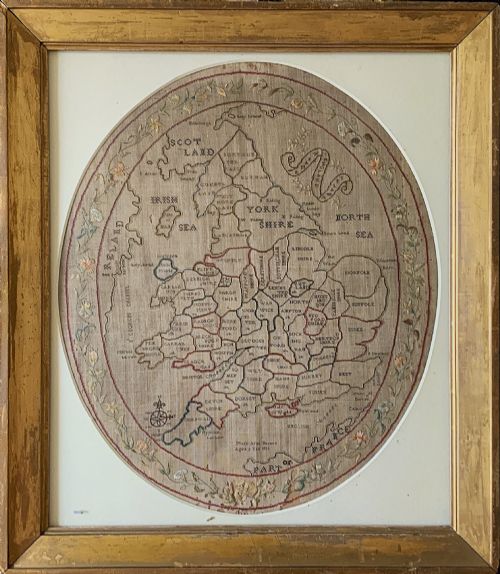
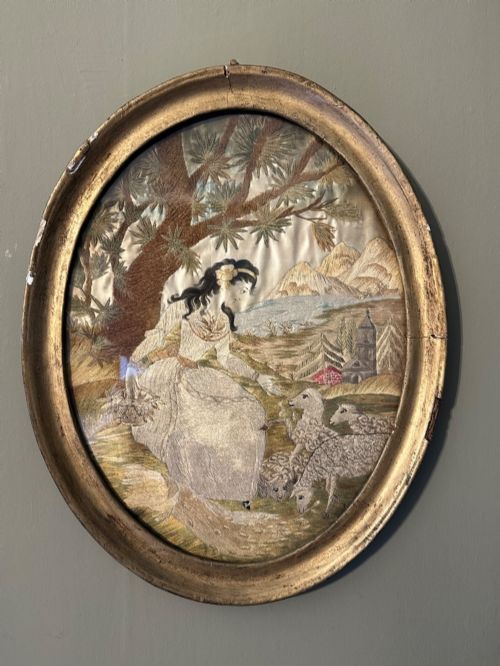
When you search for oval silk embroidery, you encounter textile art, needlework pictures, and map samplers spanning the Georgian, Regency, 18th century, Victorian, Edwardian, and 1920 periods. These pieces include needlework, embroidery combined with watercolour, and woolwork pictures depicting subjects such as girls in gardens, religious scenes, oyster sellers, and maps of England and Wales.
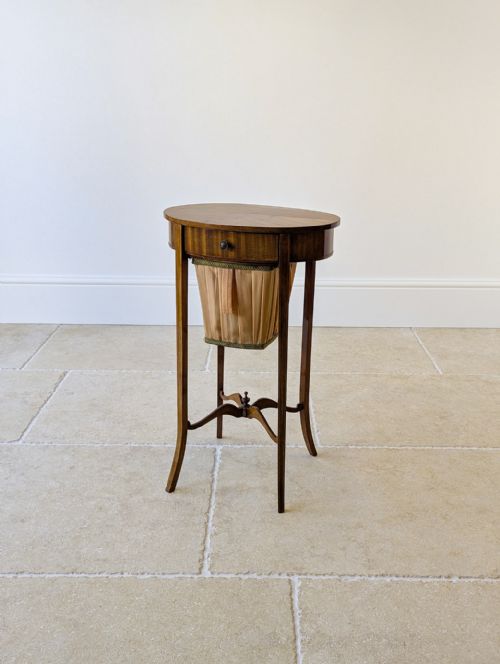
You are most likely to meet Georgian and Regency examples on this page, often framed in water gilded wood, giltwood, or black glass frames. The forms range from wall art and framed artwork to work tables containing textile elements, presenting varied compositions created by makers including Mary Banion and Mary Pinfold.
How they were made
The finished works were housed in bespoke framing, notably Verre Églomisé frames with mezzotint black glass and water gilded wood or giltwood mouldings enhanced with gold leaf.
Nine-year-old Mary Banion stitched a complete map of England and Wales in 1811, proving geography homework used to be much more arduous.
What varies in quality
The fineness of the stitching and the complexity of the needlework distinguish the examples, particularly in detailed map samplers and figurative silkwork pictures. Superior execution appears in the rendering of facial expressions, lettering on maps, and the crispness of the silk threads.
The quality of the surrounding frame holds equal weight, with original water gilded frames and Verre Églomisé glass panels elevating the stature of the piece compared to later replacements.
Mary Banion·Mary Pinfold
The Oval Silk Embroidery Glossary
- Verre Églomisé
- A process of applying gold or metal leaf to glass along with painting and engraving. This technique creates a decorative, reflective border often seen on antique frames.
- Needlework Picture
- A framed textile artwork created with needle and thread. These pieces use various stitches to depict pictorial scenes.
- Berlin Silk
- A style of needlework utilising printed pattern grids and fine silk threads. It gained popularity during the 19th century for detailed pictorial stitching.
- Map Sampler
- A needlework piece depicting geographical boundaries, typically schools of cartography executed by young makers. They record both needle skills and topographical knowledge.
- Water Gilded
- A traditional framing technique applying gold leaf over a prepared gesso and bole surface using water as the adhesive. It permits burnishing to a high gloss.
Oval Silk Embroidery: Frequently Asked Questions
What periods do these embroideries come from?
The pieces span several eras, predominantly featuring Georgian and Regency items alongside 18th century, 19th century, Edwardian, and 1920 examples.
Datings often rely on stylistic markers in the framing, lettering, and subject matter rather than explicit maker signatures.
How were these textile pieces originally displayed?
Makers mounted them directly into wall art formats, using specialised surrounds like water gilded frames or Verre Églomisé glass.
Some examples also appeared incorporated into functional furniture such as work tables.
What subjects do the needlework pictures show?
Common motifs include maps of England and Wales, religious scenes, figures in gardens, and genre subjects like oyster sellers.
Several works combine embroidery with watercolour to add depth to townscapes and architectural elements.
How do I care for antique silk embroidery?
Protect the silk threads and textiles from direct sunlight to prevent fading of the natural fibres and watercolours.
Keep them in stable indoor humidity environments away from damp walls to preserve the linen grounds and original giltwood frames.