
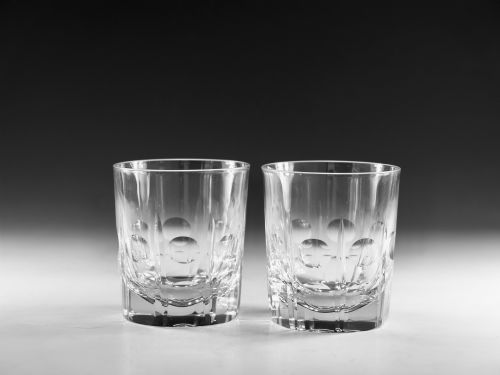
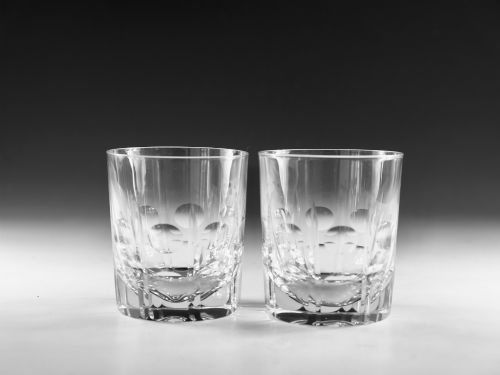
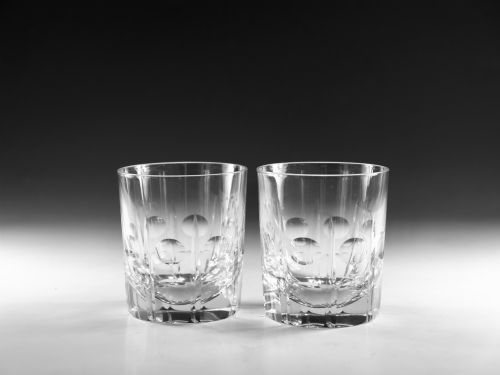
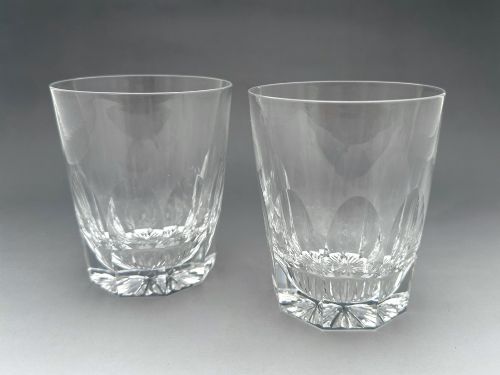
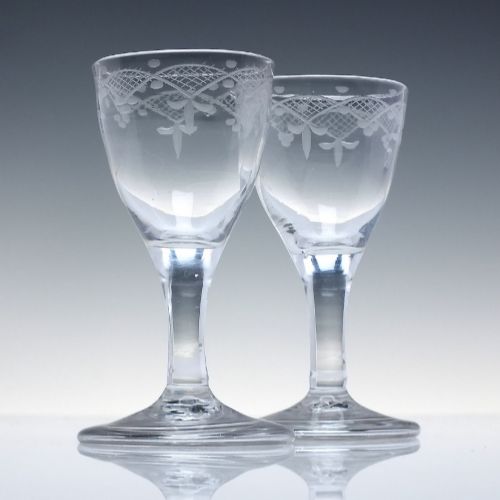


Pair Glass Tumblers
Pair antique glass tumblers bring weight to the hand and history to the table, offering a direct link to past drinking traditions.
Pair Glass Tumblers
When you search for pair antique glass tumblers, you encounter robust drinking vessels shaped for everyday utility across multiple centuries. The selection spans Georgian dram glasses, Victorian whisky tumblers, and early twentieth-century cut glass drinking vessels.
English and Bohemian origins dominate the pieces, alongside Irish mixing vessels. You are most likely to meet Victorian examples alongside early twentieth-century and Georgian specimens.
Forms include whisky tumblers, beakers, ale glasses, and large mixing tumblers. These objects served households for spirits, ale, and drams.
What varies in quality
Depth and precision of wheel cutting separate the standard production pieces from finer works. Crisp engraving and balanced proportions define superior examples.
Clarity of the metal and the presence of hand-finished details such as folded feet indicate higher production standards. Weight distribution in the hand also distinguishes finer vessels.
Listings span periods from the Georgian era through the Victorian period and into the early twentieth century, utilising lead glass, clear glass, and ruby glass.
The Pair Glass Tumblers Glossary
- Lead Crystal
- Glass containing a high proportion of lead oxide, providing extra weight and refractive brilliance. This material allows for deep, sharp cutting.
- Ruby Flash Glass
- Clear glass coated with a thin layer of red glass before being cut away to reveal the clear base. This technique creates a striking two-tone contrast.
- Folded Foot
- A rim at the base turned under while hot to add strength and stability. It appears on earlier drinking vessels.
- Whisky Tumbler
- A flat-bottomed drinking glass designed for spirits. These vessels often feature heavy bases to prevent tipping.
- Dram Glass
- A small drinking vessel intended for a single measure of spirits. They frequently date to the Georgian period.
Pair Glass Tumblers: Frequently Asked Questions
How do I clean old glass?
Wash these vessels gently by hand in warm water using mild soap. Avoid sudden temperature changes to protect the historic material.
Dry them immediately with a soft lint-free cloth to maintain clarity and prevent water spots.
Can I use antique tumblers daily?
Many people enjoy using these sturdy drinking vessels for modern dining and evening spirits. Hand washing keeps them safe from dishwasher heat and harsh detergents.
Take care with eighteenth-century specimens which benefit from more gentle handling.
How do I identify Georgian glass?
Look for pontil marks on the base, darker metal tones, and hand-engraved details typical of the eighteenth century. Folded feet often accompany these earlier pieces.
Weight and surface wear also help distinguish Georgian items from later Victorian reproductions.
What is ruby flash glass?
Ruby flash glass consists of a clear glass body coated with a thin layer of ruby red colour. Artisans cut through the red layer to expose the clear glass underneath.
This method produced vibrant decorative patterns during the Victorian era.