




English Crystal Whisky Glasses
English crystal whisky glasses and their accompanying decanters bring genuine weight and brilliance to any sideboard.
English Crystal Whisky Glasses
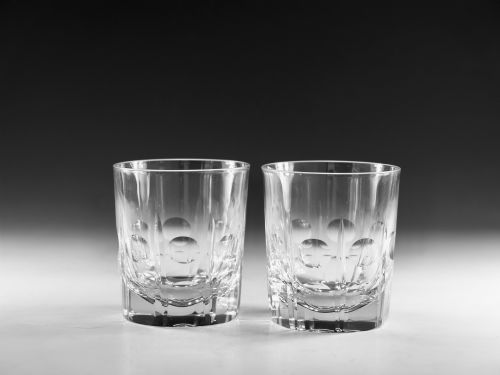
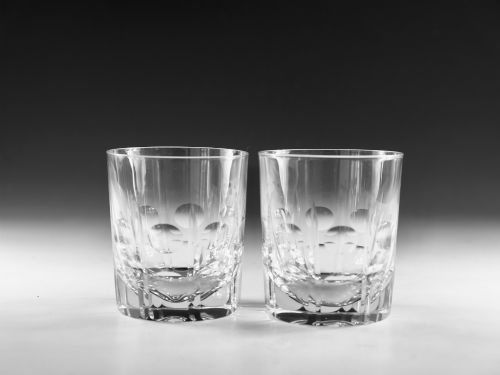
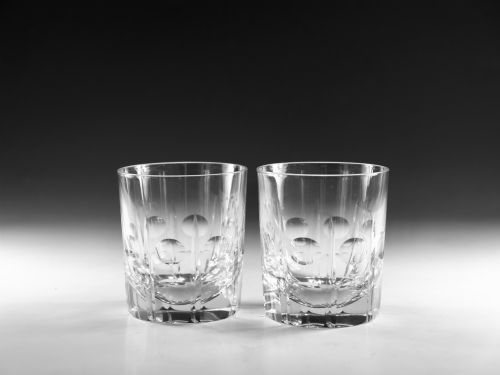
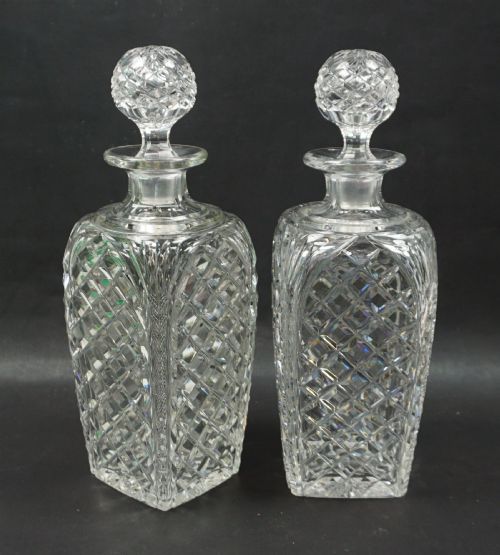
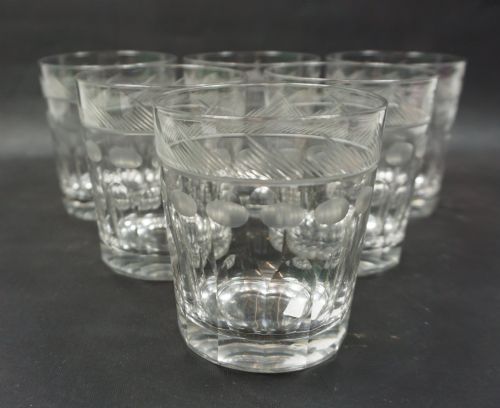
When buyers search for English crystal whisky glasses, they encounter robust tumblers and heavy decanters spanning the Victorian, Edwardian, and Art Deco periods. These drinking vessels and barware pieces reflect the social habits of late nineteenth and early twentieth century Britain.
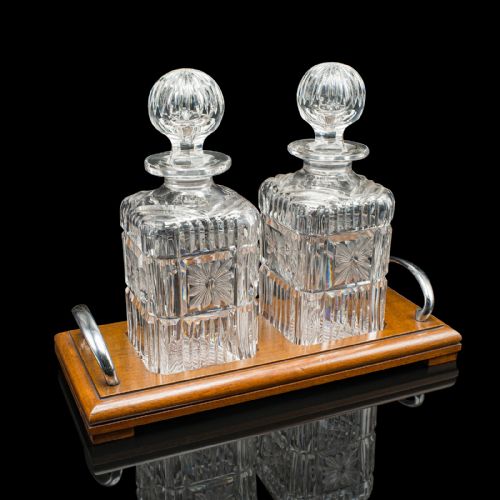
Decanter sets and fitted drinks boxes lined in exotic woods like coromandel also appear among the drinkware. Buyers find both individual Scotch bottles and complete service sets designed for formal entertaining.
How they were made
Makers utilised lead glass and clear cut glass, shaping vessels through traditional blowing and extensive wheel cutting techniques. The high lead content in the crystal permits deep, sharp facets that refract light brilliantly.
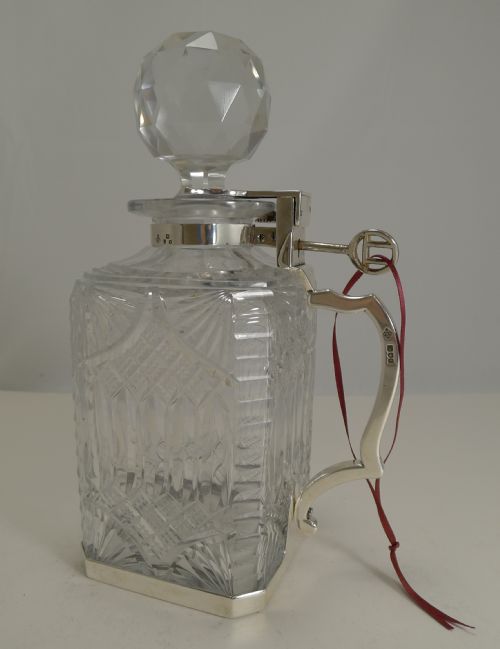
Silversmiths added functional elegance by mounting sterling silver collars, hallmarked mounts, and locking mechanisms onto the glass bodies. Some pieces incorporate substantial wooden decanter boxes fitted to secure the glass securely.
Some Victorian gentlemen required a locked box just to keep the household from finishing the good Scotch.
What varies in quality
The crispness of the wheel cutting sets superior pieces apart from simpler moulded wares, as deep and precise facets produce a sharper refraction of light. Weight also dictates quality, with heavier lead crystal vessels offering a more substantial feel in the hand.
The integration of precious metal elements influences overall distinction, particularly where hallmarked sterling silver collars or maker-signed silver mounts accompany the glassware. Fitted coromandel boxes and complete matched sets elevate the desirability of the decanters significantly.
Mappin and Webb·Hukin and Heath
The English Crystal Whisky Glasses Glossary
- Cut crystal
- Glassware decorated by grinding facets and patterns into the surface using a rotating wheel. This technique creates sharp edges and brilliant light refraction.
- Sterling silver
- An alloy of silver containing ninety-two point five percent pure silver and seven point five percent other metals, commonly used for decanter collars and mounts. Hallmarks stamped into the metal indicate the assay office, standard, and date.
- Decanter
- A vessel used for holding and serving spirits such as whisky, typically fitted with a ground glass stopper. Square section tapered profiles are particularly characteristic of the period.
- Coromandel
- A dense, heavily grained cabinet wood imported from Asia, often used to construct luxury Victorian drinks boxes and decanter cases. Its rich dark brown colour contrasts with bright glass and silver fittings.
- Tumbler
- A flat-bottomed drinking glass without a handle or stem, designed for serving spirits. Heavy cut versions provide a tactile grip and considerable heft.
English Crystal Whisky Glasses: Frequently Asked Questions
How do I date an old whisky decanter?
Examine the silver hallmarks on the collar for specific date letters and assay office symbols, which provide an exact year of manufacture.
Shape, cutting style, and the presence of a ground glass pontil mark also help assign pieces to the Victorian, Edwardian, or Art Deco eras.
Are these old glasses safe for daily use?
Most antique crystal tumblers are robust enough for regular use when handled with proper care and washed by hand.
Avoid extreme temperature changes to protect the heavy lead glass from thermal shock.
How should I clean cut crystal?
Wash crystal pieces gently in warm water using mild detergent and a soft cloth, avoiding abrasive pads that might scratch the surface.
Allow them to air dry on a soft mat to prevent water spots on the deep cuts.