

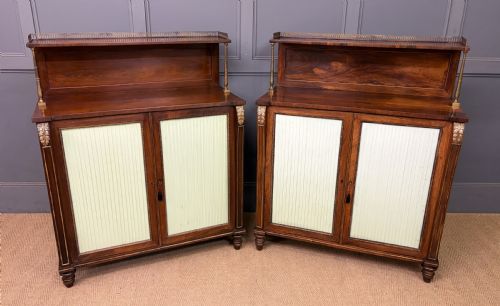
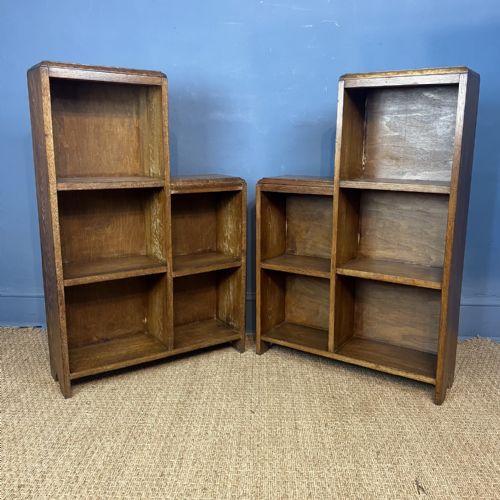

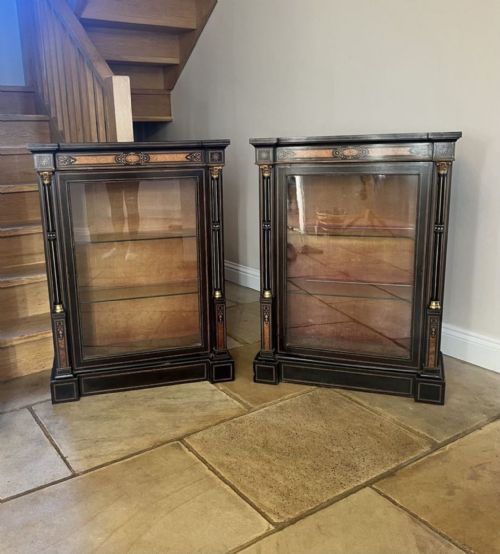
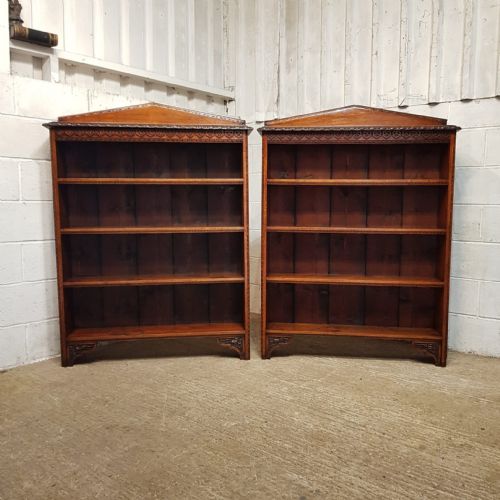


Pair Bookcases
Pair antique bookcases bring architectural symmetry to a room, offering matching proportions and practical shelving for serious libraries or display.
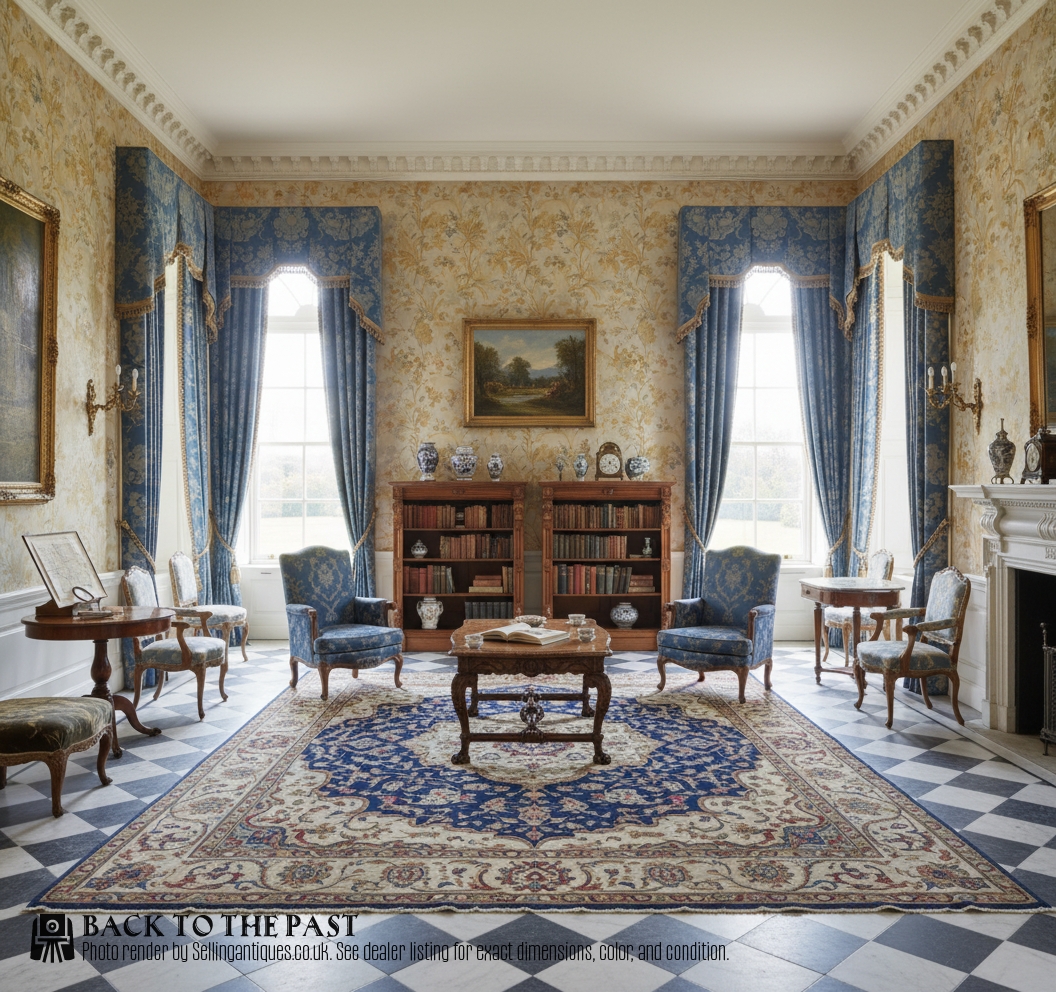
Identifying Pair Antique Bookcases
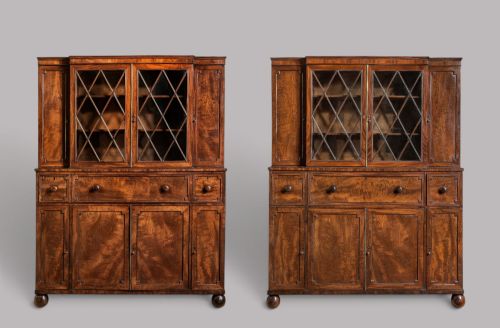
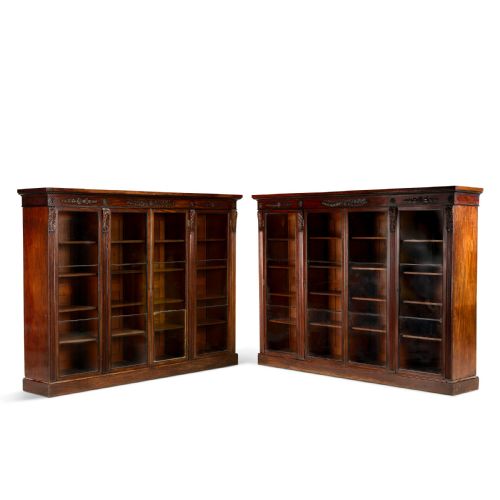
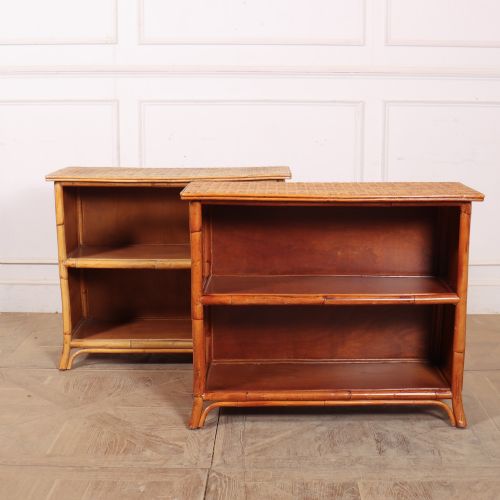
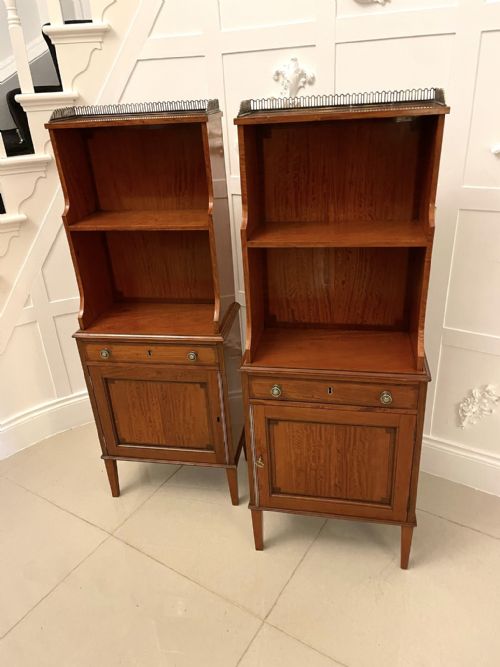
When you search for pair antique bookcases, you are looking at matched sets of shelving units designed to sit harmoniously together in a study, library or drawing room. The pieces recorded here span the nineteenth and early twentieth centuries, encompassing formal library furniture and lower open configurations.
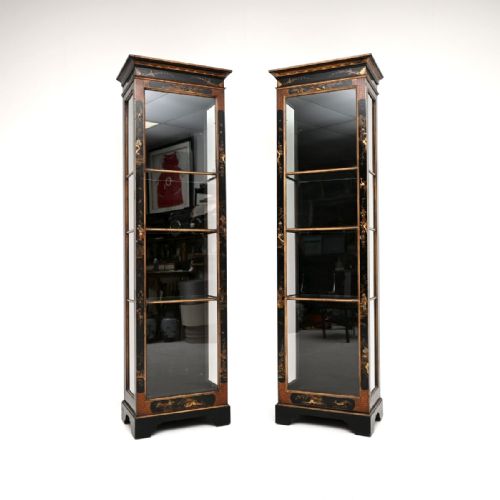
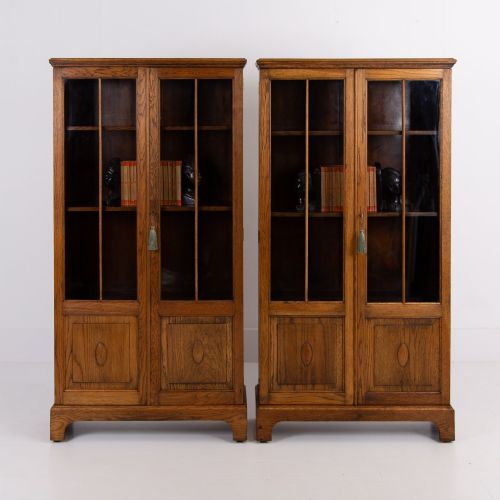
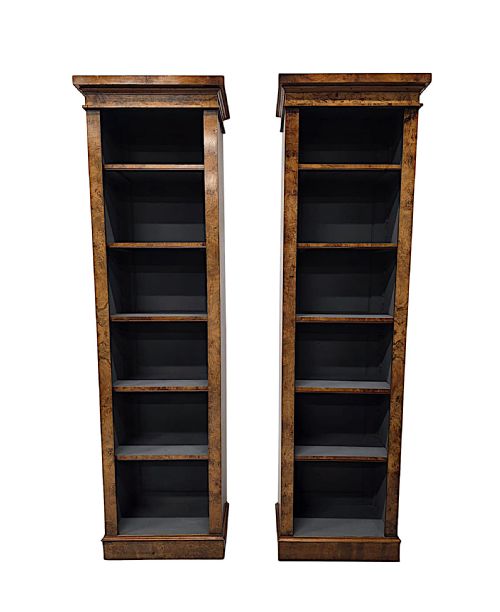
You are most likely to meet mahogany, walnut and oak examples on this page, reflecting the dominant timbers of the periods represented. Forms range from tall breakfront library fixtures and open bookshelves to glazed display cabinets and modular stacking designs.
Origins stretch across English cabinet workshops, Scottish production and continental output such as Biedermeier elm pieces. Whether configured as open shelves or enclosed by glass doors, these matched pairs provide balanced storage that single units cannot achieve.
Materials and Construction
Makers utilised dense native and imported timbers, predominantly mahogany, walnut, rosewood, oak and elm, often selecting figured veneers such as flame mahogany or burr walnut for prominent surfaces. Secondary woods provided structural stability behind these decorative faces.
Joinery techniques combined traditional framing with glazed door construction, brass hardware fittings, and in some instances ormolu mounts. Finer examples integrated delicate inlaid stringing, satinwood details and painted finishes.
Retail Price Guide 2026
Typical UK retail prices for pair bookcases, calculated from the Sellingantiques database of over a million retail prices indexed since 2003. This retail price guide relies exclusively on Sellingantiques data; no external sources or auction records are used, so the figures do not describe the wider market.
Judging Quality and Execution
The distinction between standard utility shelving and superior items rests on timber selection and timber matching across both pieces. Gradations in quality appear in the choice of richly figured veneers, the precision of inlaid details, and the integrity of original glass panels and brass fittings.
Proportion and architectural detailing set the finest examples apart from routine workshop production. Cabinetmakers who achieved absolute symmetry across a pair invested greater care in cornice moulding, plinth design, and the seamless alignment of internal shelf supports.
Gillows·Minty of Oxford·Heals of London·Globe Wernicke·Maple and Co·John Taylor
The Pair Bookcases Glossary
- Breakfront
- A cabinet design where the central section projects forward from the flanking wings. This configuration adds architectural depth to large library pieces.
- Ormolu
- Gilded bronze mounts applied as decorative ornaments on furniture. It provides metallic contrast against dark timbers like mahogany and rosewood.
- Biedermeier
- A Central European style spanning the nineteenth century focusing on clean lines and utilitariangrace rather than heavy ornamentation. Elm and walnut were frequently utilised.
- Barrister bookcase
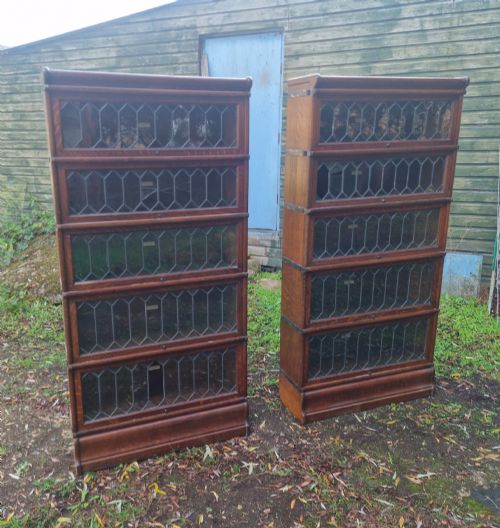
- A stacking sectional bookcase featuring glass-fronted tiers that lift and slide inward. These modular units gained popularity in the early twentieth century.
- Flame mahogany
- A veneer cut from the fork of the mahogany tree where the branches join the trunk. It creates a distinctive rippling, flame-like pattern across the wood.
Frequently Asked Questions
How do I style pair antique bookcases in a modern room?
Place them symmetrically on either side of a fireplace, doorway or large window to establish immediate balance in the interior.
Mix vertical book stacks with horizontal groupings and carefully chosen decorative objects to prevent the shelves from looking heavy or overcrowded.
What is the difference between open and glazed bookcases?
Open bookcases provide immediate, unobstructed access to volumes and create a relaxed atmosphere in a study or library room.
Glazed display cabinets protect fragile bindings and dust-sensitive collections behind glass doors, often incorporating lockable hardware and adjustable shelving.
How do I identify Regency period bookcases?
Regency pieces date from the early nineteenth century and frequently exhibit classical architectural influences, restrained brass mounts, and dark mahogany or rosewood timbers.
Look for clean geometric lines, formal proportions, and expert cabinet work attributed to prominent workshops of that era.
Are stacking sectional bookcases difficult to assemble?
Sectional bookcases operate on modular stacking tiers that require no permanent fixings, allowing each glazed or open shelf unit to rest securely on the base.
This clever design allows the entire pair to be easily separated, transported, and reconfigured to fit different ceiling heights.