
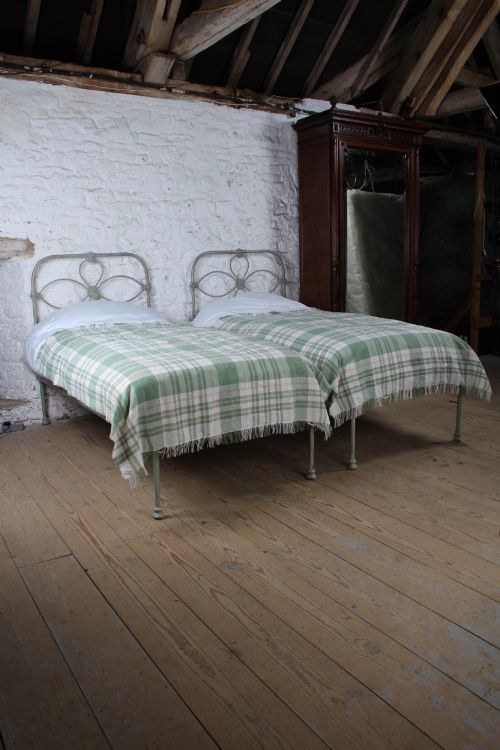


Painted Wrought Iron Bed
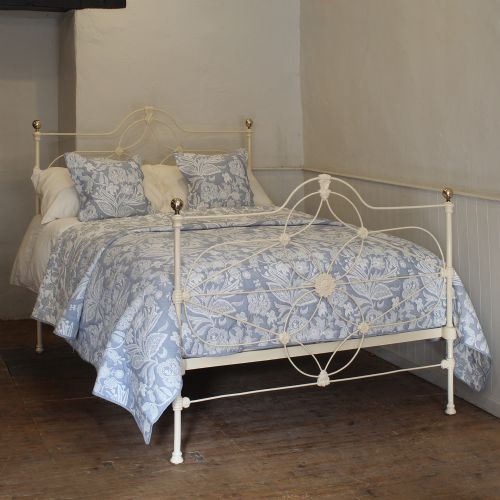
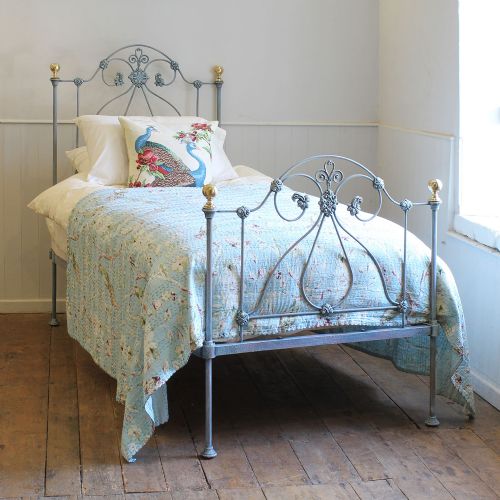
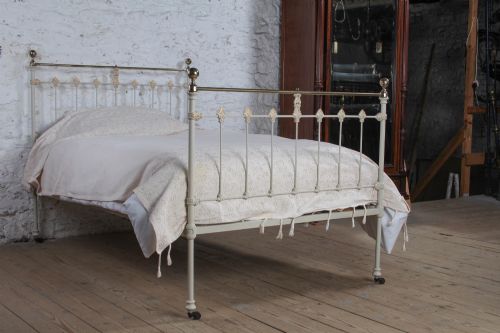
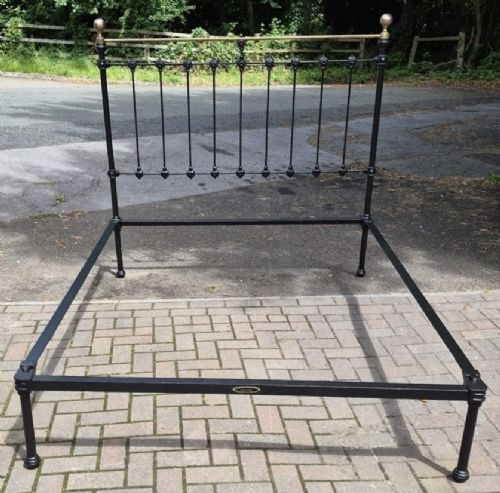
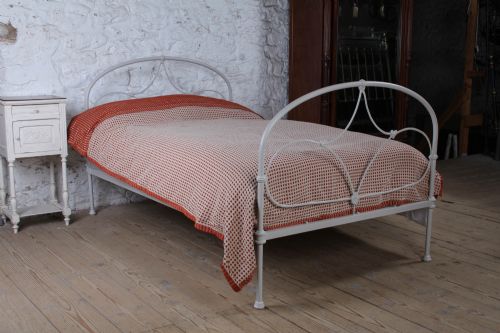
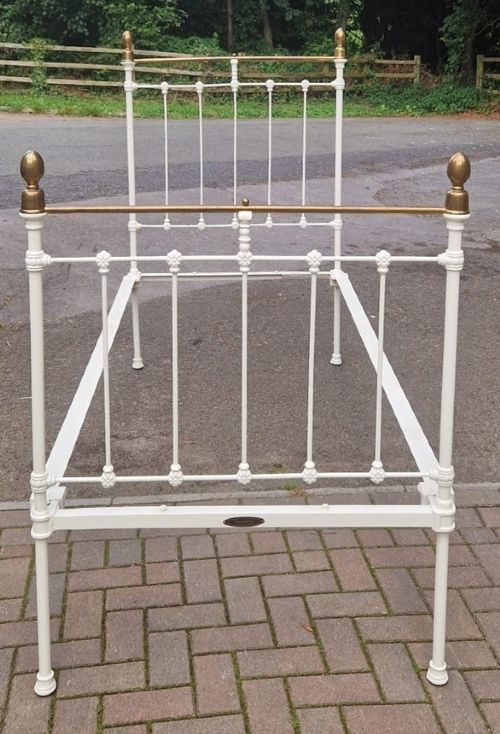
These painted wrought iron bed frames bring sturdy nineteenth-century charm and character to any bedroom interior.
Painted Wrought Iron Bed
A painted wrought iron bed provides a robust sleeping frame constructed from forged and cast metal elements, often finished in period paint colours such as blue verdigris, ivory, cream, white, or black. You will frequently encounter single, double, and king size formats spanning the Victorian era and the turn of the twentieth century.
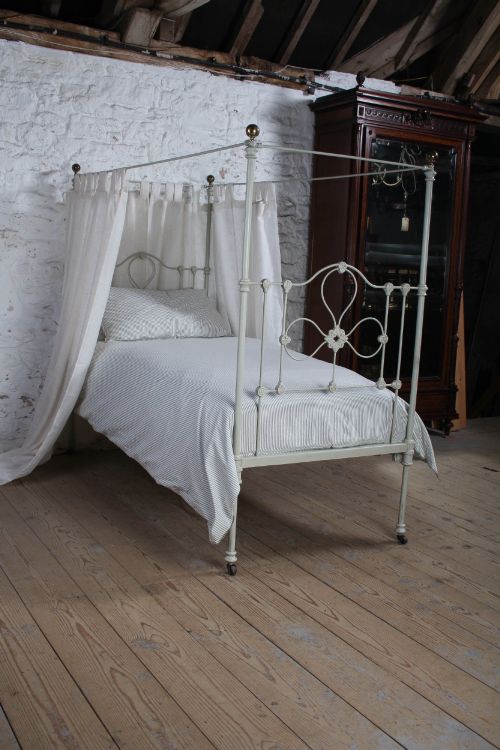
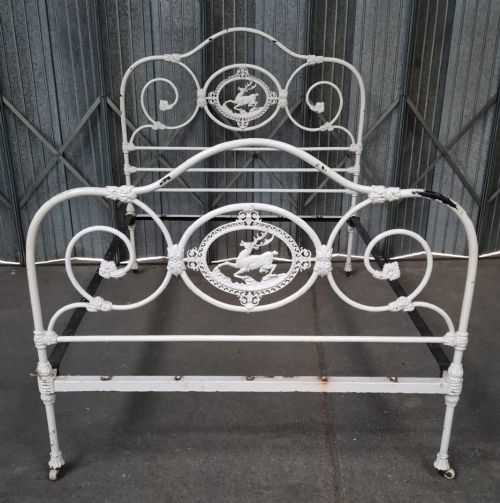
Many examples incorporate decorative brass accents, scrolled ironwork, or regional styling influences originating from Ireland, Portugal, Italy, and France. These frames range from simple no-end single sleepers to elaborate four-poster and half-tester configurations designed to serve as focal points in period rooms.
How they were made
Makers utilised forged iron, cast iron, and sheet metal components, joining structural elements through traditional blacksmithing techniques and mechanical fastenings. Forged iron parts were shaped by hand over an anvil, resulting in organic curves and variable thicknesses.
Surfaces were coated in protective paint layers or tôle ware finishes, sometimes complemented by polished brass mounts, finials, and corner brackets. This combination of heavy metal construction and applied colour protected the underlying iron from oxidation while offering decorative versatility.
Listings feature items built during the Victorian period and around nineteen hundred, utilising iron, brass, paint, and sheet metal.
What varies in quality
Construction rigidity and the intricacy of the hand-forged scrollwork differentiate standard production frames from finer examples. Heavier gauge iron and meticulous attention to joint construction ensure structural stability across larger king and super king proportions.
The sophistication of the original or surviving painted finish, alongside the integration of decorative brass details, distinguishes more ambitious designs. Pieces featuring regional stylistic traits or complete matching pairs display a higher degree of design ambition.
The Painted Wrought Iron Bed Glossary
- Wrought iron
- A tough, malleable form of iron containing silicate slag inclusions, traditionally shaped by hammering while hot. It allows for detailed hand-forging into scrolls and structural components.
- Cast iron
- Iron melted and poured into a mould to create rigid decorative elements and bed feet. It provides distinct ornamental detail that contrasts with hand-forged bars.
- Brass
- An alloy of copper and zinc utilised for decorative finials, knobs, and corner mounts on metal bedframes. It adds a warm metallic contrast to the painted iron structure.
- Tôle ware
- Lacquered and painted sheet metal, often associated with decorative nineteenth-century Italian furnishings. It brings smooth, colourful surfaces to bedstead panels.
- Half tester
- A canopy bed frame where the tester extends only partially over the head of the bed. It creates an intimate sleeping alcove without dominating the room.
Painted Wrought Iron Bed: Frequently Asked Questions
How do I choose the right size?
Consider the available floor space and mattress standards you intend to use with the frame. Listings include single, three-quarter, double, king, and super king dimensions.
Note that older frames may require custom mattress sizing or slight adjustments to accommodate modern bedding standards comfortably.
Can these beds be dismantled?
Most nineteenth-century metal bedframes feature detachable side rails and head and foot boards secured by traditional wedge or bolt fastenings. This modular construction facilitates straightforward transport and assembly.
Ensure all original iron keys or matching fixings are accounted for when setting up the frame in your home.
How do I care for the paint?
Maintain the painted finish by dusting gently with a dry microfibre cloth and avoiding harsh chemical cleaning agents. Preserve the integrity of vintage coatings by keeping the metal away from damp environments.
Minor touch-ups can be applied using matching mineral or acrylic paints if historical surfaces show signs of wear.
Are pairs common?
Matching pairs of single beds occasionally appear, offering versatile arrangement options for guest rooms or twin sleeping spaces. Several examples include provisions to be joined together into a larger configuration.
Look for consistent casting details and identical paint tones when seeking matching sets.