
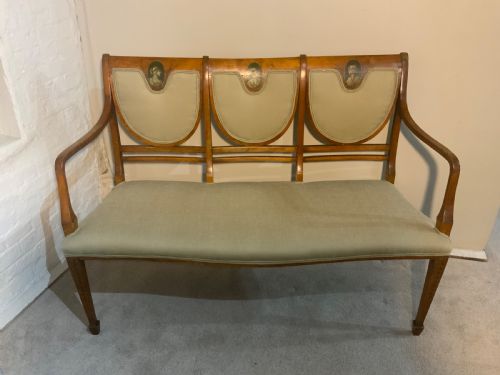


Painted Wooden Settee
A painted wooden settee brings architectural grace to a room, offering elongated seating with decorated wooden frames.
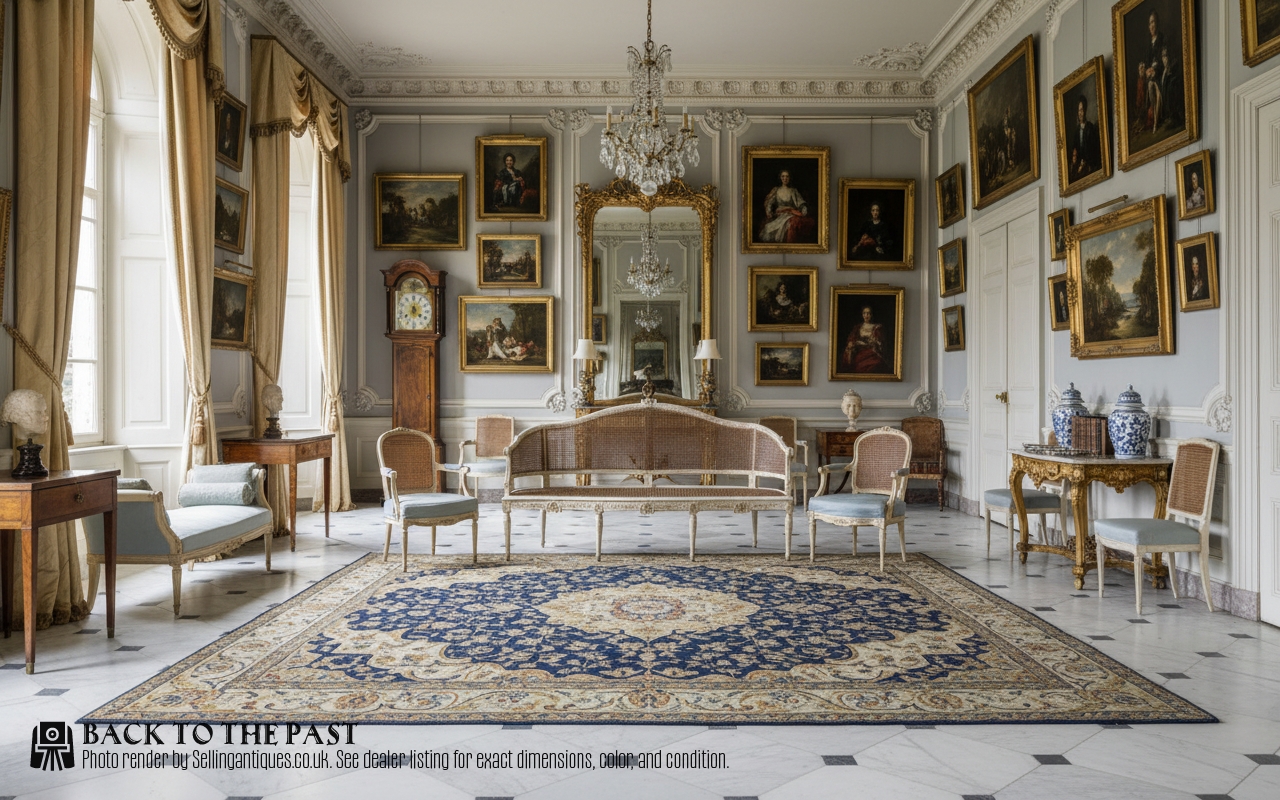
Defining the painted wooden settee
A painted wooden settee provides formal or informal seating across several distinct stylistic traditions, including Gustavian, Neo-Classical, and Sheraton Revival forms. These pieces combine wooden framework with applied surface decoration, occasionally incorporating woven panels or upholstered cushions.
The selections available here range from eighteenth-century Swedish examples to pieces produced around nineteen hundred. Forms vary from triple-back settees to simpler sofas reflecting French and Italian influences.
Materials and construction
Construction relies on timber frames finished with paint, satinwood, and occasionally gold leaf highlights. Surface decoration defines the visual character of these seating pieces.
Seating sections utilise cane, fabric, and linen for comfort and structural support. Artisans shaped the wood to mirror prevailing classical motifs of the eighteenth and nineteenth centuries.
Retail Price Guide 2026
Typical UK retail prices for painted wooden settee, calculated from the Sellingantiques database of over a million retail prices indexed since 2003. This retail price guide relies exclusively on Sellingantiques data; no external sources or auction records are used, so the figures do not describe the wider market.
The documented pieces reflect French, Italian, and Swedish design traditions, including Sheraton Revival and Gustavian styles.
Evaluating quality and execution
Quality rests in the finesse of the painted surface and the crispness of the carved wooden details. Pieces finished with delicate satinwood or restrained gilding display superior craftsmanship compared to simpler decorative applications.
Proportion and the integration of secondary materials like cane or fine linen indicate the original maker's skill. The harmony between the structural frame and the decorative paint layer dictates the standing of each piece.
The Painted Wooden Settee Glossary
- Settee
- A long wooden seat with a back and arms, designed for multiple occupants. This form bridges the gap between a chair and a full sofa.
- Satinwood
- A durable timber known for its yellowish colour and fine grain, frequently used in polished or painted furniture. It provides a smooth base for decorative finishes.
- Gustavian
- The Swedish interpretation of French neoclassical design, characterised by pale painted finishes and restrained classical carving. This style dominates Scandinavian seating from the eighteenth century.
- Cane
- Woven material made from rattan or stripped plant stems, utilised for light and flexible seat panels. It offers both ventilation and decorative texture.
Frequently Asked Questions
What is a painted wooden settee?
A painted wooden settee is an elongated seating bench featuring a decorated wooden frame. These pieces serve as both functional seats and prominent decorative focal points in interior spaces.
Origins span French, Italian, and Swedish workshops from the eighteenth century into the early twentieth century, reflecting various neoclassical design movements.
Where should I place a settee?
Settees suit hallways, bedrooms, and drawing rooms where full-scale sofas might overwhelm the floor plan. Their open frames maintain visual lightness in smaller spaces.
They function well against walls or positioned beneath large windows, adding architectural interest without blocking light.
How do I care for painted wood?
Maintain painted wooden surfaces by dusting gently with a dry, soft cloth. Avoid harsh chemical cleaners that can degrade historic paint and gilt layers.
Keep pieces away from direct sunlight and severe humidity fluctuations to protect the underlying timber and delicate surface finishes.
How do I identify a Gustavian settee?
Gustavian pieces typically feature pale, muted paint colours such as grey or cream. The carving remains restrained, drawing on classical architectural motifs.
Swedish makers adapted French Louis XVI styles to create a brighter, simpler aesthetic tailored for Nordic interiors.