






Painted Wood Server
A painted wood server brings functional surface space and decorative colour to a room, spanning the eighteenth and nineteenth centuries in various country styles.
Painted Wood Server
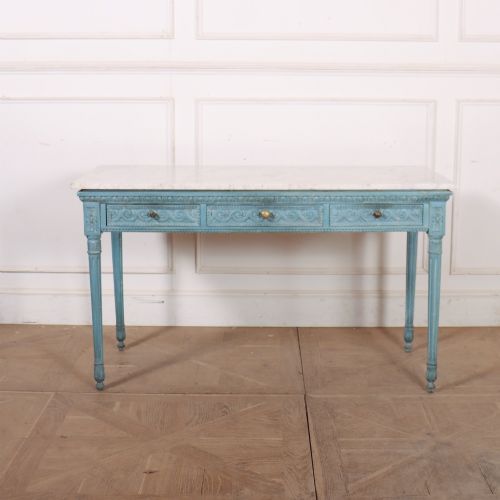
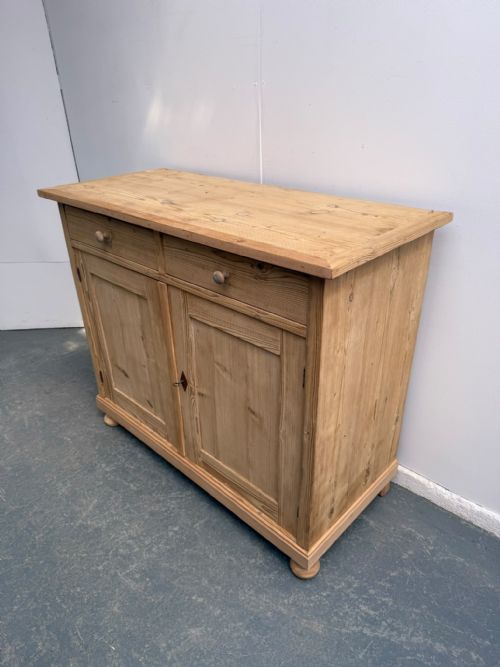
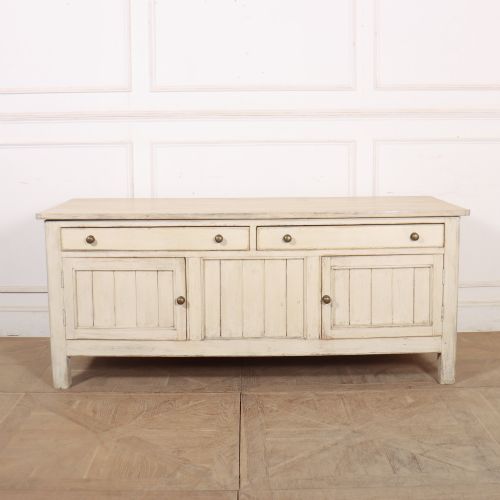
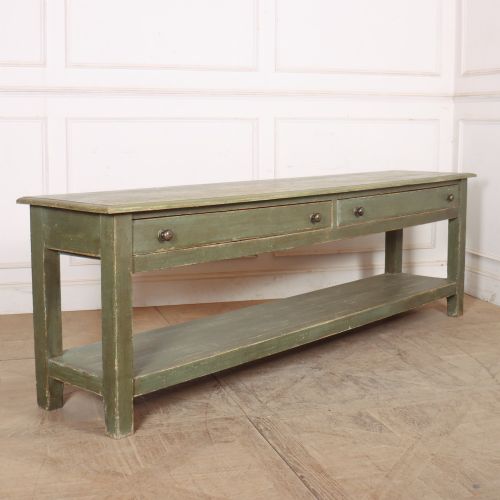
When you search for a painted wood server, you encounter robust utility furniture designed for food preparation and storage across British, French, Italian, and Swedish domestic spaces. These pieces function as serving tables, console tables, and dresser bases, offering substantial tabletops paired with lower potboards, drawers, or cupboards.
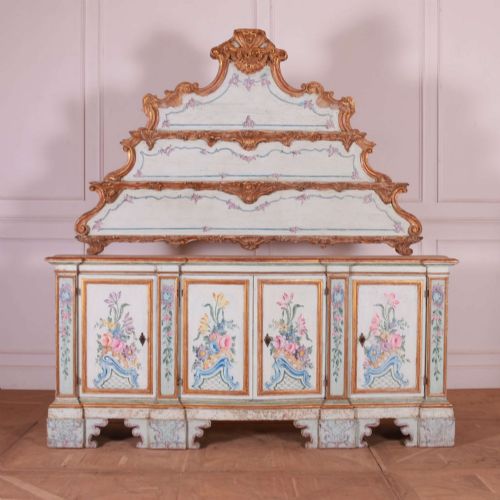
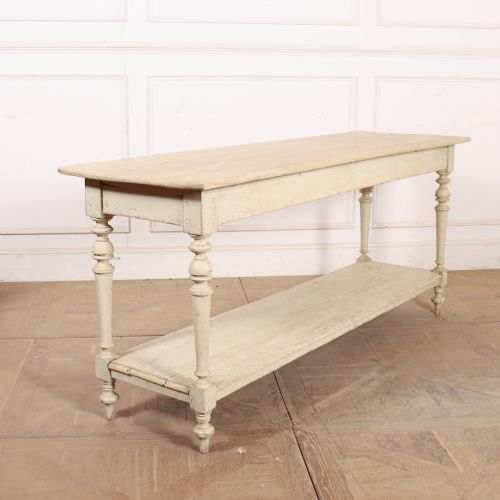
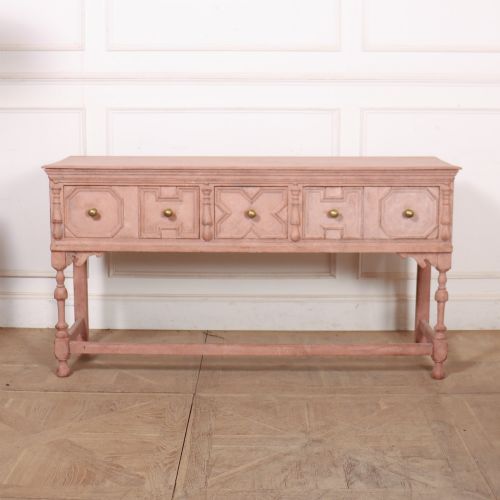
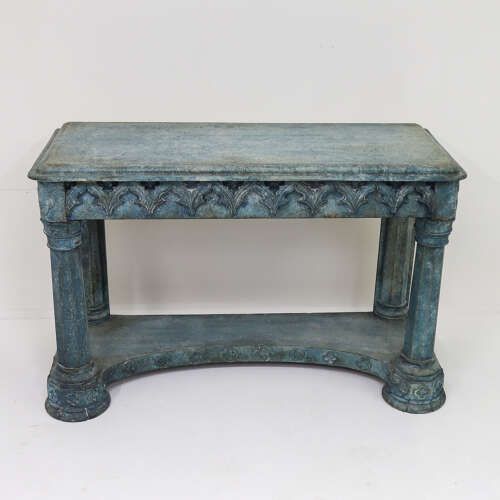
The versions most commonly met on this page date from the nineteenth century alongside select eighteenth-century examples, reflecting styles such as English Country, French Provincial, and Venetian Rococo. Their forms range from narrow console tables to large potboard serving tables and kitchen dresser bases, constructed to handle heavy daily use.
How they were made
Makers built these pieces primarily using pine, oak, and general timber, frequently applying paint, painted finishes, or scumble directly onto the wood. Structural support often involved iron hardware and brass details, with surfaces shaped into console tables, sideboards, and preparation tables.
Construction techniques prioritized practical utility, utilising solid wood panels for dresser bases and serving tables. Painted surfaces were applied over timber, ranging from simple country finishes to elaborate Venetian and Gothic schemes.
Some nineteenth-century tables wear their kitchen history proudly, carrying the quiet ghosts of countless flour dredgings and spilled supper gravy.
What varies in quality
The distinction between standard utility items and exceptional pieces lies in the integrity of the original painted surface and the sophistication of the regional style. Pieces featuring untouched historical paint layers and regional characteristics, such as Italian Neoclassical or Venetian Rococo detailing, stand apart from simpler provincial builds.
Proportions and structural balance also dictate the character of each piece, with larger serving tables and console forms demonstrating more ambitious joinery. The presence of original hardware, potboards, and drawers further distinguishes standard domestic furniture from finer country house examples.
The Painted Wood Server Glossary
- Potboard
- An open lower shelf fitted beneath a dresser base or serving table for storing pots and kitchen utensils. This traditional feature provides stability to the legs while offering visible lower storage.
- Dresser base
- The lower section of a kitchen dresser, functioning independently as a sideboard or serving table with drawers and cupboards. These heavy timber pieces formed the working heart of the historic kitchen.
- Console table
- A table designed to stand flat against a wall, frequently supported by brackets or legs. They often feature decorative carving or painted surfaces suited to hallways and reception rooms.
- Scumble
- A translucent layer of darker paint dragged or textured over a lighter base coat to imitate wood grain or create a mottled finish. This technique was widely used on nineteenth-century kitchen furniture for decorative effect.
- Buffet
- A sideboard or serving piece utilised for the display and distribution of food and drink. They provide enclosed storage space beneath a flat serving surface.
Painted Wood Server: Frequently Asked Questions
What is a painted wood server used for?
These pieces function as serving tables, sideboards, and prep surfaces in dining rooms, kitchens, and hallways.
They provide both a sturdy top surface for food presentation and lower storage via shelves, potboards, or drawers.
How do I identify an 18th century server?
Eighteenth-century examples often display regional European characteristics, such as Venetian Rococo or French provincial forms, with hand-mixed historic paint.
Construction details like hand-cut joints and timber shrinkage provide further clues to their age.
Where were these servers originally made?
They originate from various regions including England, France, Italy, Scotland, and Sweden, reflecting local country house and domestic traditions.
Each region utilised native timbers like pine and oak alongside distinct regional painted finishes.
How do I care for painted wood furniture?
Maintain the painted surface by dusting gently with a dry or slightly damp cloth, avoiding harsh chemical cleaners that strip historic paint.
Keep the timber away from direct heat sources and excessive moisture to prevent warping.