


Painted Wood Glazed Cabinet
A painted wood glazed cabinet brings colour and light into a room while keeping books or collections safely enclosed behind glass.
Painted Wood Glazed Cabinet
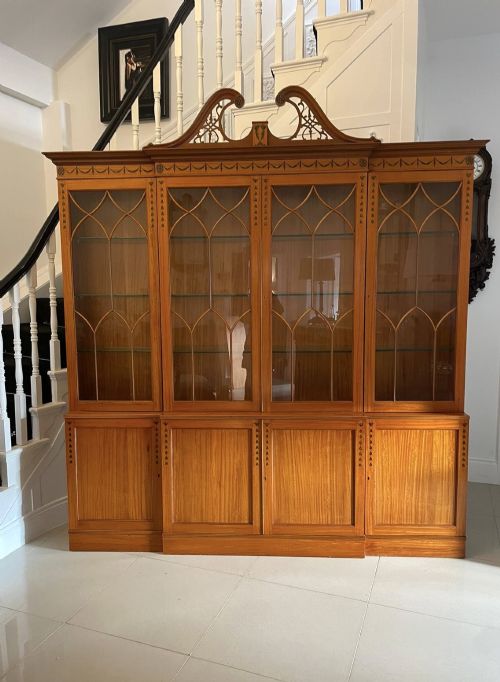
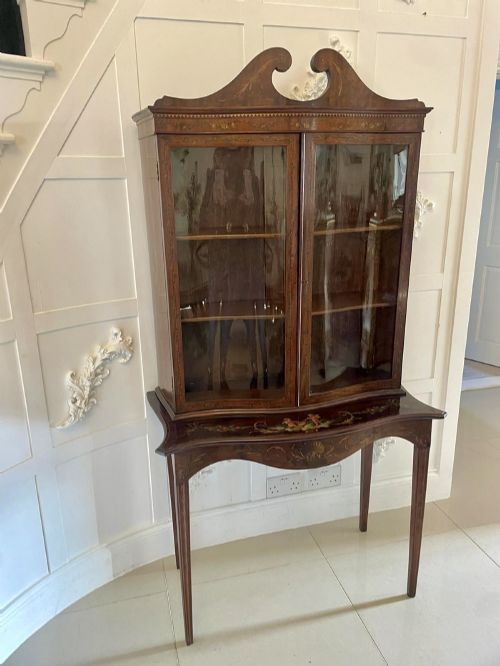
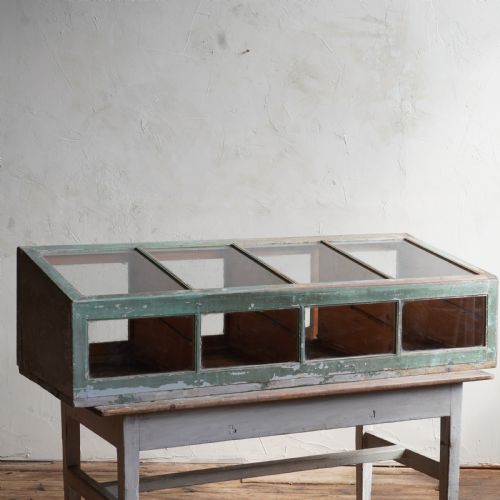
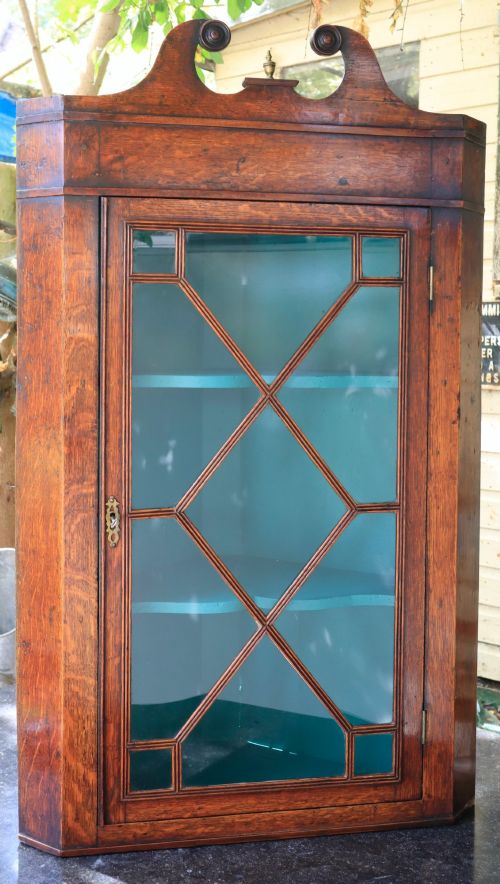
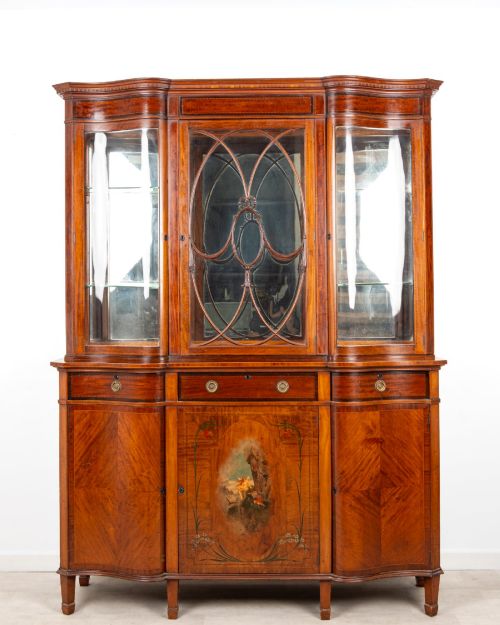
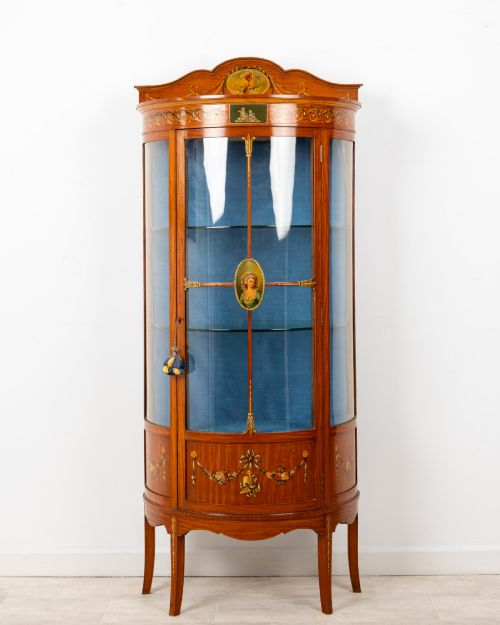
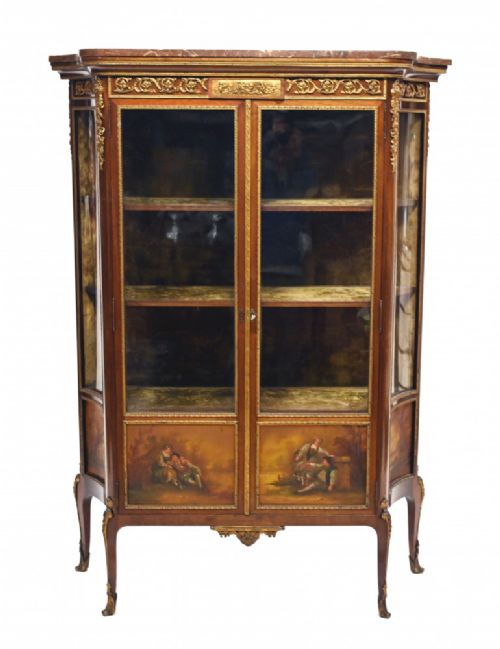
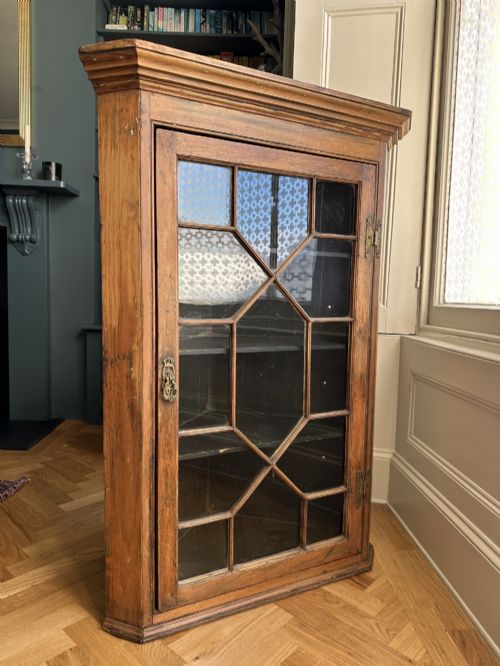
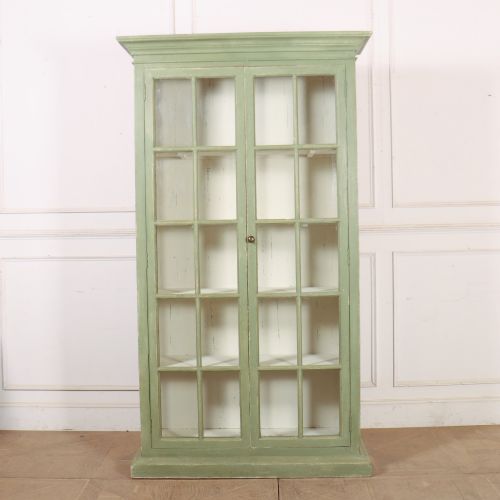
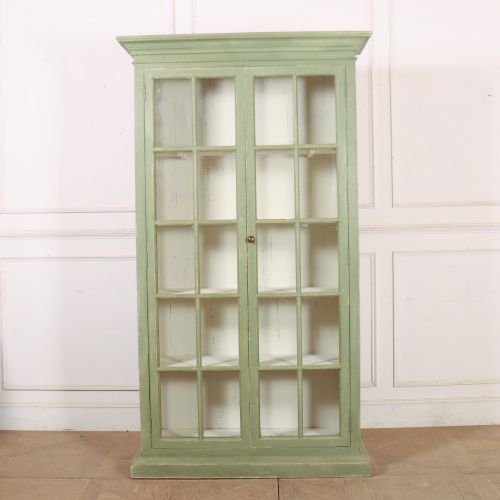
A painted wood glazed cabinet combines timber construction with glass panelling and painted finishes, appearing across display cabinets, bookcases, corner cabinets, and vitrines. These storage items originate from periods spanning the nineteenth century through the early twentieth century, taking forms from large breakfront bookcases down to compact wall hanging vitrines.
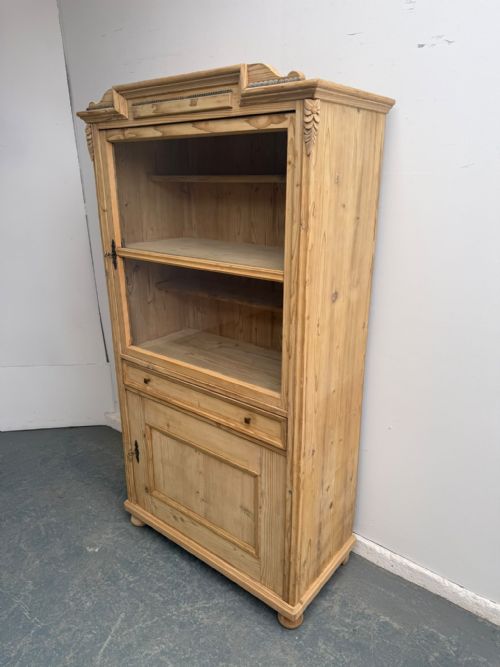
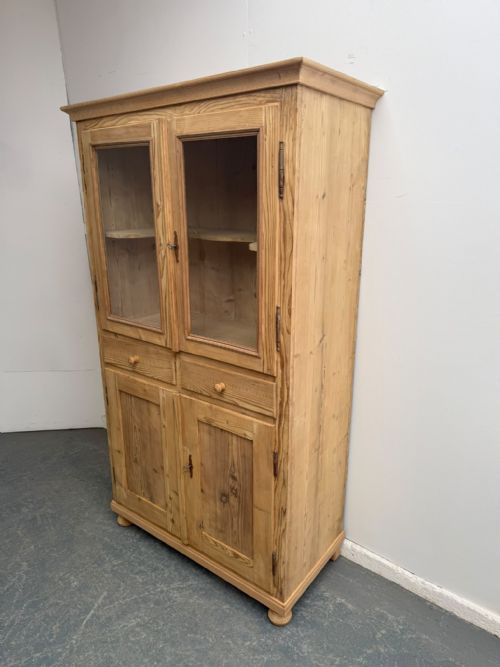
The most common examples on this page are Edwardian and Victorian display cabinets alongside nineteenth century bookcases finished in paint, satinwood, mahogany, and pine. Pieces range from English country house furniture and Scottish bookcases to continental designs such as French vitrines and Italian cabinets.
How they were made
Cabinet makers built these pieces using solid timbers like pine, mahogany, and satinwood, often applying paint finishes directly to the wood or incorporating original painted decoration and gilded details. Glass was fitted into doors using timber framing such as astragal bars, sometimes with concave glass or brass hardware completing the structure.
Surfaces received decorative treatment ranging from distressed paint and black paint to neoclassical decoration, Vernis Martin techniques, and inlaid satinwood details. Interior spaces often retained original painted decoration or natural wood finishes tailored for display purposes.
Materials across these listings include glass, brass, painted wood, satinwood, paint, pine, wood, and mahogany spanning the nineteenth and early twentieth centuries.
What varies in quality
The standard of a painted wood glazed cabinet depends upon the finesse of its timber construction and the execution of its painted surface. Pieces showing original painted decoration or fine satinwood inlay alongside well-proportioned astragal glazing stand apart from plain utility storage.
Integration of specialised elements like concave glass, brass fittings, and adjustable shelving elevates the work. Structural integrity in the doors and glass framing dictates how successfully the cabinet has survived its period.
The Painted Wood Glazed Cabinet Glossary
- Astral glazed
- Glass held within a framework of wooden bars dividing the window into smaller panes. This technique is frequently seen on large breakfront bookcases and display cabinets.
- Vitrine
- A glass-fronted display cabinet designed specifically for showing porcelain, curiosities, or decorative objects. These often feature glazed sides as well as doors.
- Breakfront
- A piece of furniture where the central section projects forward from the flanking wings. This architectural arrangement creates depth and shadow on large bookcases and cabinets.
- Vernis Martin
- A type of decorative lacquer finish developed in eighteenth-century France and imitated in later nineteenth-century pieces. It involves multiple translucent coats giving a rich, polished depth to painted surfaces.
- Serpentine
- A curved line that undulates outward in the centre and inward at the sides. It adds fluid movement to the frontage of cabinets and commodes.
Painted Wood Glazed Cabinet: Frequently Asked Questions
Where should I place a glazed cabinet?
These cabinets suit drawing rooms, dining spaces, or studies where books and collections benefit from protection against dust while remaining visible.
Positioning them away from direct sunlight preserves both the timber and any original painted decoration on the exterior.
How do I clean painted wood surfaces?
Dusting gently with a dry, soft cloth prevents the accumulation of particles without disturbing fragile historic paint layers.
Harsh chemical cleaning agents or excessive moisture must be avoided to protect nineteenth-century finishes and distressed paint.
Can shelves be adjusted inside?
Many period bookcases and vitrines feature adjustable shelving systems allowing books or tall display objects to fit comfortably.
Some early pine or country pieces have fixed wooden shelves determined by their original utilitarian function.