


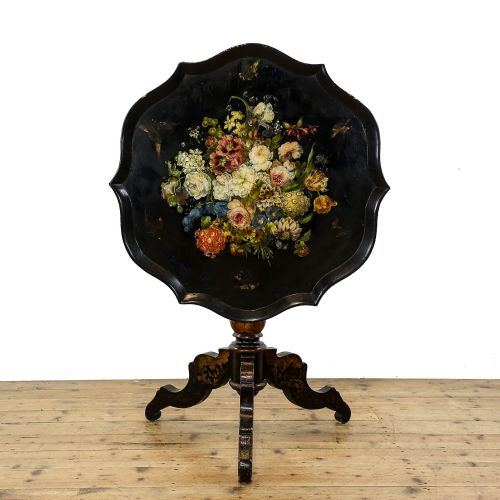

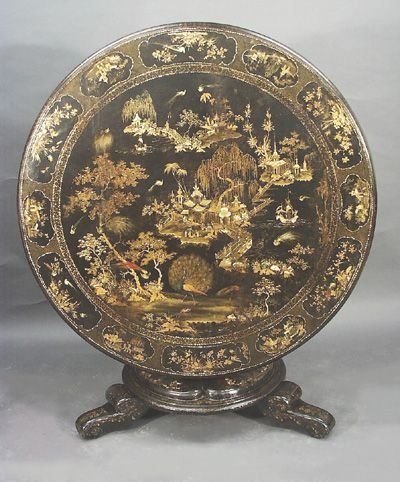
Painted Tripod Tea Table
A painted tripod tea table brings hand-decorated surfaces and historic utility into a room, offering a versatile resting place for cups or small objects.
Painted Tripod Tea Table
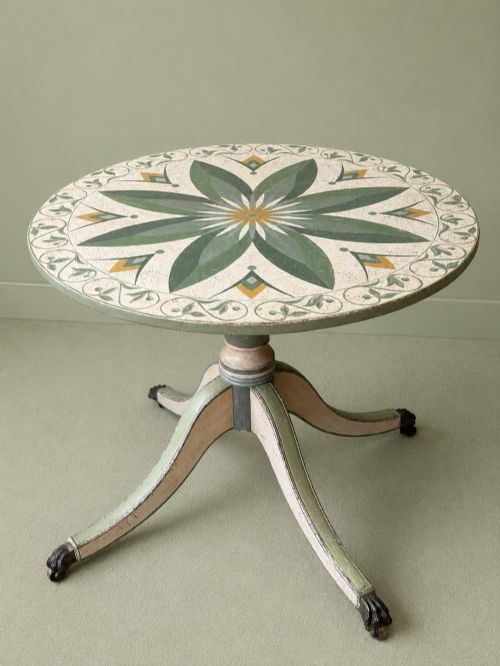
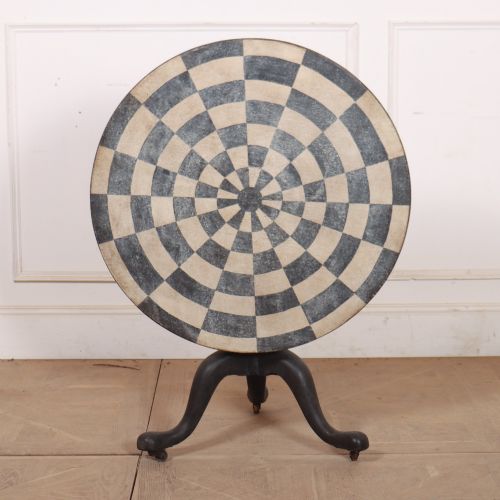
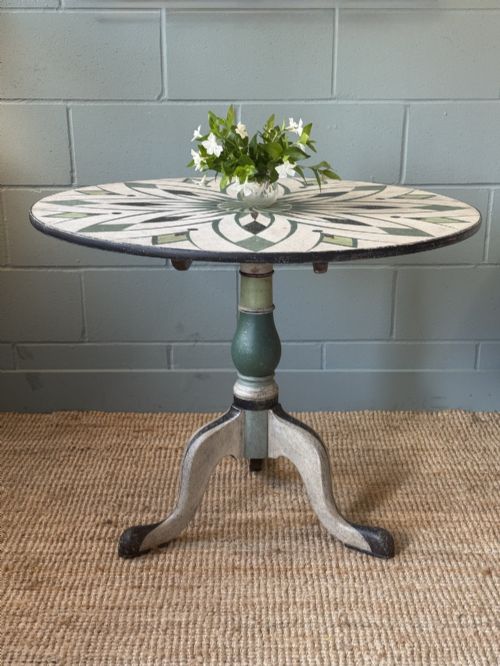
When you search for a painted tripod tea table, you encounter occasional tables, side tables, wine tables, and tilt top tables resting on three-legged supports. These pieces emerge across periods spanning the eighteenth century through the early twentieth century.
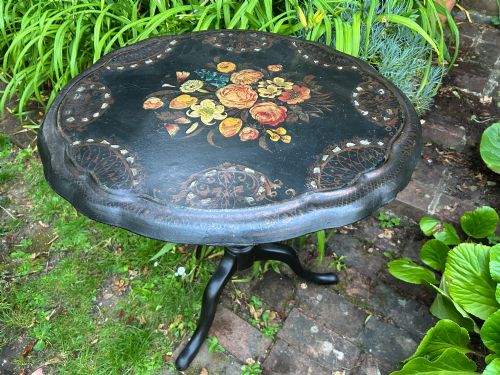
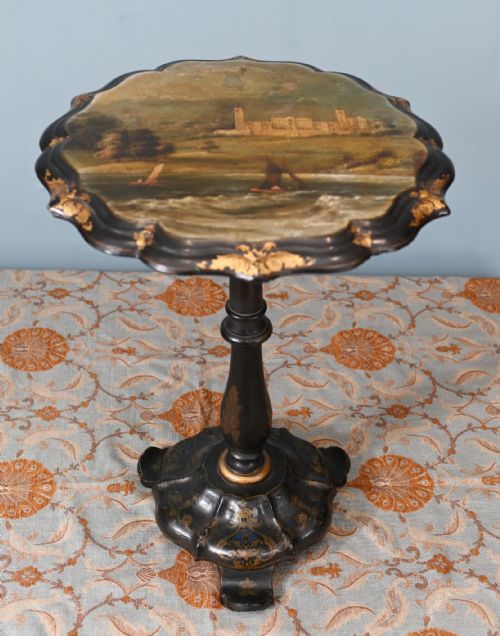
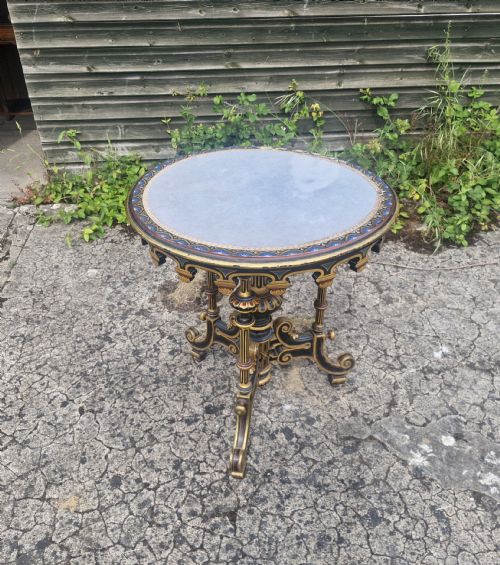
The version you are most likely to meet on this page is Victorian in origin, often featuring tilt tops or hand-painted floral decorations. Earlier examples date to the eighteenth century or early nineteenth century, whilst later variants include ebonised gypsy tables and papier-mâché wine tables.
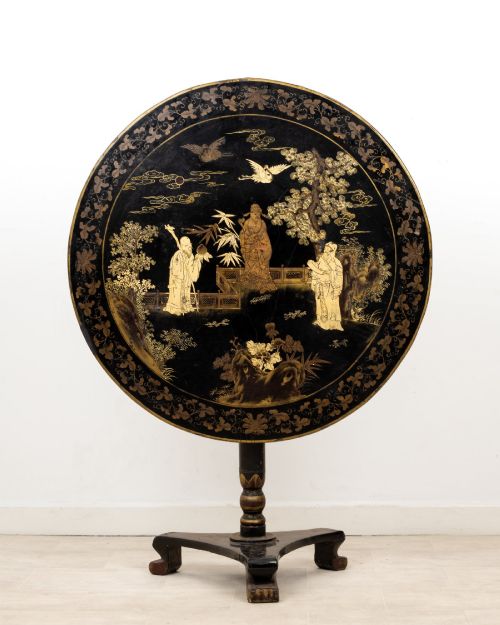
Formations range from standard tripod bases holding round tops to lacquered tray tables and ink-work surfaces. Makers utilised various timber foundations before applying paint, lacquer, gilt, or gold leaf.
How they were made
Construction relies on wood bases shaped into tripod supports, paired with surfaces designed to tilt or remain fixed. Artisans fashioned these tables from timber, ebonised wood, and papier-mâché.
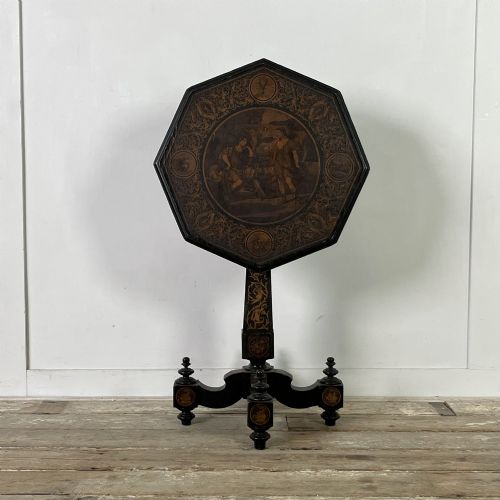
Decoration involved hand-painted motifs, lacquer, gilt, and gold leaf applications. Certain pieces display japanning or intricate ink work executed directly onto the wood or papier-mâché substrate.
Listings feature wooden tables decorated with paint, lacquer, gilt, brass, gold leaf, and papier-mâché across Victorian, Georgian, and Regency styles.
What varies in quality
Quality separates tables by the precision of the hand-painted or lacquered decoration relative to the age of the timber foundation. Original painted schemes contrast with later embellishments applied to older structures.
The refinement of the tripod turnings and the mechanical execution of the tilt top mechanism distinguish finer examples from standard production pieces.
The Painted Tripod Tea Table Glossary
- Tripod table
- A small freestanding table supported by a pillar above three legs. This construction allows the table to remain stable on uneven floors.
- Tilt top table
- A table with a hinged top that pivots into a vertical position when not in use. This mechanism saved space in historic interiors.
- Japanning
- A European imitation of East Asian lacquerwork using resin-based varnishes and paints. It was widely applied to eighteenth and nineteenth-century furniture.
- Papier-mâché
- A composite material made from paper pulp or reinforced paper sheets pressed and varnished. It provided a smooth surface for painted decoration on Victorian wine tables.
Painted Tripod Tea Table: Frequently Asked Questions
What is a painted tripod tea table?
A painted tripod tea table is an occasional or tilt-top table supported by three legs with a decorated surface.
These pieces were utilised historically for serving tea or displaying small decorative objects in parlours and drawing rooms.
How do I date a painted tea table?
Dating relies on examining the construction of the tripod base, the timber used, and the style of the painted decoration.
Pieces range from eighteenth-century English examples to Victorian papier-mâché or ebonised gypsy tables from the early twentieth century.
What is japanning?
Japanning is a European decorative technique that simulates traditional Asian lacquerwork through layers of varnish and paint.
It appears on eighteenth and nineteenth-century tables, often featuring dark backgrounds with contrasting painted details.