



Painted Wood Pedestal Table
A painted wood pedestal table brings surface pattern and structured elevation to a room through traditional craftsmanship.
Painted Wood Pedestal Table
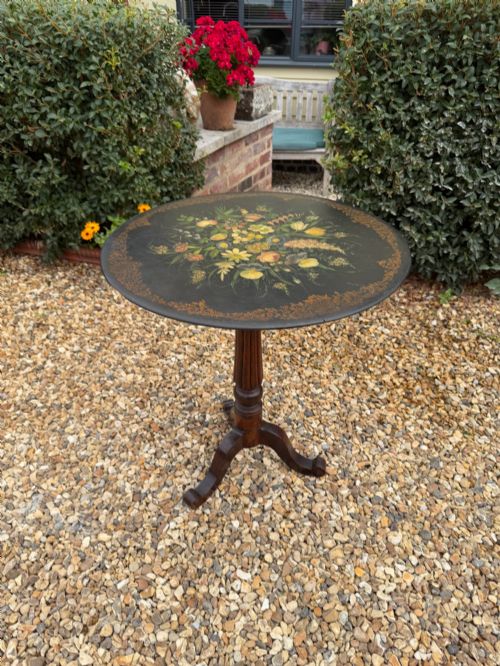
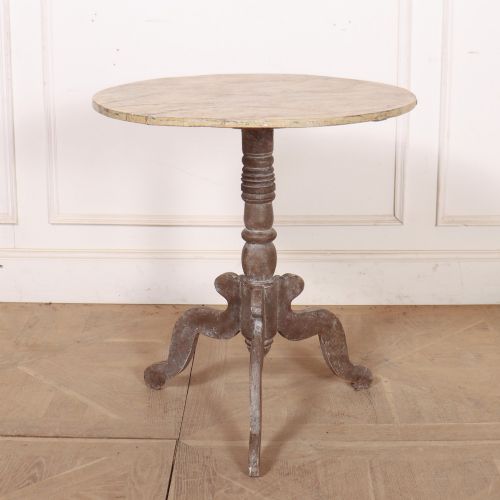
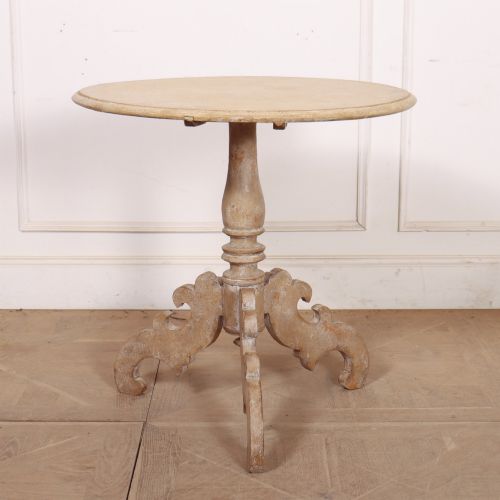
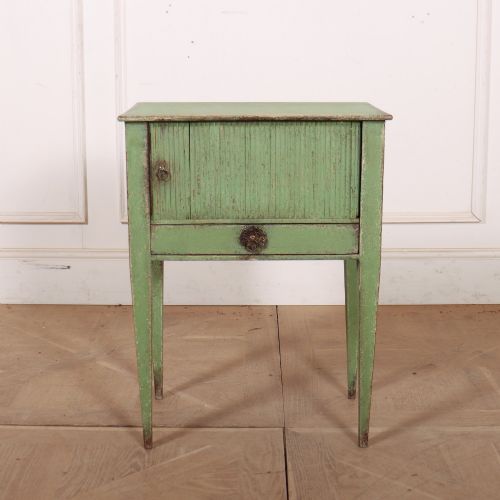
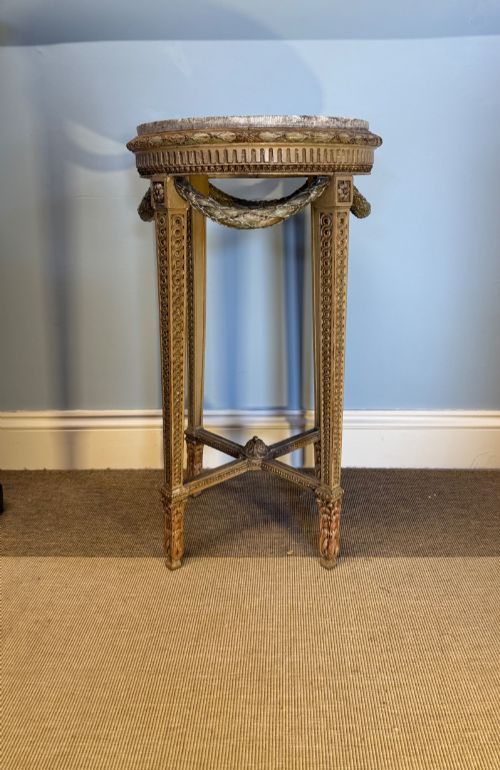
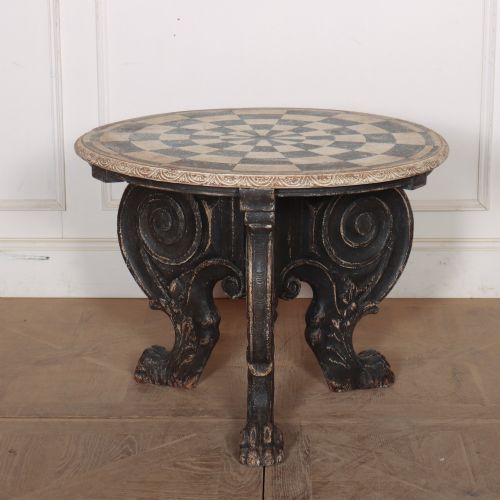
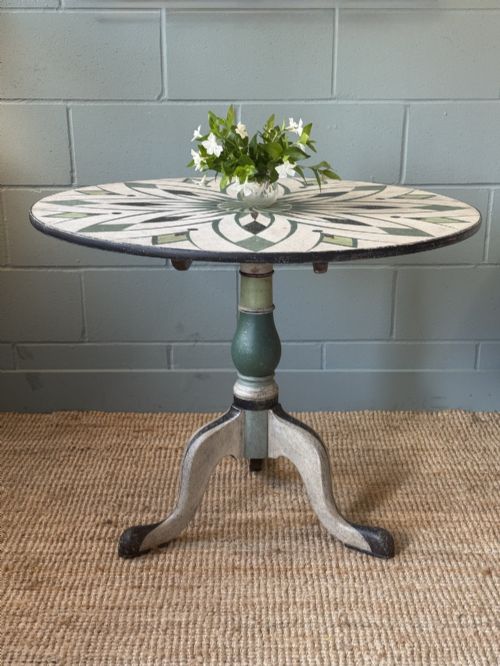
A painted wood pedestal table spans a variety of nineteenth century forms, from Swedish lamp tables to French gueridons and occasional tripod stands. Buyers searching this phrase encounter circular or multi-tiered surfaces raised on central columns, often decorated with floral motifs or finished in muted regional colour schemes. The selection leans heavily towards Victorian and nineteenth century examples featuring painted pine, satinwood, and sycamore.
Beyond standard occasional tables, the inventory includes specialised forms such as centre tables, bedside cupboards, and plant stands with painted or faux marble finishes. Continental pieces from Sweden, France, and Germany dominate the selection, bringing distinct neoclassical, rustic, and rococo revival influences to the central pillar format.
How they were made
These tables rely on solid timber foundations such as pine, oak, and sycamore, shaped into central pillars and sturdy tripod bases. Artisans applied layers of paint, gesso, or lacquer directly to the wood, sometimes incorporating decorative carving or contrasting brass and marble elements.
Surface decoration ranges from original hand-painted floral designs to later surface treatments and faux finishes imitating marble or more costly graining. Turning and joinery techniques stabilize the central pedestal, supporting round tops designed for lamps, bedside use, or display.
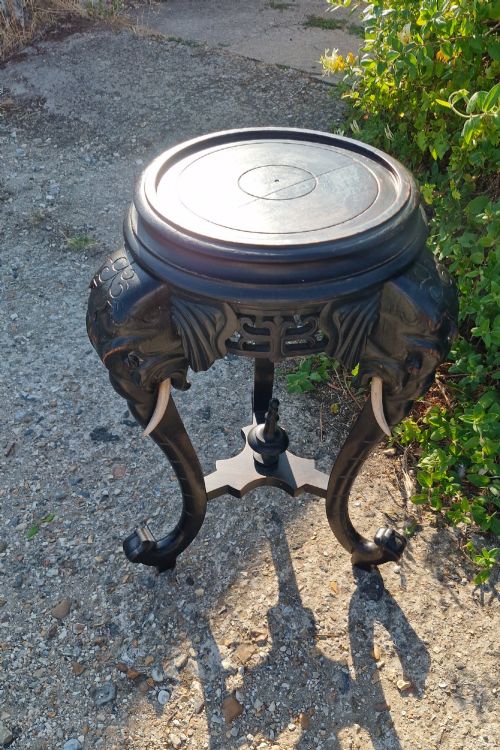
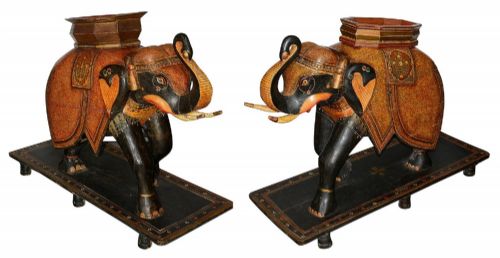
Several Victorian tables on offer feature carved wooden elephants complete with painted tusks.
What varies in quality
The distinction between ordinary and superior pieces rests on the integrity of the original paintwork versus later decorative additions. Tables retaining their untouched Swedish or continental painted surfaces hold greater interest than those bearing later, unrecorded floral overhauls.
Construction details also dictate standing, with sturdy turned pillars and heavy marble or solid wood tops separating finer salon pieces from utilitarian bedside cupboards.
The Painted Wood Pedestal Table Glossary
- Pedestal table
- A freestanding table supported by a single central column rising from a base or feet. This configuration frees up floor space around the perimeter of the furniture.
- Gueridon
- A small French occasional table, frequently round and supported by a single pillar or several graceful legs. These pieces gained popularity for holding lights or decorative objects in elite interiors.
- Tripod base
- A three-pronged support system attached to the bottom of a central column for stability. It appears frequently on nineteenth-century lamp and occasional tables.
- Faux marble
- A painted surface technique designed to imitate the veining and appearance of real stone. Artisans utilised this method on wood cylinders and table tops to achieve a classical look without the heavy weight of marble.
Painted Wood Pedestal Table: Frequently Asked Questions
What rooms suit a painted wood pedestal table?
These tables fit easily beside armchairs, beside beds, or as central accent points in smaller hallways and reception rooms. Their raised central pillar takes up minimal floor space while providing a convenient surface for lamps or display items.
They bring character and colour to neutral spaces, working particularly well against plain walls where their painted finishes can stand out as focal points.
How do I care for antique painted wood?
Keep these tables out of direct sunlight and away from rapid temperature changes to protect the aged timber and delicate painted surfaces from cracking or fading. Dust gently with a dry, soft cloth and avoid chemical polishes that might lift original or historic paint layers.
If the piece has a marble top, wipe spills immediately with a damp cloth and mild soap to prevent staining porous stone surfaces.
Are these tables sturdy enough for daily use?
Most nineteenth-century pedestal tables offer reliable stability for lamps, books, and decorative objects, provided the central column and base joints remain firm. Tripod bases distribute weight evenly, though care should be taken not to overload the edges of tilt-top or lighter occasional tables.
Checking that the central fixing beneath the top remains tight ensures the table stays balanced during everyday use.
How can I tell if the paintwork is original?
Original paint typically shows consistent wear, fine craquelure, and patination that matches the age of the underlying wood structure. Later decorative additions often appear flat, brighter, or lack the natural softening around edges and handling areas accumulated over decades.
Examining the surface under magnification can reveal older layers or preparation techniques beneath the top coat.