
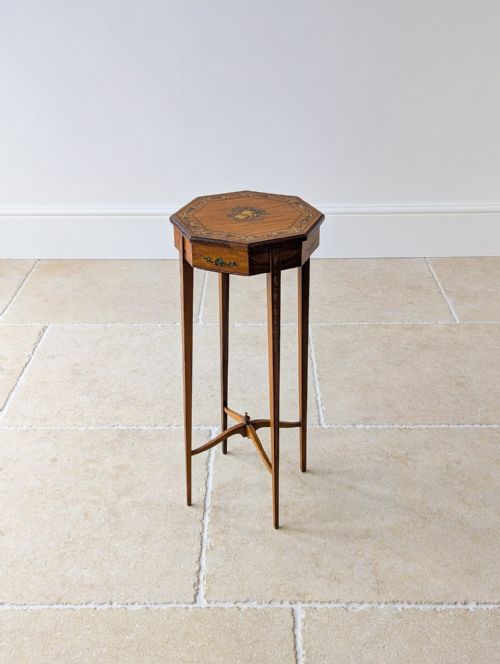

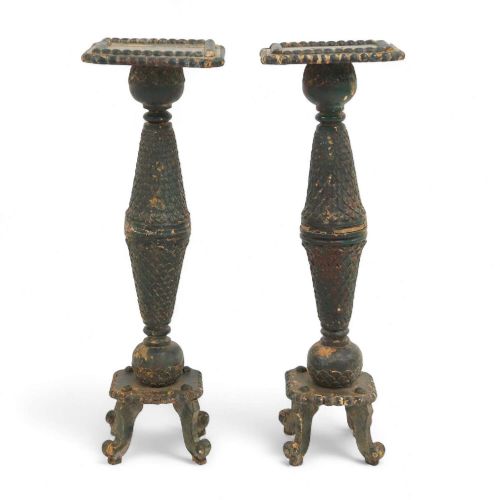


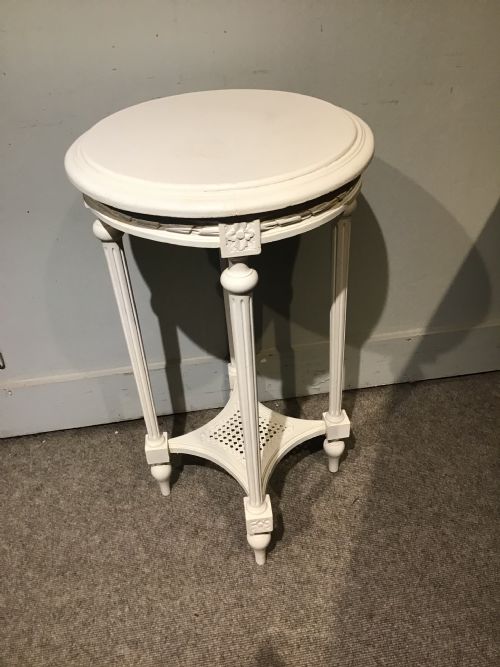


Painted Torchere Stand
A painted torchere stand brings height and colour to a dark corner, holding a lamp or a vase with timeless architectural grace.
Painted Torchere Stand
A painted torchere stand is a tall, slender pedestal designed to elevate a light source, a plant, or a decorative object within a room. These supports appear in forms ranging from simple columns to carved figural standards and occasional tables.
The versions most commonly met on this page span the eighteenth, nineteenth, and early twentieth centuries. They emerge from diverse design traditions, including French Chateau, Neoclassical, and Venetian styles.
Makers utilised various formats, such as plant stands, standard lamps, and pedestal columns, adapting the basic torchere shape for domestic display. Surfaces finished in paint, gesso, and gold leaf dominate the selection available to collectors.
How they were made
Carved wood provides the structural core for the majority of these stands, often layered with gesso to create a smooth surface for subsequent decoration. Artisans applied paint, parcel-gilt highlights, and gold leaf over these preparatory layers.
Certain pieces incorporate inset marble tops or glass elements, adding weight and contrasting textures to the carved wooden frames. Specialised techniques like simulated marble painting transform pine timbers into more costly stones.
Listings feature painted torchere stands spanning the eighteenth century through the Edwardian era, incorporating materials like marble, glass, and carved wood.
What varies in quality
Structural integrity and the balance of the slender shaft against a weighted base determine practical utility. Superior stands maintain their original proportions and joinery without excessive leaning or instability.
The Painted Torchere Stand Glossary
- Torchere
- A tall ornamental stand originally designed to carry a torch or candle. Later adaptations frequently support electric lamps or floral arrangements.
- Gesso
- A plaster mixture applied to wood to create a smooth base for gilding and painting. It allows intricate relief work to be formed before decoration.
- Parcel-gilt
- Partially gilded with gold leaf, leaving areas of the underlying paint or wood exposed. This technique creates a contrasting two-tone effect.
- Vernis Martin
- A type of European lacquer developed to imitate Asian lacquerware. It appears on fine eighteenth and nineteenth-century French furniture.
- Blackamoor
- A decorative sculptural form depicting a dark-figured human figure, frequently serving as a stand or torchere in Venetian pieces.
Painted Torchere Stand: Frequently Asked Questions
What is a torchere stand used for?
A torchere stand serves primarily to elevate objects such as lamps, vases, or plants to a more prominent viewing height.
Historically designed for lighting, modern interiors utilise them to introduce vertical interest and decorative focus into vacant corners or hallways.
How do I identify the period of a torchere?
Period identification relies on observing the interplay of decorative styles, construction methods, and materials present in the piece. Neoclassical motifs point towards the late eighteenth century, while revival styles often indicate nineteenth or early twentieth-century manufacture.
Examining the base timber and the composition of the gesso or paint layers further clarifies the age of the object.
Are painted torchere stands stable enough for lamps?
Most stands are engineered with weighted bases or sturdy tripod feet to support standard lamps and decorative vessels safely.
Heavier marble top variants offer additional stability, though slender wooden shafts still require placement away from heavy household traffic.
How should I care for a painted and gilded surface?
Maintenance requires gentle dusting with a soft, dry cloth to prevent the accumulation of grit on delicate paint and gold leaf. Moisture and harsh cleaning agents must be avoided entirely, as they can lift fragile gesso and nineteenth-century pigments.