


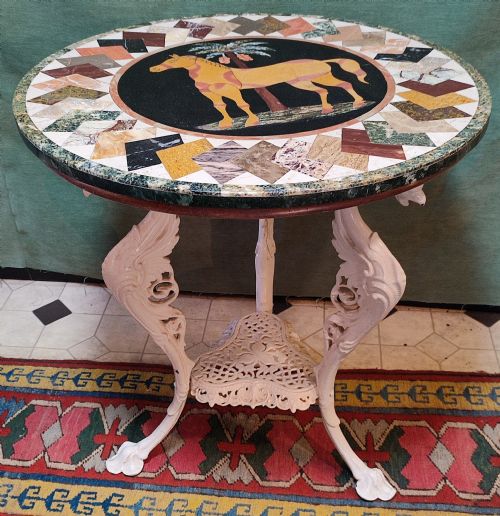


Painted Top Coffee Table
A painted top coffee table brings colour and character to a room, offering a decorative surface that elevates standard living room furniture.
Painted Top Coffee Table
A painted top coffee table encompasses a variety of low tables and occasional pieces featuring decorated or painted surfaces. The selection ranges from nineteenth century centre tables and side tables to Edwardian tray top designs and occasional pieces.
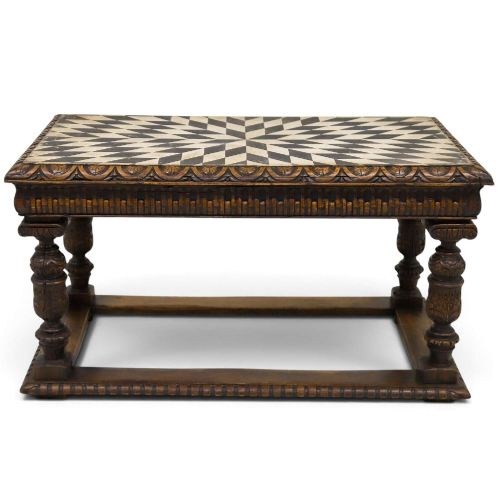
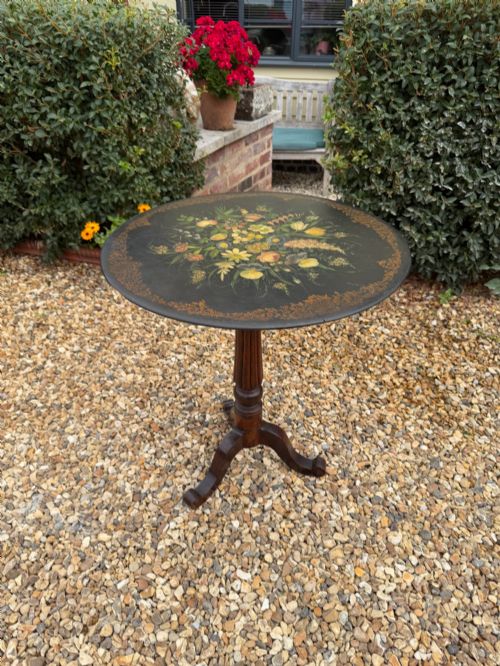
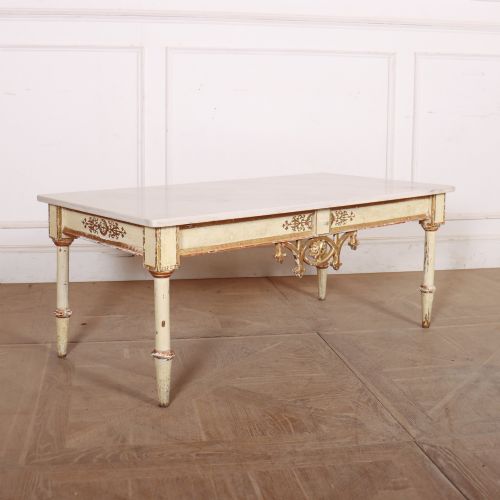
Buyers frequently encounter pieces featuring Chinoiserie lacquer, Venetian styles, and marble tops set upon wood, cast iron, or giltwood bases. Origins span the nineteenth century through the 1930s, alongside specific periods such as Edwardian and Regency.
How they were made
Makers utilised wood, marble, slate, and papier-mâché to construct the foundational tabletops and surfaces. These materials were combined with paint, lacquer, and gilding to create detailed decorative schemes.
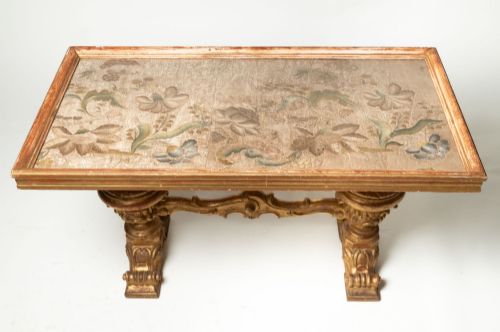
Support structures involve carved oak, giltwood, and cast iron stands, often tailored to specific styles such as Renaissance Revival, Italian Baroque, and French Régence.
Painted Top Coffee Table Retail Price Guide 2026
Typical asking prices for painted top coffee table among the pieces listed under this phrase on Sellingantiques today, from the lower quarter to the upper quarter. They describe what is for sale here now, not the wider market.
Several tables started life as portable serving trays before finding a permanent home on decorative stands.
What varies in quality
Quality rests upon the execution of the painted or lacquered decoration and the choice of materials used for the top and base. Finer examples display meticulous hand-painted detail or well-preserved lacquer work paired with solid wood or genuine marble.
The integration between the top surface and the supporting stand also dictates the overall standard. Tables where the decorative top and the base share a cohesive period design demonstrate greater craftsmanship.
The Painted Top Coffee Table Glossary
- Chinoiserie
- European decorative style reflecting Chinese artistic influences, commonly seen in lacquered furniture with gold and painted motifs.
- Tole
- Painted or enamelled sheet metal, frequently utilised for decorative trays placed on stands to form tables.
- Giltwood
- Wood that has been treated with gold leaf or gilt, adding a reflective metallic finish to carved frames and bases.
- Centre table
- A freestanding piece designed to be viewed from all sides, placed in the middle of a room rather than against a wall.
- Papier-mâché
- A composite material made from paper pulp or reinforced paper sheets, moulded and lacquered to form lightweight table surfaces.
Painted Top Coffee Table: Frequently Asked Questions
What is a painted top coffee table?
A painted top coffee table is a low surface featuring decorative paintwork, lacquer, or a contrasting material inset upon a wooden or metal base. These tables serve both functional and ornamental roles in sitting rooms.
They derive from various historical periods, incorporating styles from Italian Neoclassical to Edwardian Chinoiserie.
How do I clean a painted tabletop?
Cleaning requires a soft, dry cloth to remove dust without disturbing delicate paint or lacquer layers. Avoid harsh chemical cleaners or excessive moisture which can damage aged finishes.
For marble or slate inserts, use appropriate stone cleaners applied sparingly with a soft cloth.
Are these tables sturdy enough for daily use?
Many of these pieces began as centre tables, occasional tables, or serving trays that were later adapted onto stands. Their structural robustness depends on the materials used in the base, such as carved oak or cast iron.
Care should be taken with antique lacquer and painted surfaces to prevent scratching during everyday use.
How do I identify the period of a table?
Dating relies on examining the construction methods, materials, and stylistic motifs present in both the top and the base. Characteristics such as Regency proportions or Edwardian Chinoiserie details offer clues to the era of manufacture.
Comparing the woodwork and fixings helps confirm whether the top and stand originate from the same period.