







Painted Tin Dish
When you search for a painted tin dish, you encounter tin-glazed earthenware and faience pieces spanning several centuries of hand-painted ceramic tradition.
Painted Tin Dish
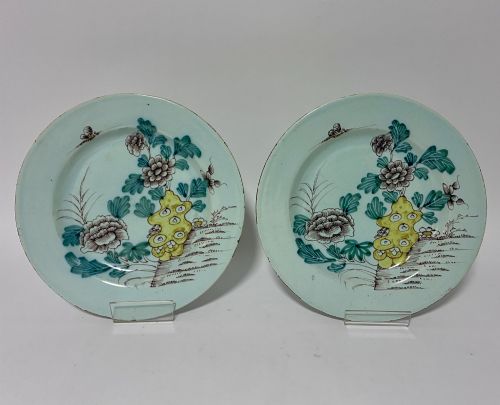
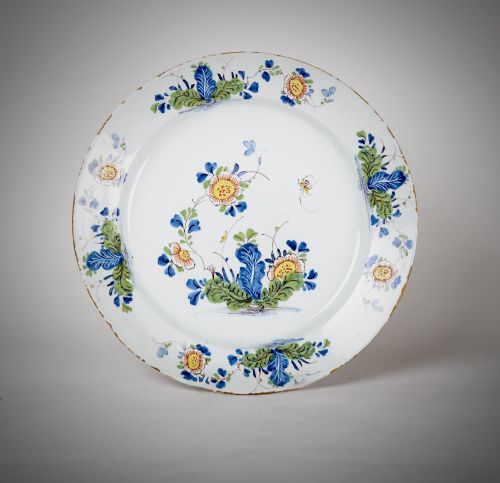
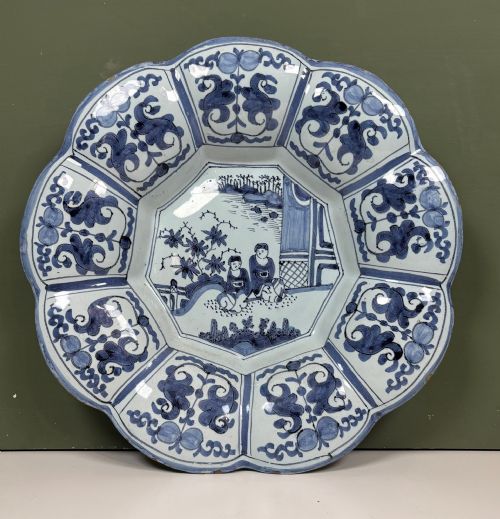
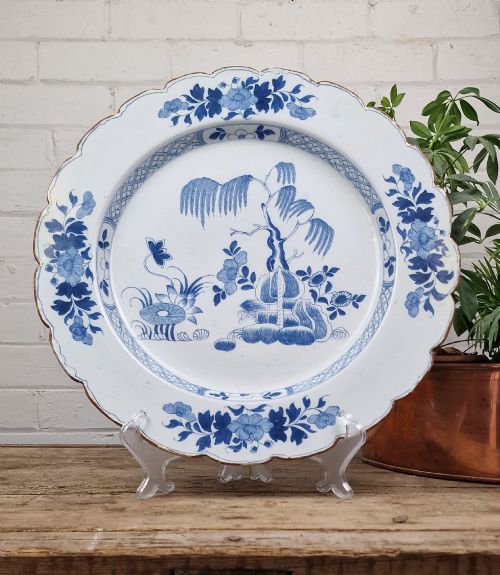
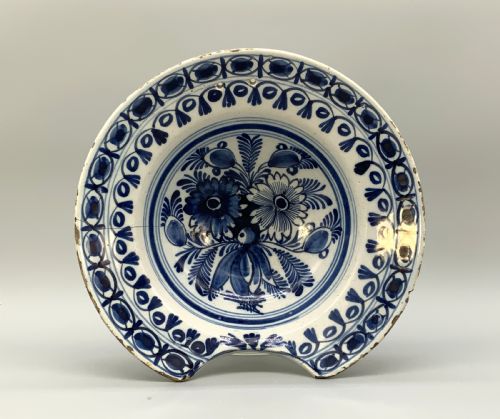
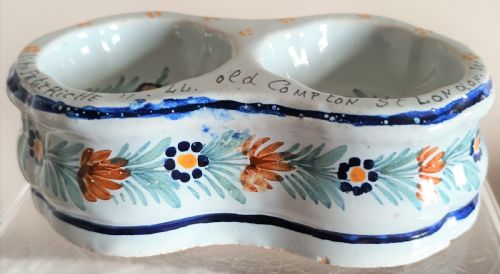
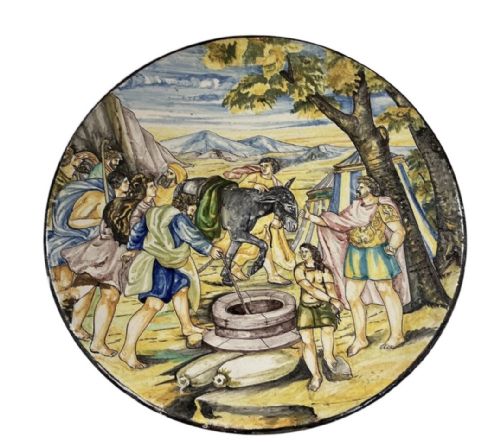
A painted tin dish encompasses tin-glazed earthenware forms including chargers, decorative plates, bowls, salt cellars, and bleeding dishes originating from English, Dutch, French, Spanish, and Italian kilns. Buyers searching this phrase meet domestic and decorative vessels shaped as large display chargers, lobbed dishes, and shallow bowls from the seventeenth century onwards.
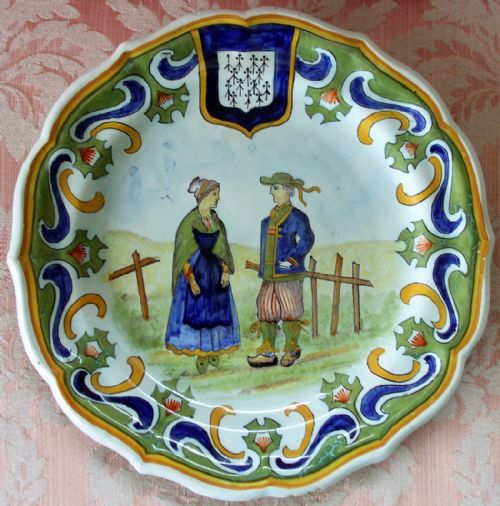
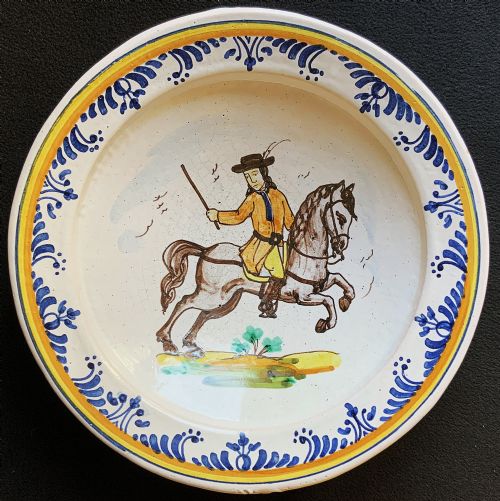
The assortment on this page concentrates heavily on eighteenth-century Delftware, alongside nineteenth-century French faience and Continental maiolica. Makers utilised tin-glaze to achieve an opaque white surface suitable for elaborate blue and white or polychrome hand-painted scenes, floral motifs, and geometric patterns.
How they were made
Potters shaped earthenware clay into plates, chargers, and bowls before applying a tin glaze that fired into an opaque white background. Artisans then hand-painted designs directly onto this absorbent unfired glaze using pigments such as cobalt oxide for blue decoration or a palette of colours for polychrome examples.
The prepared pieces underwent kiln firing to fuse the metallic oxide pigments with the tin glaze, producing the distinctive glossy surface characteristic of Delftware, faience, and maiolica.
Painted Tin Dish Retail Price Guide 2026
Typical asking prices for painted tin dish among the pieces listed under this phrase on Sellingantiques today, from the lower quarter to the upper quarter. They describe what is for sale here now, not the wider market.
Listings feature tin-glazed earthenware forms ranging from seventeenth-century Dutch lobbed dishes to twentieth-century Moorish style charger plates.
What varies in quality
Quality rests upon the crispness of the hand-painted brushwork and the ambition of the depicted subject, ranging from simple geometric floral borders to complex historical or figurative scenes. Early examples show deliberate control in pigment application, whereas lesser pieces display hurried execution in the cobalt oxide or polychrome pigments.
The stability of the tin glaze and the evenness of the earthenware body during firing distinguish superior chargers and plates from routine domestic ware.
Quimper French Faience·Desvres French Faience·Rouen French Faience
The Painted Tin Dish Glossary
- Tin-glazed earthenware
- Earthenware pottery covered with a glaze containing tin oxide to produce an opaque white surface. This technique forms the foundation of European Delftware and faience.
- Charger
- A large decorative plate intended for display on a wall or sideboard rather than for service at the dining table. These broad vessels often feature detailed central painted scenes.
- Polychrome
- Decoration employing multiple distinct colours applied by hand. In these wares, pigments sit within the tin glaze to depict florals, figures, or landscapes.
- Faience
- European tin-glazed earthenware produced primarily in France, Spain, and Italy. The term encompasses decorative dishes, saucers, and boxes decorated in blue and white or colours.
- Cobalt oxide
- A metallic pigment used to produce deep blue painted decoration on tin-glazed ceramics. It reacts with the glaze during firing to yield distinct cobalt tones.
Painted Tin Dish: Frequently Asked Questions
How were painted tin dishes used?
Large chargers and plates served primarily as decorative wall hangings or display pieces on sideboards within wealthy homes. Smaller bowls, salt cellars, and specialised vessels fulfilled specific domestic and dining functions.
Over time, these ceramic items transitioned from utilitarian table objects into cherished decorative displays reflecting changing interior fashions.
How do I tell Dutch Delft from English Delftware?
English and Dutch pieces share tin-glazed earthenware techniques and blue-and-white palettes, but subtle differences in clay bodies and painting styles distinguish them. Dutch workshops frequently produced large geometric chargers, while English kilns like Lambeth focused on distinct floral and Chinoiserie interpretations.
Examining the glaze texture, foot ring construction, and pigment tone helps differentiate the regional origins of eighteenth-century examples.
What does polychrome mean on these ceramics?
Polychrome decoration indicates the use of multiple hand-painted colours beyond traditional blue and white. Artisans applied various mineral pigments onto the unfired tin glaze to create vibrant floral, geometric, and figurative compositions.
These multi-coloured pieces often require precise kiln temperature control to ensure the distinct pigments fuse evenly into the white glaze.