




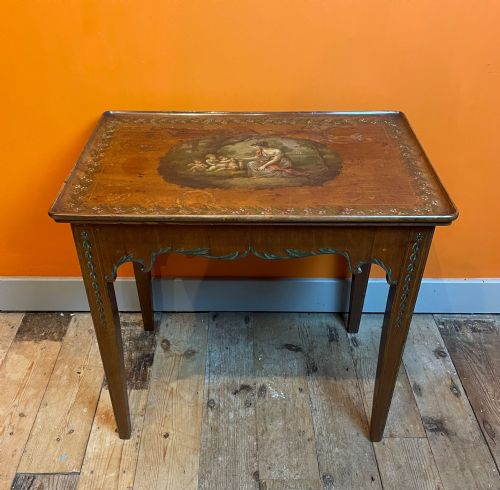


Painted Tea Tray Table
These painted tea tray table examples combine portable serving vessels with stable supports, offering versatile surfaces for modern interiors.
Painted Tea Tray Table
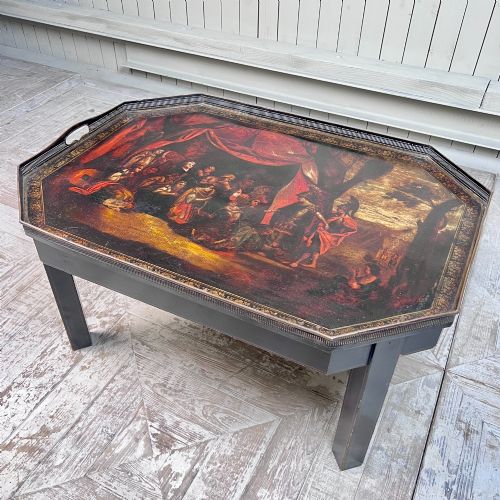
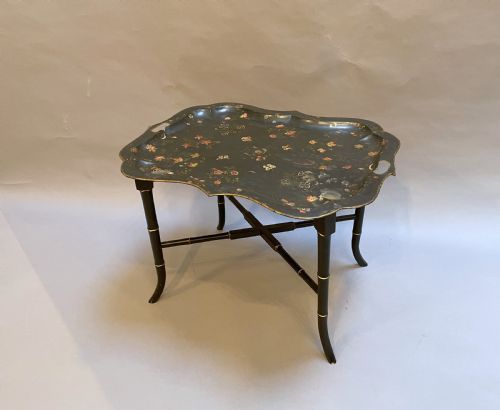
A painted tea tray table brings together a removable serving tray and a supportive stand, creating a flexible surface for daily use. When you search for a painted tea tray table, you encounter diverse forms ranging from low coffee tables to taller occasional pieces.
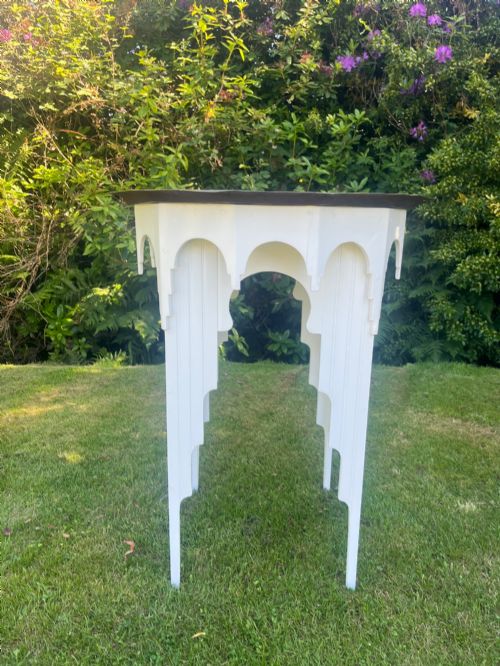
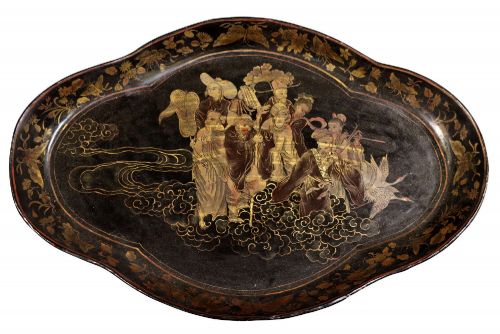
The pieces on this page span several distinct periods including the Georgian era, the Regency period, the Victorian epoch, and Edwardian times. You will frequently find tray tables featuring Chinoiserie decoration, Venetian Rococo styling, Moorish Revival details, or classical scenes.
Many examples pair a historical painted or lacquered tray with either a period stand or a later support. These surfaces serve multiple functions in a modern room, operating as side tables, coffee tables, or occasional furniture.
Materials and construction methods
Makers constructed these trays using papier-mâché, wood, or toleware metal, often applying layers of dark lacquer as a base. Artisans then built up detailed surface schemes using paint, gilt, and gold leaf to depict figurative scenes, landscapes, or floral motifs.
Supports take various forms, utilising timber stands, iron frames, or folding bases designed to hold the removable tray securely. The integration of painted decoration with sturdy structural materials defines the manufacturing tradition of these tables.
Painted Tea Tray Table Retail Price Guide 2026
Typical asking prices for painted tea tray table among the pieces listed under this phrase on Sellingantiques today, from the lower quarter to the upper quarter. They describe what is for sale here now, not the wider market.
Listings incorporate pieces spanning from the Georgian period through the 1930s, utilising wood, papier-mâché, metal, and lacquer.
Assessing quality and craftsmanship
Quality rests primarily in the precision of the hand-painted artwork and the depth of the lacquer finish. Superior examples display intricate brushwork, well-preserved gilding, and balanced composition across the surface of the tray.
The relationship between the tray and its stand also influences the character of the piece. Tables retaining their original custom-made stands generally command greater interest than those pairing older trays with later or replacement bases.
Jennens & Bettridge
The Painted Tea Tray Table Glossary
- Papier-mâché
- A composite material made from paper pulp or layers of paper bonded with glue, pressed, and dried to form a rigid surface suitable for lacquer and paint. It provides a lightweight yet durable base for decorative trays.
- Toleware
- Painted or lacquered sheet metal utensils and decorative objects produced in Europe and Britain. This material often forms the foundation for portable serving trays placed onto folding stands.
- Gilt
- The application of gold leaf or gold paint to a surface to provide metallic highlights. This technique enhances the decorative contrast against dark lacquer backgrounds.
Painted Tea Tray Table: Frequently Asked Questions
Are the trays removable from the stands?
Most examples feature a detachable tray resting on a folding or fixed base, allowing the surface to function independently as a serving vessel.
Historically, servants carried the tea service into a room on the tray before placing it onto the waiting stand.
How do I care for a lacquered surface?
Maintain lacquered and painted surfaces by dusting gently with a dry, soft cloth and avoiding exposure to direct sunlight or moisture.
Keep hot cups and wet items off delicate areas by using coasters to protect the historic finish underneath.
Can these tables be used daily?
These tables adapt well to modern living rooms as coffee tables or side tables, holding books, lamps, and everyday items.
Handle the older surfaces with reasonable care to preserve the original paintwork and structural integrity over time.
What is the difference between tole and papier-mâché?
Tole refers to painted sheet metal, whilst papier-mâché uses compressed paper pulp treated with varnishes and dark lacquer.
Both materials offer smooth grounds for detailed artistic painting but differ notably in weight and rigidity.