




Vintage Metal Tray Stand
A vintage metal tray stand organises hallway umbrellas and walking sticks using robust materials shaped across Victorian and twentieth-century periods.
Vintage Metal Tray Stand
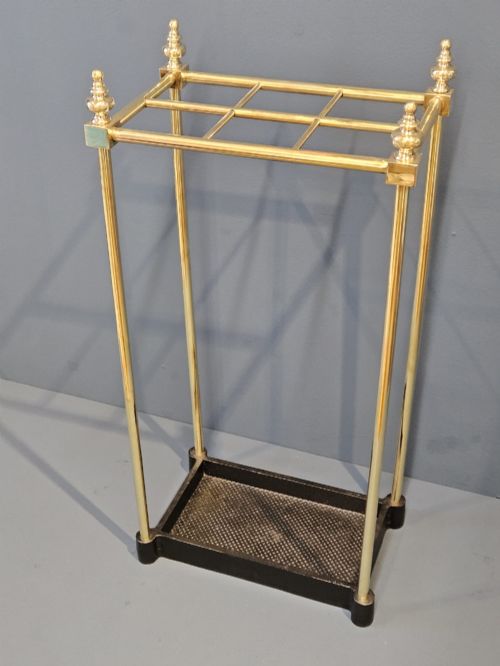
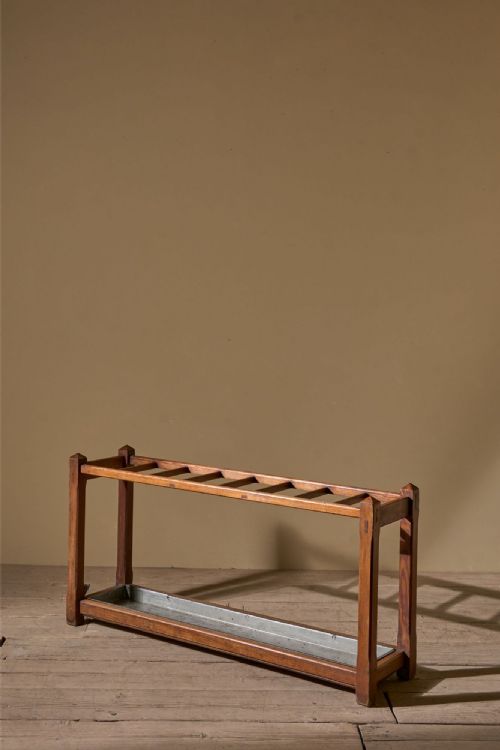
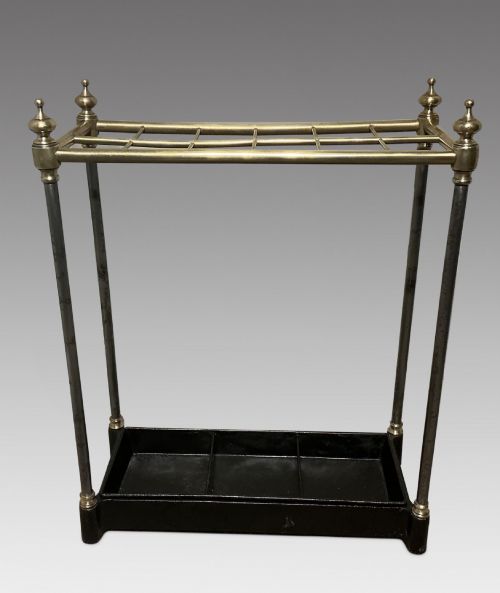
These pieces are functional hallway furnishings designed to hold wet umbrellas and walking sticks, appearing primarily as umbrella stands, stick stands, and occasional tray tables across this selection. Buyers find sturdy examples spanning the nineteenth century through the Edwardian and Art Deco eras, constructed to manage daily household entrance requirements.
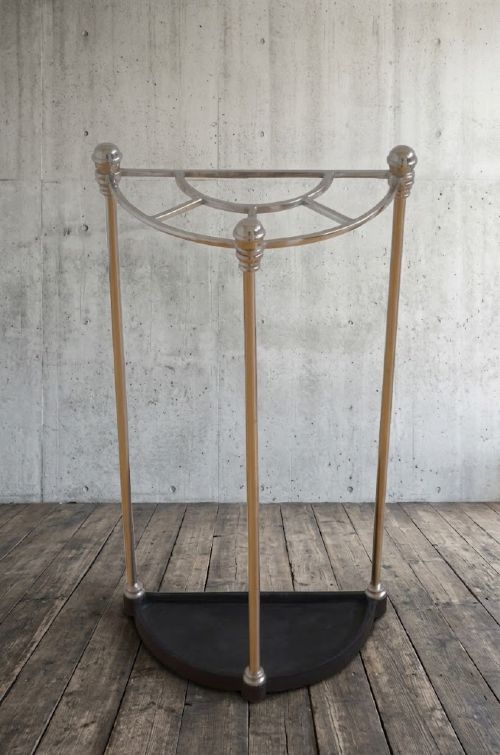
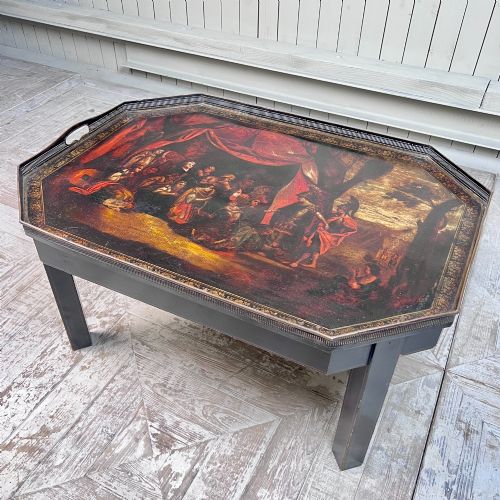
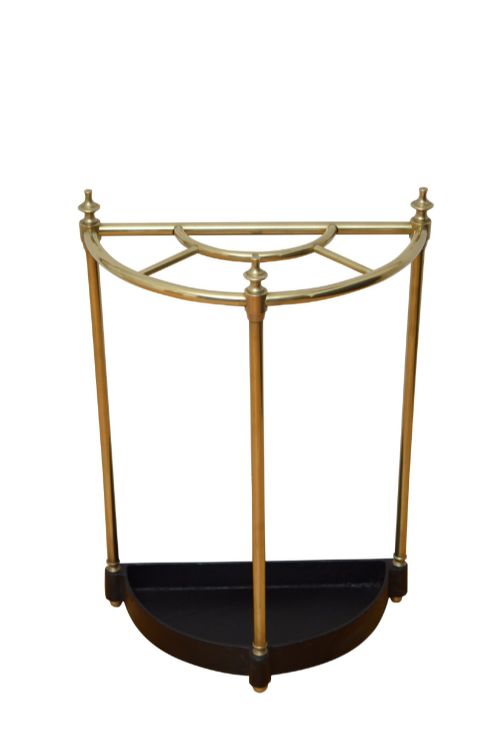
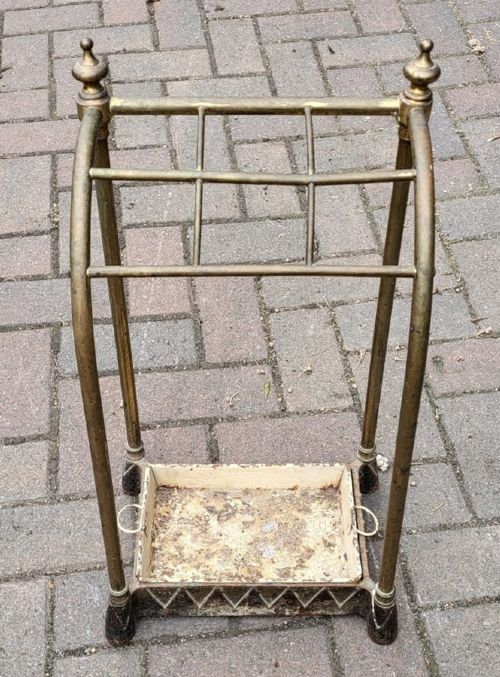
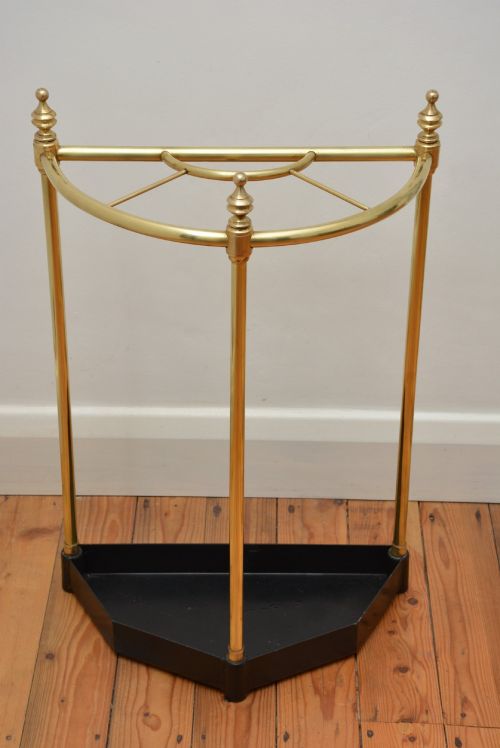
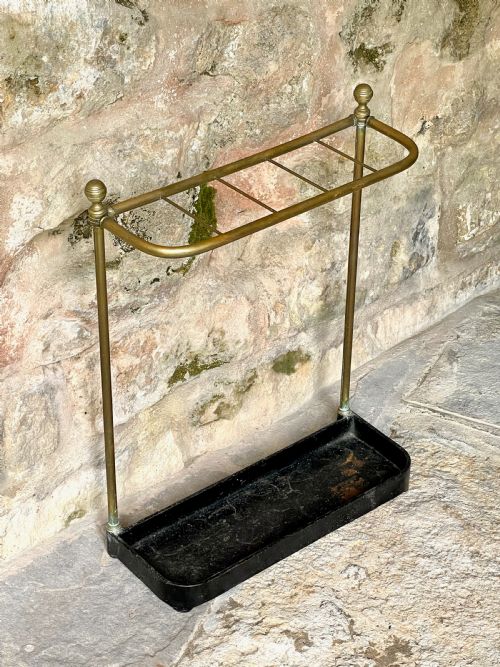
The most common forms on this page combine cast iron frames with brass rails or incorporate dedicated metal drip trays to protect floors. Pieces range from demilune hall stands to substantial twenty-four ring umbrella holders and occasional tables with removable metal trays.
Origins stretch across English, French, Belgian, and Italian workshops, reflecting diverse regional tastes in hallway organisation. Victorian cast iron and brass combinations dominate the available selection, alongside later nickel-plated and painted variations.
How they were made
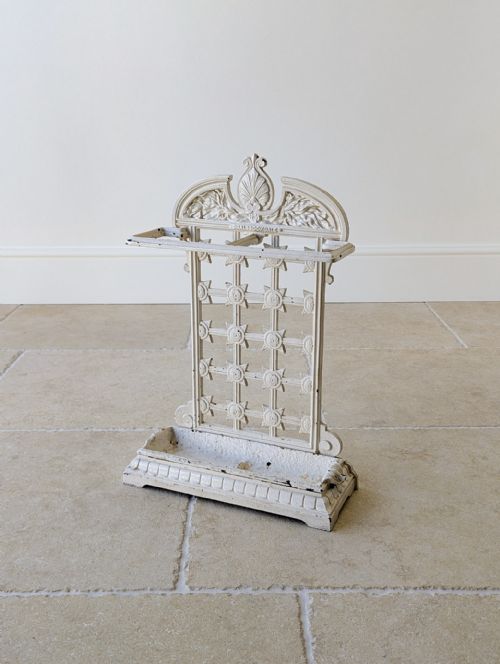
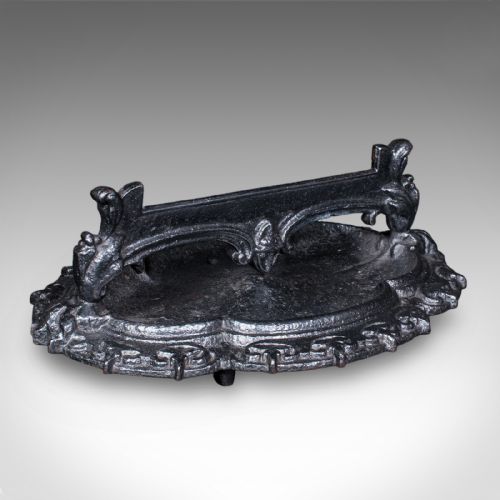
Foundries utilised durable cast iron for heavy structural frames and bases, often moulding intricate patterns, Gothic revival motifs, or plain structural rings for umbrella storage. Brass and copper components were shaped, cast, and turned to form rails, decorative loops, and removable drip trays.
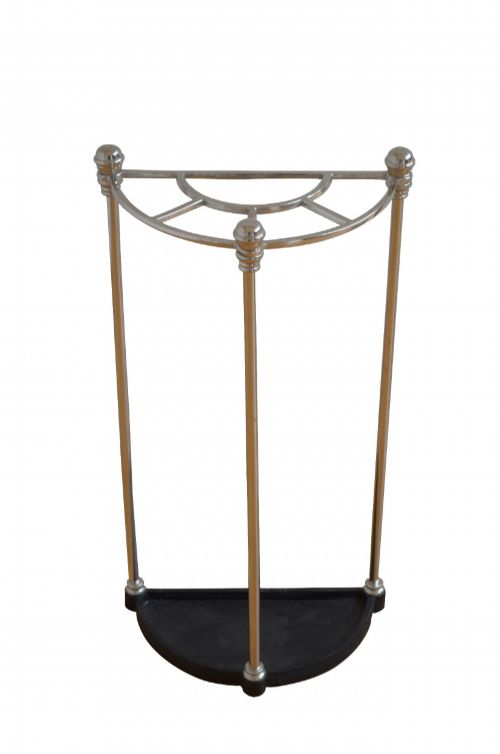
Makers integrated secondary materials such as oak, pine, walnut, and onyx to complement the primary metal structures. Nickel plating and painted finishes were applied to protect surfaces from moisture and align with Art Nouveau and Art Deco aesthetic shifts.
Vintage Metal Tray Stand Retail Price Guide 2026
Typical asking prices for vintage metal tray stand among the pieces listed under this phrase on Sellingantiques today, from the lower quarter to the upper quarter. They describe what is for sale here now, not the wider market.
What varies in quality
Construction substance dictates the grade of a piece, separating heavy, stable cast iron frames from lighter, less robust alternatives. The presence of original metal drip trays significantly elevates a stand's integrity, as these components frequently suffered from rust and subsequent loss or replacement.
Detailing in metalwork and casting crispness distinguish superior examples from standard utility items. Refined finishing, such as integrated division rings, decorative brass casting, and intact patination across copper and bronze elements, marks the upper tier of the range.
Coalbrookdale·WMF
The Vintage Metal Tray Stand Glossary
- Demilune
- A half-moon shape used for umbrella stands designed to sit flush against a hallway wall. This curved form maximises floor space in narrow entrance passages.
- Tole
- Painted or enamelled metal, typically tin or iron, utilised for decorative trays and vessels. It provides a smooth surface for painted ornamentation.
- Drip tray
- A removable metal basin positioned at the base of a stand to catch water from wet umbrellas. It protects underlying flooring from moisture damage.
- Cast iron
- An iron-carbon alloy poured into moulds to create rigid, heavy frames. It forms the stable foundation for many nineteenth-century hallway stands.
- Art Nouveau
- A decorative style characterised by fluid, organic lines and floral motifs prevalent around nineteen hundred. This aesthetic influenced the shaping of metal trays and stands.
Vintage Metal Tray Stand: Frequently Asked Questions
Where were these stands placed in a home?
These stands traditionally stood in entrance halls, vestibules, or boot rooms where wet weather gear was deposited upon entry.
Their narrow profiles allowed them to fit neatly against corridor walls without obstructing movement.
How do I care for a metal stand?
Maintain the metal surfaces by dusting regularly and keeping the internal drip trays free of standing water to prevent corrosion.
Apply neutral wax sparingly to cast iron or brass elements if preservation of the current patination is desired.
How do I distinguish Victorian from Art Deco pieces?
Victorian examples rely on heavy cast iron, Gothic revival patterns, and ornate brass detailing intended to project domestic solidity.
Art Deco items utilise streamlined geometric forms, nickel plating, and simplified demilune silhouettes typical of the nineteen thirties.
What is the purpose of the tray?
The tray serves to catch rainwater and mud dripping from wet umbrellas and walking sticks.
In table formats, the metal tray acts as a removable surface for serving drinks or displaying decorative objects.