






Antique Toleware Table
These antique toleware table pieces bring painted metal work and lacquered finishes into rooms, offering both decorative presence and practical lighting or surface space.
Antique Toleware Table
When you search for an antique toleware table piece, you encounter objects created from painted or lacquered metal, spanning lighting and small furniture forms. These pieces bridge decorative arts and functional household items, originating across periods from the Regency era through the early twentieth century.
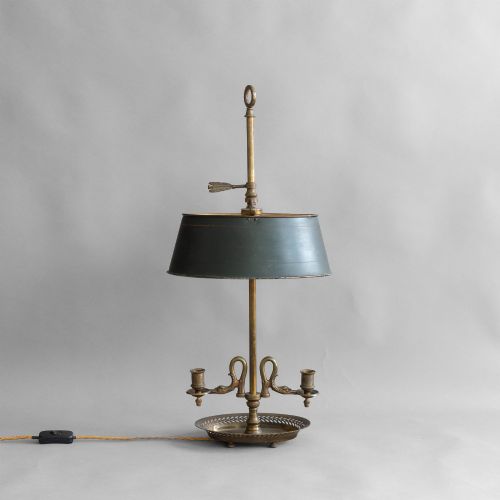
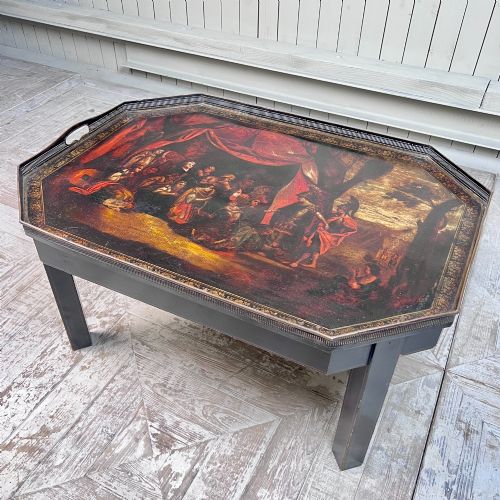
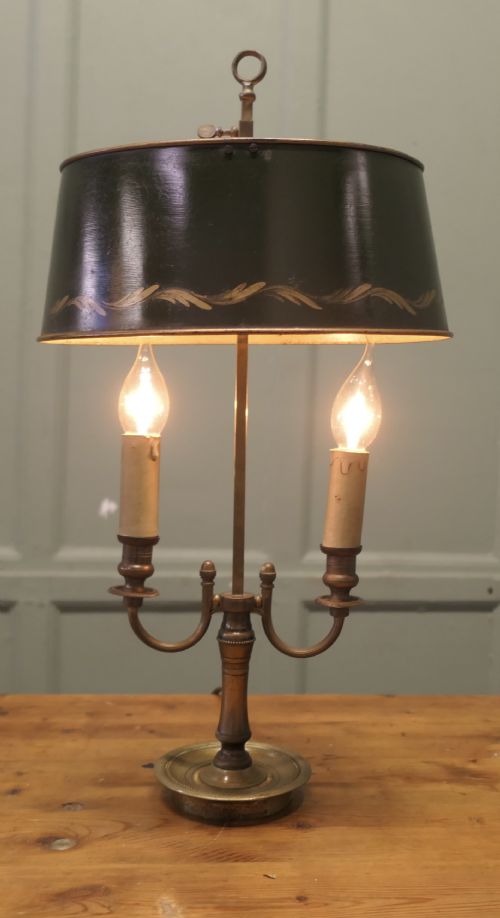
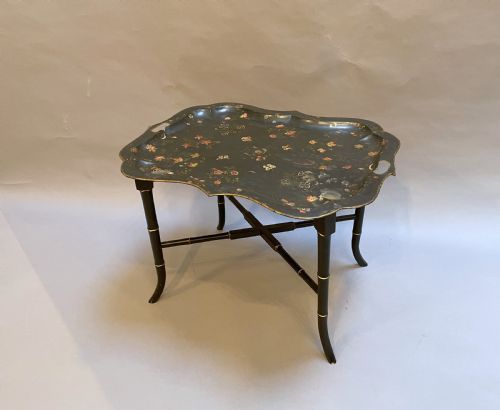
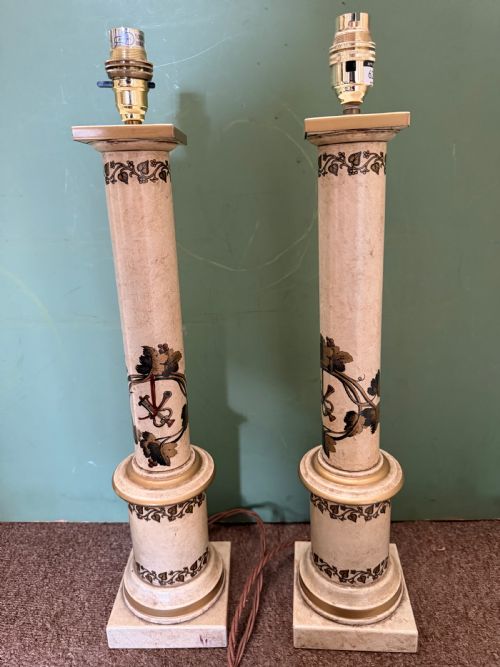
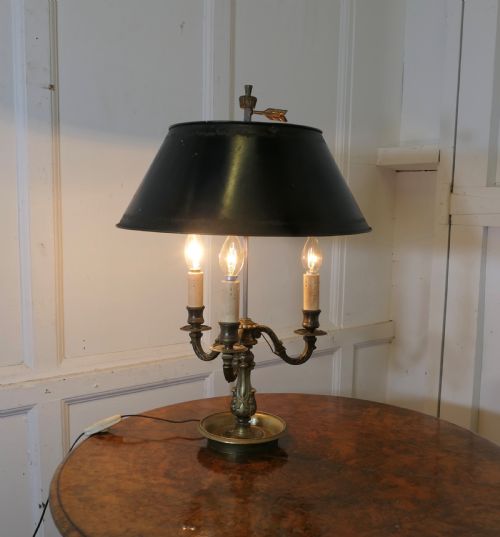
The selections on this page most commonly include bouillotte desk lamps, painted tray tables on stands, and occasional side tables or urns. French origins feature strongly, alongside pieces reflecting Regency, Victorian, and Chinoiserie styles.
Forms range from adjustable candle lamps with brass and tole shades to octagonal tray tables decorated with classical scenes. Each item demonstrates the adaptability of painted metal within historic domestic interiors.
How they were made
The construction of these items relies on metal substrates, primarily iron or steel, shaped into trays, shades, and lamp bodies. Artisans applied successive coats of paint or lacquer, often building deep black, green, or red grounds before adding decorative motifs.
Gilding and hand-painted details frequently embellish the surfaces, paired with structural mounts in brass or gilt metal. Wood appears in the stands designed to support painted tole trays, while porcelain and bronze components integrate into lighting assemblies.
Antique Toleware Table Retail Price Guide 2026
Typical asking prices for toleware table among the pieces listed under this phrase on Sellingantiques today, from the lower quarter to the upper quarter. They describe what is for sale here now, not the wider market.
The listings show pieces spanning from the Regency period through the 1930s, utilising metal, brass, and wood.
What varies in quality
Quality in these painted metal items rests upon the crispness of the hand-painted decoration and the preservation of the original lacquer or paint surface. Finer examples display meticulous gilt work and harmonious colour palettes that retain their depth over centuries.
The integration of secondary materials, such as heavy brass fittings, hand-carved wood stands, or bronze mounts, elevates the standard of manufacture. Superior pieces maintain their original structural integrity, whether in the adjustment mechanisms of desk lamps or the stability of tray stands.
The Antique Toleware Table Glossary
- Toleware
- Painted or lacquered metalware, typically tin or iron, produced for decorative and domestic use. The word derives from the French term for painted sheet metal.
- Bouillotte lamp
- An adjustable desk or table lamp featuring a central shaft, candle arms, and a distinctive tole shade that moves up and down the stem. It takes its name from an eighteenth-century card game.
- Tole-peinte
- Painted tin or metalwork originating from French decorative traditions. This term specifically highlights the hand-painted pictorial or floral surface ornamentation.
- Chinoiserie
- European stylistic interpretation of Chinese and East Asian artistic motifs, frequently rendered in black and gold lacquer on metal surfaces. It gained popularity during the eighteenth and nineteenth centuries.
Antique Toleware Table: Frequently Asked Questions
What is toleware?
Toleware refers to household objects made from sheet metal, usually iron or tin, that have been painted or lacquered. Artisans decorated these surfaces with pigments and gilding to create functional items like trays and lamps.
The word comes from the French phrase for painted sheet metal. This technique allowed makers to produce durable decorative goods that imitated more expensive oriental lacquerwork.
How do I use a bouillotte lamp?
A bouillotte lamp functions as a task or accent light, traditionally placed on a desk or side table. The metal shade slides up and down the central column to direct the light downward onto a surface.
Most historic examples feature multiple candle arms or electrified fittings. Adjusting the shade allows you to control the pool of illumination for reading or working.
How do I care for painted metal?
Caring for painted metal involves dusting surfaces gently with a soft, dry cloth. Avoid using harsh chemical cleaners, abrasive sponges, or excessive moisture that might lift the historic paint or lacquer.
Keep these items out of direct sunlight to prevent the painted finishes and gilt details from fading. Wax polishes should only be applied to wooden stands, keeping them away from the painted metal components.
How do I date a tole piece?
Dating these items requires examining the materials, construction methods, and stylistic cues present in the paintwork and mounts. Regency and Victorian examples often feature hand-forged iron elements, neoclassical motifs, and specific hand-mixed colour grounds.
Later pieces from the early twentieth century may incorporate different wiring standards, machine-formed components, or distinct Art Deco design influences. Comparing the decorative vocabulary to established periods helps narrow down the decade of production.