


Painted Slant Front Desk
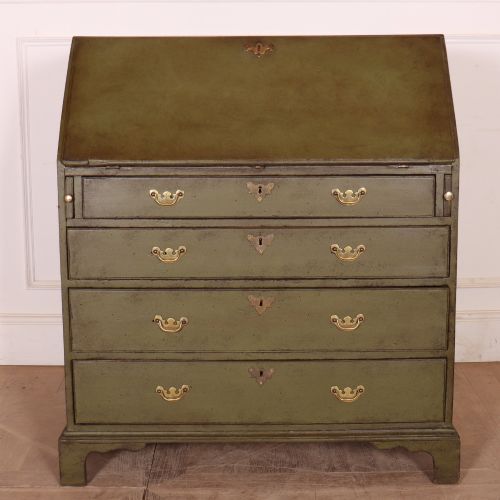
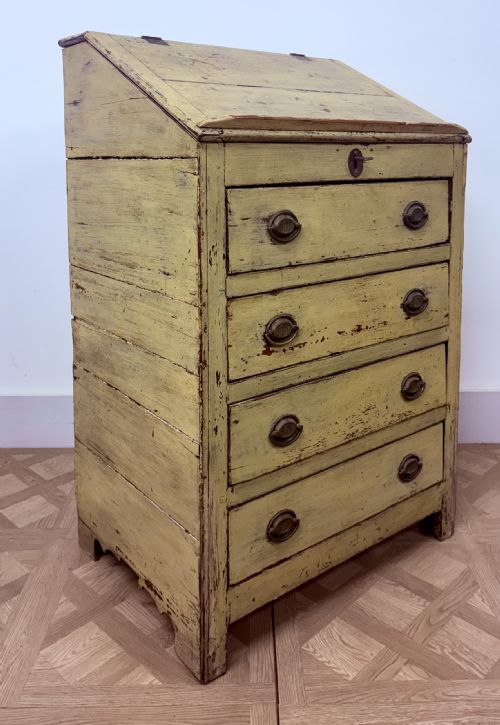
A painted slant front desk brings together the practical drop-leaf surface of a bureau and the decorative possibilities of an applied paint finish.
Painted Slant Front Desk
A painted slant front desk combines a hinged writing flap that opens down for correspondence with concealed interior pigeonholes and drawers below. The forms vary from compact table top writing desks to full-height bureau bookcases and cabinets fitted with upper shelving.
Most examples found here date from the eighteenth and nineteenth centuries, with English country pieces and Scandinavian country versions appearing regularly. Regional pieces often show provincial interpretations of formal styles, including Chinoiserie motifs and applied lacquer work.
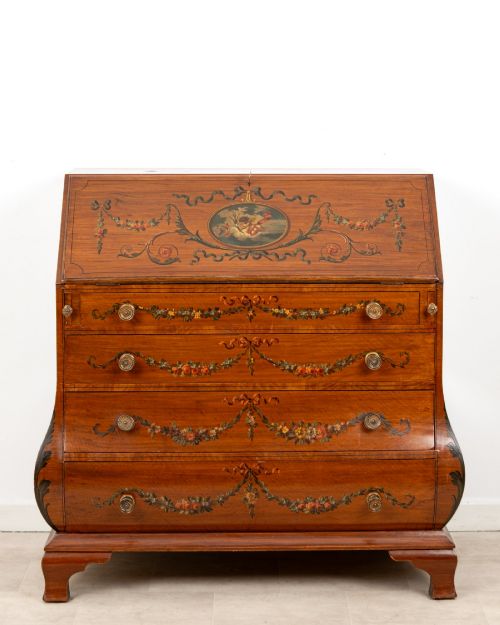
Makers utilised woods such as pine, satinwood, and various solid timbers beneath painted and decorated surfaces. Buyers encounter both simple rustic finishes and elaborate satinwood or red lacquered decorative schemes.
Materials and construction
Carpenters constructed the carcase and interior compartments using solid timbers such as pine and wood, often mounting the heavy writing flap on sturdy brass hinges to support the downward pressure of the writing surface. Drawer linings and secondary woods reflect regional joinery traditions of the eighteenth and nineteenth centuries.
Decorative surfaces relied on layered paint, lacquer, or applied satinwood veneers, sometimes enhanced with hand-painted Chinoiserie scenes and glass panel doors on upper bookcase sections. The integration of paintwork over wood required careful preparation of the ground to prevent cracking across the sloping fall front.
Secret drawers tucked inside the pigeonholes remind writers that privacy was once engineered directly into the timber.
Distinguishing quality
Quality rests on the integrity of the original paint surface and the crispness of any hand-painted decoration rather than simple age alone. Desks retaining their early painted finishes or authentic lacquer work command attention over later or heavily restored surfaces.
Interior architecture also separates standard pieces from finer examples, particularly the complexity of the internal drawers, pigeonholes, and secret compartments hidden behind the drop-leaf fall. Well-proportioned carcases with balanced drawer configurations reflect superior cabinet-making standards.
The Painted Slant Front Desk Glossary
- Bureau
- A writing desk with a sloping hinged flap that covers a set of drawers and pigeonholes. This form evolved during the seventeenth century and remained popular through the Edwardian period.
- Chinoiserie
- European imitation of Chinese artistic motifs, popular in furniture decoration during the eighteenth and early twentieth centuries. It typically involves painted or lacquered scenes of figures, landscapes, and pagodas.
- Satinwood
- A durable hardwood with a lustrous, yellow-toned grain utilised for fine cabinet-making and decorative veneers. It provides a pale, smooth ground for painted details.
- Lacquer
- A hard, protective varnish finish applied in multiple layers and often polished to a glossy sheen. Red lacquer is particularly associated with grander Georgian and Victorian revival pieces.
- Pigeonhole
- A small, open compartment inside a desk or cabinet used for sorting letters and papers. These compartments are frequently concealed behind the drop-front flap of a bureau.
Painted Slant Front Desk: Frequently Asked Questions
What is a slant front desk?
A slant front desk is a form of writing furniture featuring a hinged writing board that opens at an angle to reveal internal compartments and drawers.
When closed, the slanted flap conceals the working area and protects correspondence from dust and view.
How do I identify the period?
Dating relies on examining construction methods, secondary woods, timber selection, and the style of the painted decoration.
Eighteenth-century examples often display simpler provincial joinery, whereas Edwardian pieces utilise lighter satinwood grounds and refined decorative painting.
Where were these desks made?
The pieces originate from workshops across England, Sweden, Denmark, and Austria, reflecting distinct regional tastes in furniture design.
English country pieces contrast with Scandinavian painted furniture and Viennese enamel-decorated cabinets.
How do I care for a painted finish?
Painted and lacquered surfaces require protection from direct sunlight and drastic changes in relative humidity to prevent the paint from cracking.
Dusting with a dry, soft cloth is sufficient for routine maintenance without applying modern chemical polishes.
What is a bureau bookcase?
A bureau bookcase is a dual-purpose furniture form combining a lower writing desk with an upper shelving or cabinet section.
These taller pieces provide both enclosed workspace and display storage behind wooden or glass doors.