






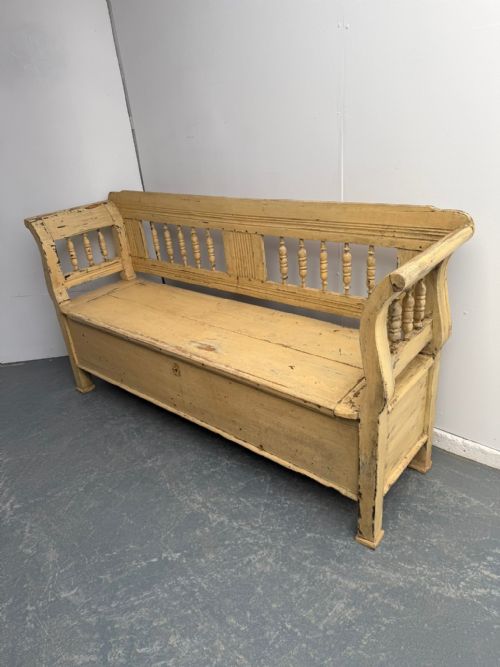
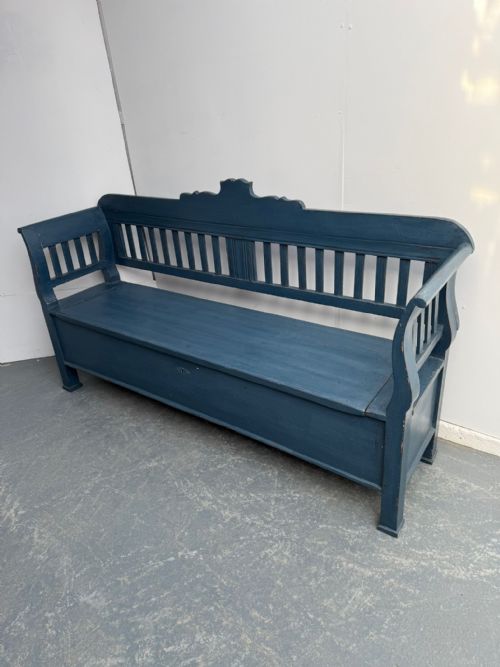
Painted Settle Bench
A painted settle bench brings centuries of rustic utility and regional folk colour into a room.
Painted Settle Bench
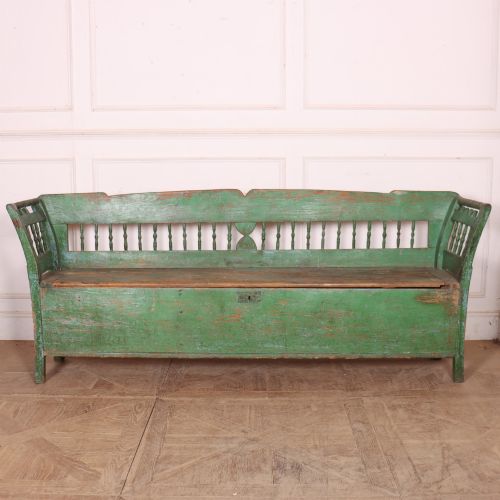
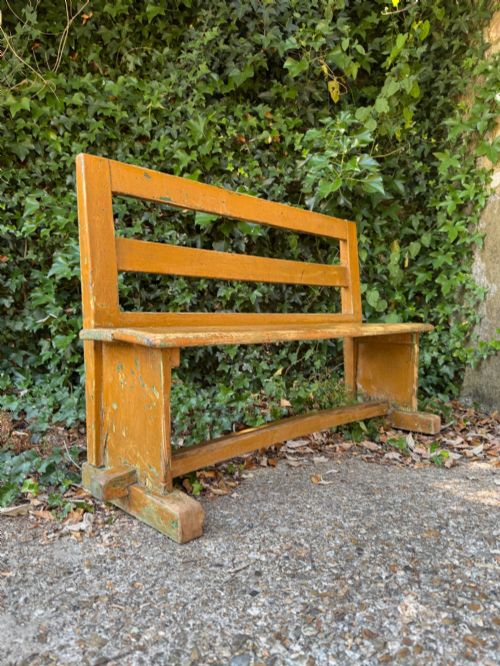
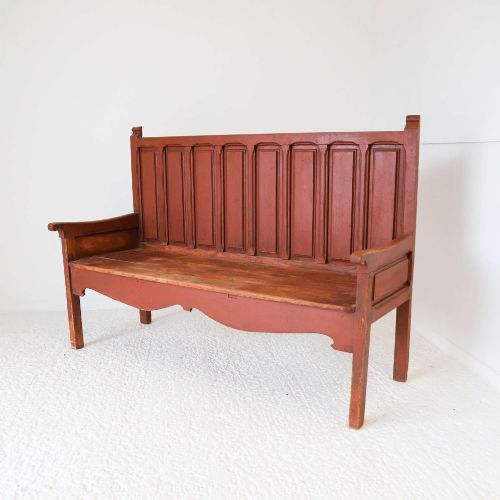
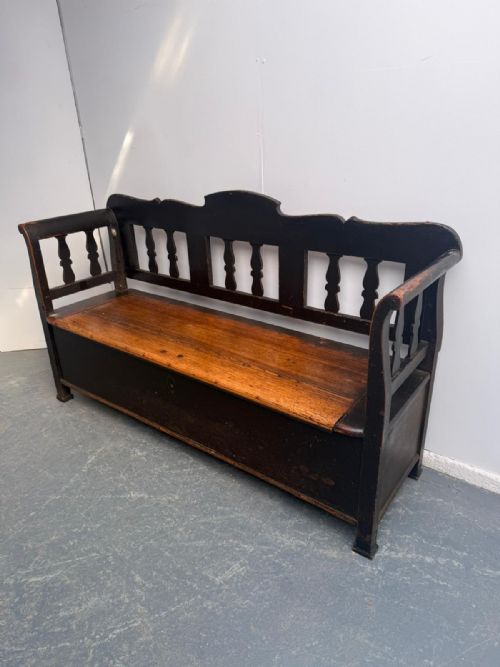
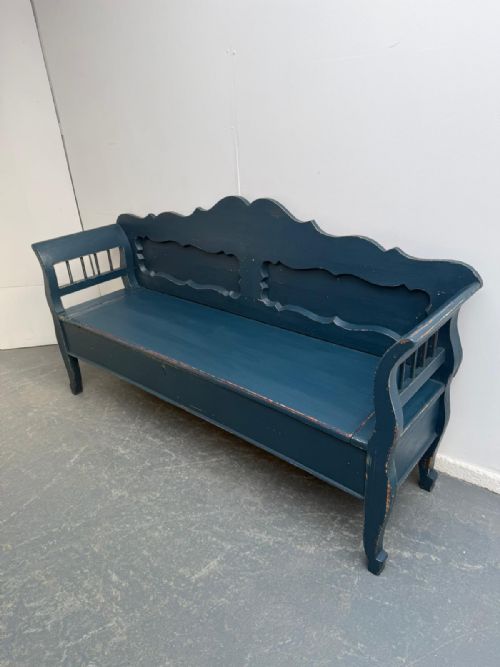
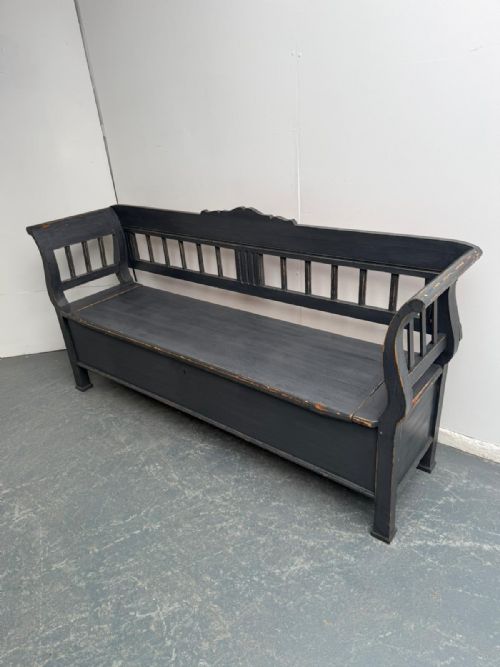
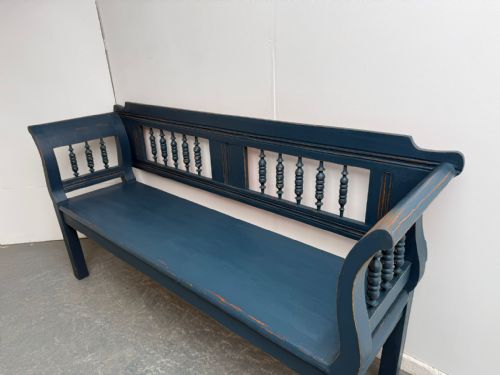
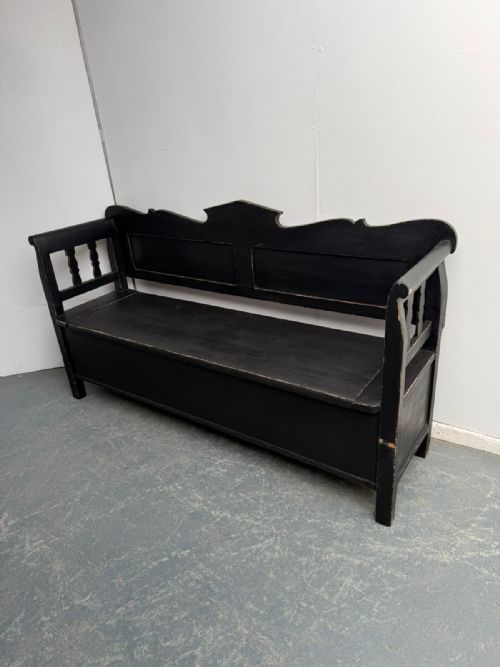
A painted settle bench is a high-backed wooden seat designed to keep out drafts, frequently incorporating a box compartment beneath the seat for storage. When you search for this phrase, you encounter heavy vernacular seating originating from farmhouse kitchens, taverns, and rural dwellings across Britain and continental Europe. The examples found here span the eighteenth, nineteenth, and early twentieth centuries, taking forms such as high-backed settles, tavern benches, corner seats, and storage benches.
The regional variety is substantial, ranging from Hungarian three-seater box settles and Swedish Gustavian pine benches to Welsh tavern benches and Spanish examples. Many retain their original painted finishes in blue, grey, black, cream, and green, alongside folk art decoration. These pieces bridge the gap between architectural woodwork and domestic furniture, functioning as practical seating that doubles as a room divider.
How they were made
Construction relies heavily on solid pine and timber planks joined with pegged mortise and tenon joints to withstand decades of daily use. Cabinetmakers and local joiners built these seats to endure, utilising sturdy panelled backs and robust armrests that often curve downward from the high backrest.
Surfaces were prepared with ground layers before receiving coats of traditional paint, which over generations has acquired natural wear, craquelure, and patination. Iron fixings, hinges, and occasional linen or fabric elements appear on specific variants, while some pieces feature hand-painted folk art details.
Listings feature pine and painted timber pieces originating from Britain, Sweden, Hungary, Spain, France, and Austria.
What varies in quality
Quality rests primarily on the integrity of the surface finish and whether the paint is original or a later application. Pieces retaining their untouched early pigment display a depth of character and surface texture that completely alters their desirability compared to stripped or heavily repainted items.
Proportion and structural survival also separate the examples. A bench with uncompromised timber thickness, original box storage lids and hinges, and well-balanced proportions commands attention because vernacular pieces often suffered from heavy alterations or amputated high backs over long working lives.
The Painted Settle Bench Glossary
- Settle bench
- A wooden bench with a high solid back designed to block cold drafts in domestic rooms, often featuring a hinged seat lifting to reveal storage space below.
- Box settle
- A specific form of settle where the base forms a fully enclosed compartment or coffer, used historically for storing blankets or household provisions.
- Vernacular
- Furniture rooted in local traditions and made by regional craftsmen for everyday use rather than following high-style academic design canons.
- Gustavian
- The Swedish interpretation of French neoclassical style, characterised by restrained carving, pale painted finishes, and functional elegance.
- Patination
- The gradual change in the surface appearance of wood and paint caused by age, wear, handling, and light exposure over centuries.
Painted Settle Bench: Frequently Asked Questions
What is a painted settle bench used for?
These benches served historically in farmhouses and inns as windbreaks near open hearths, offering enclosed seating and hidden storage beneath the seat. In a modern home, they function effectively in hallways, kitchens, or dining areas where both seating and storage are required.
The high back provides privacy and anchors a room visually, while the interior box compartment holds bulky items like boots, linens, or books out of sight.
How do I tell original paint from later paint?
Original paint shows consistent micro-cracking, natural thinning around high-contact areas like armrests, and an integrated relationship with the underlying timber. Later overpainting often feels flat, masks the grain texture unevenly, or lacks the accumulation of dirt and wax settled in the crevices.
Examining the edges and fastener sites under magnification reveals whether multiple campaigns of colour exist beneath the top layer.
Are these benches comfortable to sit on?
Vernacular benches were built for utility and posture rather than deep lounge relaxation, so the wooden seats are upright and firm. Many owners add loose cushions or folded textiles to the seat base for softer daily use.
The high back and solid armrests, however, create a secure, enclosed feeling that makes them pleasant for sitting in an entryway or at a dining table.
Where were settle benches placed historically?
In traditional homes, settles stood perpendicular to the fireplace to deflect cold drafts sweeping across flagstone floors. They also lined the walls of village taverns and farmhouse kitchens to seat multiple people efficiently around a central table.
Their substantial backing made them natural room dividers in open-plan historic interiors, creating a protected micro-environment near the hearth.
How do I care for historic painted furniture?
Protect the surface by keeping the bench away from direct heat sources and strong sunlight, which can dry out old timber and cause paint to flake. Dust gently with a dry, soft cloth and avoid chemical cleaning agents that strip fragile historical pigments.
Applying microcrystalline wax occasionally helps preserve exposed timber edges, but painted surfaces generally require minimal intervention beyond stable environmental conditions.