

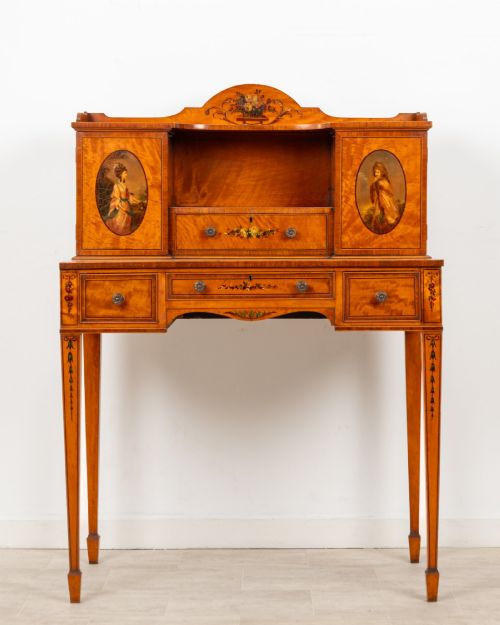
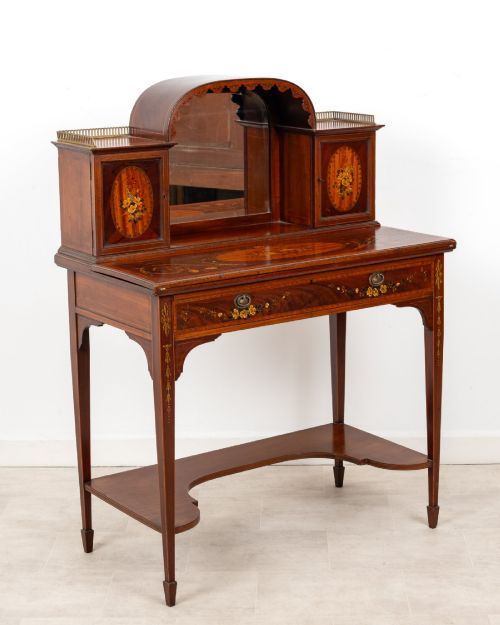
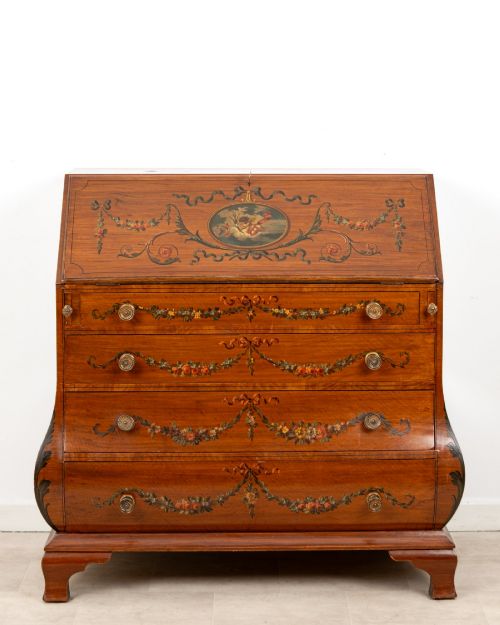


Painted Satinwood Writing Desk
A painted satinwood writing desk brings luminous timber and delicate brushwork together, offering a refined workspace shaped by Edwardian and Georgian hands.
Painted Satinwood Writing Desk
A painted satinwood writing desk combines the pale, reflective sheen of exotic timber with hand-applied decoration, creating a light and decorative surface for correspondence. These pieces span from the late eighteenth century through the Victorian era and well into the Edwardian period, capturing major revivals of classical taste.
The most common examples encountered here date from the Edwardian era and the late nineteenth century, often reflecting Sheraton Revival or Neoclassical influences. Forms range from simple ladies writing tables and knee-hole desks to elaborate bureau chests and Carlton House desks with fitted superstructures.
Many items show dual utility, functioning as both writing desks and dressing tables, complete with mirrors or tiered compartments. Their lighter proportions distinguish them from earlier heavy mahogany furniture, designed specifically to brighten principal rooms.
Materials and construction
Makers utilised pale satinwood veneers applied to solid timber foundations such as mahogany, creating smooth surfaces ideal for detailed pigment work. Brass handles, hinges, and occasional gallery rails provided structural contrast to the golden grain.
Decorative schemes relied on direct paintwork and hand-applied floral motifs, garlands, or classical figures, often complemented by finely inlaid banding. Writing surfaces were frequently lined with panels of tooled leather to provide a durable and tactile working area.
Painted Satinwood Writing Desk Retail Price Guide 2026
Typical asking prices for painted satinwood writing desk among the pieces listed under this phrase on Sellingantiques today, from the lower quarter to the upper quarter. They describe what is for sale here now, not the wider market.
Common materials recorded across these desks include satinwood, mahogany, painted timber, brass, and leather.
Variations in quality
The sophistication of the painted ornament distinguishes standard commercial production from exceptional cabinet work. Skilled hands achieved subtle shading and precise botanical or classical details, whereas lesser pieces relied on heavy stencilling and crude brushwork.
Construction methods also reveal the standard of the piece, with superior examples utilising solid mahogany carcases, carefully matched satinwood veneers, and well-fitted drawers with dovetail joinery. The crispness of inlaid borders and the quality of the original brass hardware indicate the original workshop's standing.
The Painted Satinwood Writing Desk Glossary
- Satinwood
- A dense, lustrous timber native to tropical regions, prized for its golden-yellow colour and natural sheen that catches the light. It serves as the primary ground for painted decoration on these desks.
- Carlton House desk
- A distinctive horseshoe-shaped writing desk featuring a raised superstructure of small drawers and pigeonholes curving around the back of the writing surface. This form gained immense popularity during revival periods.
- Bonheur du jour
- A small, light ladies writing table featuring a tiered cabinet or superstructure with drawers and shelves above the main writing surface. Originating in France, it became a staple of refined English drawing rooms.
- Sheraton Revival
- A late nineteenth and early twentieth century design movement that reinterpreted the elegant neoclassical furniture of George III designer Thomas Sheraton. These pieces frequently employ satinwood grounds and delicate painted classical motifs.
- Superstructure
- The raised tier of small drawers, compartments, or mirrors built onto the back of a writing table or desk. It maximises storage space while maintaining a graceful silhouette.
Painted Satinwood Writing Desk: Frequently Asked Questions
What is a painted satinwood writing desk?
A painted satinwood writing desk is a decorative piece of antique furniture surfaced with pale timber and embellished with hand-applied floral or classical artwork. These tables range from compact ladies writing desks to elaborate Carlton House forms.
Created largely during the Georgian, Victorian, and Edwardian eras, they were designed to bring light and elegance into private sitting rooms and boudoirs.
How do I care for satinwood?
Satinwood requires gentle treatment to protect both the polished timber ground and the delicate painted decoration on the surface. Keep the desk away from direct sunlight and excessive heat sources to prevent the wood from drying or fading.
Dust regularly with a soft, dry cloth and avoid modern aerosol polishes, which can build up a residue and damage aged paintwork over time.
How can I tell an Edwardian piece from a Georgian one?
Edwardian painted satinwood furniture, largely dating around nineteen hundred, often displays looser revival styling, machine-assisted secondary woods, and brighter, more varied floral palettes. Georgian examples from the eighteenth century typically exhibit tighter proportions, heavier structural timbers, and finer hand-cut joinery.
Examining the drawer linings, secondary woods like oak or pine, and the wear patterns on the leather writing surface helps clarify the period of production.
Were these desks used for writing letters?
These desks served primarily as private writing stations for correspondence, keeping stationery, ink, and sealing wax close to hand in fitted drawers and pigeonholes. Many included leather-lined panels to provide a smooth, resilient surface for penwork.
In addition to writing, owners utilised them for reading, managing household accounts, or as dressing tables when paired with a mirror superstructure.