




Painted Satinwood Stand
A painted satinwood stand brings delicate, light-reflecting timber and hand-finished ornament to a room.
Painted Satinwood Stand
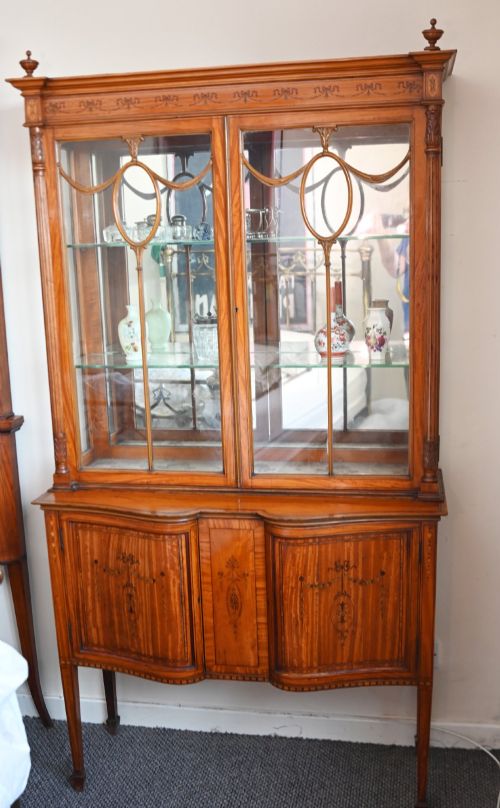
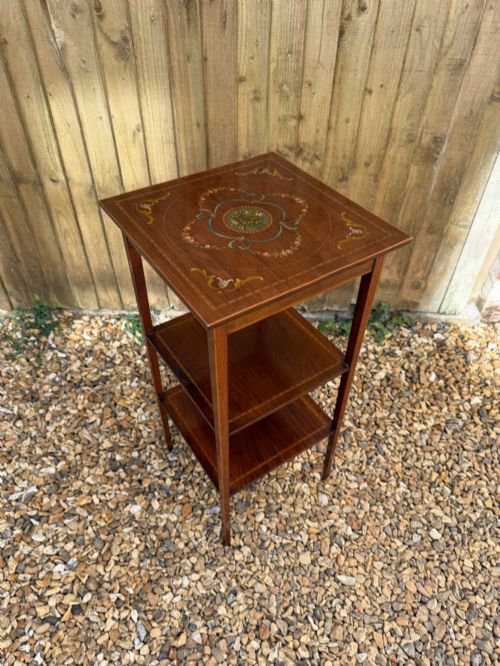
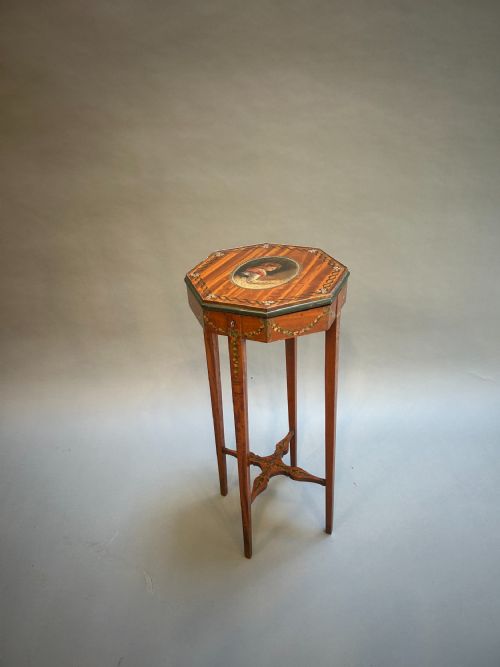
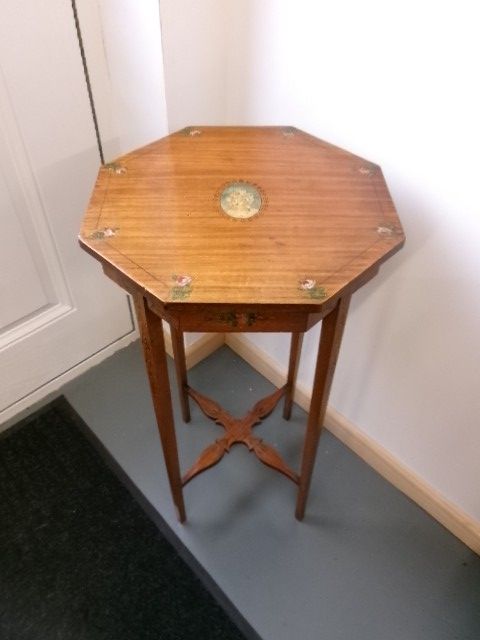
A painted satinwood stand is a refined piece of furniture designed for display or utility, combining blonde timber with pigmented decoration. These items appear in forms such as occasional tables, plant stands, jardinières, and kettle stands.
Most examples encountered on this page date from the Edwardian era and the late nineteenth century, often executed in the Sheraton Revival or Neoclassical manner. Earlier Georgian and Regency prototypes also occur, showing similar hand-painted details upon the timber surface.
The construction serves both decorative and practical ends, providing a compact surface for lamps, urns, or floral arrangements while brightening a corner with pale wood and painted motifs.
Materials and Construction
Cabinet makers utilised dense satinwood veneers or solid timber foundations, frequently combining them with mahogany, boxwood inlay, and brass or ormolu mounts. The underlying structure provides a stable base for the fine grain of the primary wood.
Decoration relies on direct hand-painting upon the timber, sometimes enhanced by boxwood stringing and contrasting secondary woods such as satin birch or mahogany. Artisans applied floral, portrait, or classical motifs directly onto the pale satinwood ground.
Painted Satinwood Stand Retail Price Guide 2026
Typical asking prices for painted satinwood stand among the pieces listed under this phrase on Sellingantiques today, from the lower quarter to the upper quarter. They describe what is for sale here now, not the wider market.
Listings demonstrate that satinwood stands frequently incorporate mahogany and boxwood inlay, spanning periods from George III through the Edwardian Sheraton Revival.
Assessing Quality and Execution
Quality rests primarily on the crispness of the hand-painted decoration and the selection of the satinwood timber. Finer pieces display detailed floral wreaths, portraits, or classical urns executed with precision rather than mechanical uniformity.
The integration of secondary materials such as ormolu mounts, delicate boxwood inlay, and sturdy structural joinery distinguishes standard production from exceptional cabinet work. Superior items maintain balance and proportion alongside meticulous surface finishing.
Edwards and Roberts·Hobbs and Sons
The Painted Satinwood Stand Glossary
- Satinwood
- A dense, lustrous tropical timber with a natural golden sheen. It provides the pale reflective ground characteristic of these stands.
- Sheraton Revival
- A late nineteenth and early twentieth century design movement that reinterpreted the light, neoclassical furniture forms of the eighteenth century.
- Jardinière
- A decorative stand or receptacle designed to hold plants or flowers. In satinwood pieces, these often incorporate waterproof liners or brass galleries.
- Ormolu
- Gilt bronze mounted onto furniture as decorative enrichment. It appears on finer Edwardian and neoclassical stands to accent the timber.
- Neoclassical
- A style drawing inspiration from classical antiquity, featuring symmetrical forms, urn motifs, and restrained painted decoration.
Painted Satinwood Stand: Frequently Asked Questions
Where should I place a painted satinwood stand?
These stands suit drawing rooms, hallways, or reception spaces where their reflective timber and painted details can catch natural light. They function well as lamp tables, plant holders, or display surfaces for small decorative objects.
Because prolonged direct sunlight can fade both the satinwood grain and the painted pigments, positioning them away from south-facing windows helps preserve the surface decoration.
How do I distinguish Edwardian pieces from Georgian originals?
Edwardian items frequently display the lighter, airier characteristics of the Sheraton Revival style, often utilising machine-prepared veneers alongside hand-finishing. Georgian and Regency pieces show older construction methods, heavier secondary timbers, and patination acquired over a longer lifespan.
Examining the underside, drawer linings, and interior secondary woods helps clarify the period of manufacture when stylistic similarities overlap.
How do I clean and care for painted satinwood?
Dust the surface regularly with a soft, dry cloth to prevent particulate buildup on the painted and polished areas. Avoid chemical sprays, silicone polishes, and excessive moisture, which can damage the delicate pigments and timber finish.
Applying a microcrystalline wax occasionally protects the satinwood without harming the hand-painted details or altering the sheen of the timber.
What is the difference between an occasional table and a plant stand?
Occasional tables provide a broader surface intended for books, lamps, or general utility within a room. Plant stands and jardinières feature taller, narrower proportions and often incorporate specific design elements to accommodate botanical displays.
Many jardinières include protective metal liners or galleried tops to contain water and soil from potted plants.