

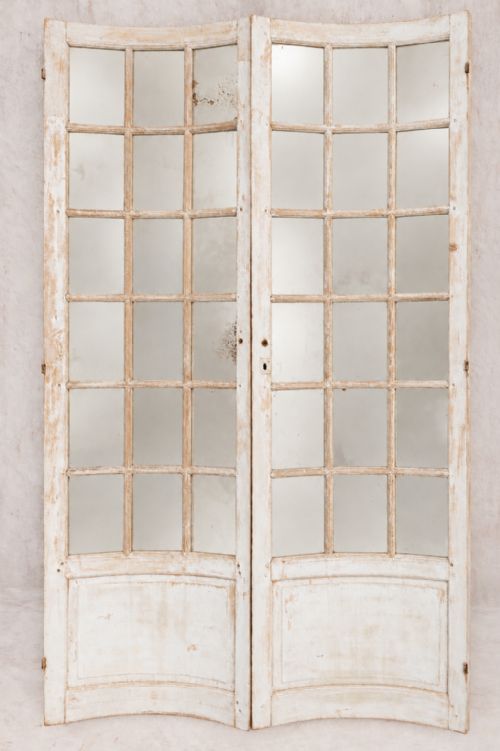
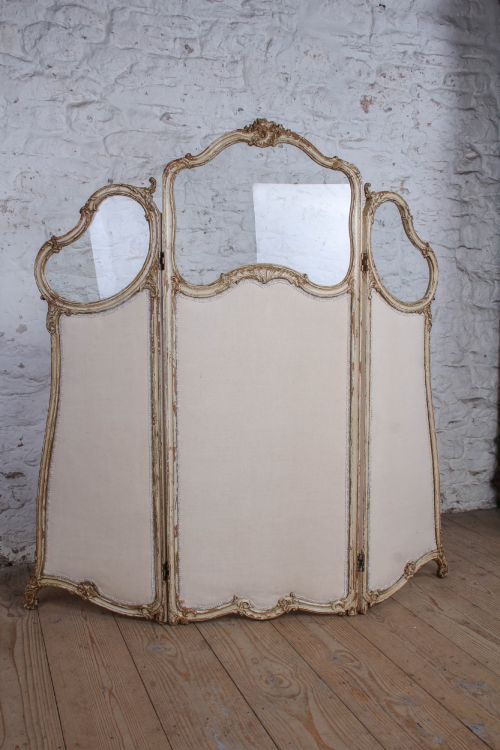

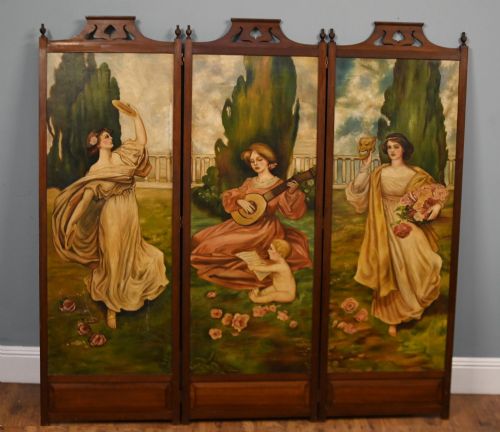
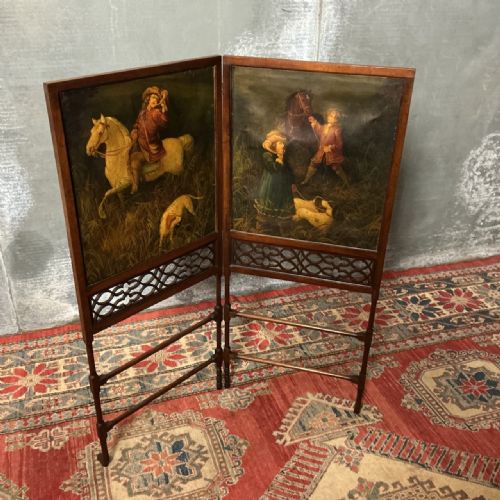



Painted Room Divider
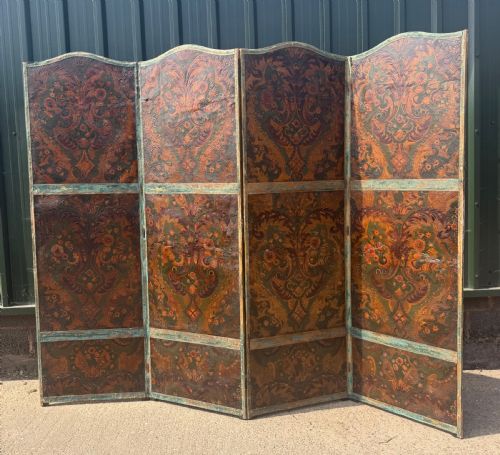
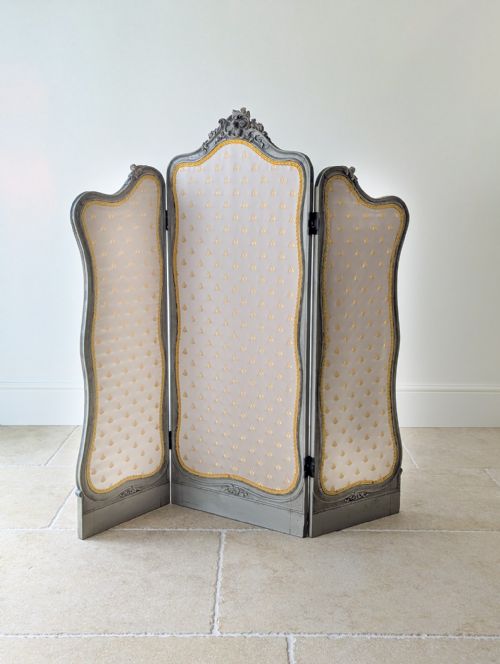
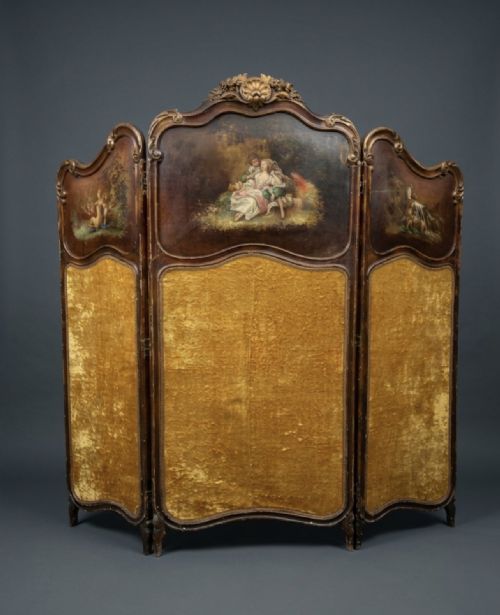
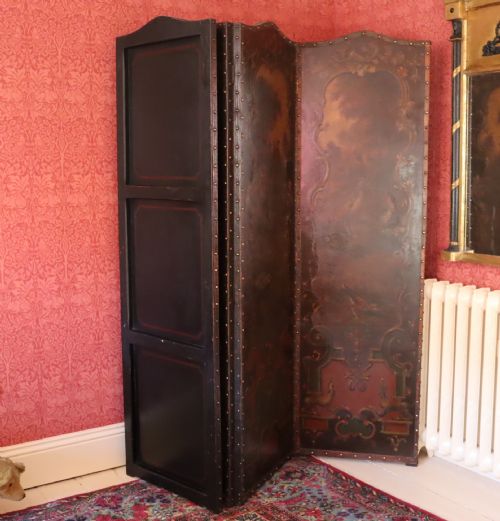
A painted room divider creates instant privacy and divides a large interior using folding panels decorated with oil paint, lacquer, or hand-painted leather.
Painted Room Divider
A painted room divider functions as a movable partition, appearing most frequently in nineteenth-century incarnations with three or four folding panels. These pieces span eras from the eighteenth to the early twentieth century, taking the form of tall dressing screens, modesty panels, and freestanding room dividers.
The selection ranges from European Chinoiserie and French Rococo Revival styles to Chinese black lacquer and Japanese decorated pieces. Buyers encounter various configurations, including standard folding screens and specialised pieces mounted with hardstone or canvas.
Materials and Construction
Makers constructed the structural frames from timber such as mahogany, walnut, and various native woods, often incorporating brass hinges and fretwork details. Panels consist of stretched canvas, heavy leather, or wooden boards prepared to receive oil paint, lacquer, and gold leaf.
Surface decoration relies on meticulous hand-painting, polychrome finishes, and gilt embossing. Asian pieces employ layers of black lacquer and hardstone mounting, while European workshops utilised tooling and oil painting to emulate Dutch leather.
Painted Room Divider Retail Price Guide 2026
Typical asking prices for painted room divider among the pieces listed under this phrase on Sellingantiques today, from the lower quarter to the upper quarter. They describe what is for sale here now, not the wider market.
Some nineteenth-century country houses employed folding canvas screens simply to stop cold drafts whistling through large, poorly heated reception rooms.
Assessing Craftsmanship
Quality rests in the execution of the painted surface and the integrity of the folding mechanism. Finer examples display accomplished brushwork in pastoral scenes or Chinoiserie motifs, alongside substantial frames that support heavy leather or multi-fold canvas without sagging.
The distinction between standard utility items and masterwork pieces lies in the depth of materials such as gold leaf, embossed Cordoban leather, and intricate joinery. Lesser pieces exhibit simpler painted panels and lighter wooden framing with minimal structural reinforcement.
Paul Sormani
The Painted Room Divider Glossary
- Chinoiserie
- European decorative style inspired by Chinese art and design, prevalent on lacquer and painted panels. This aesthetic dominated many eighteenth and nineteenth-century screens.
- Cordoban leather
- Heavily embossed, painted, and gilt leather originating from Spanish workshops. Artisans utilised this material for luxurious wall hangings and folding screens.
- Modesty screen
- A low-standing panel designed to conceal specific areas of a room or provide discrete privacy. These frequently featured painted panels set within wooden frames.
- Lacquer
- A durable finish applied in multiple layers to wood and polished to a hard sheen. Asian screens often employed black lacquer as a base for intricate decoration.
- Fretwork
- Ornamental design created by cutting patterns through wood using a piercing technique. This detail appears on frames and upper panels of various screens.
Painted Room Divider: Frequently Asked Questions
How do I use a room divider in a small space?
Position a multi-fold screen across a corner to create a distinct dressing area or reading nook without permanent alterations. The folding mechanism allows you to adjust the angle to fit narrow footprints.
Ensure the panels remain stable when angled, as heavier leather or wooden frames require a balanced zigzag placement to stand securely.
What is the difference between a dressing screen and a fire screen?
Dressing screens stand tall with three or more folds to conceal a person changing clothes or to divide a large chamber. Fire screens are smaller, single-panel pieces placed near a hearth to block radiant heat.
Both utilise painted panels, but their scale and structural proportions serve entirely different domestic functions.
How do I care for hand-painted leather panels?
Keep painted leather screens away from direct sunlight and excessive moisture to prevent the leather from cracking and the paint from flaking. Dust gently with a dry, soft cloth.
Avoid chemical cleaning products, as historic oil paints and gilt embossing react poorly to modern solvents.
How can I tell a Chinese lacquer screen from a European Chinoiserie copy?
Examine the wood preparation, lacquer depth, and the specific pigments used in the pictorial scenes. Chinese export pieces typically feature deep black lacquer with distinct hardstone or mother-of-pearl mounts.
European interpretations in the French or English taste generally apply oil paint over canvas or leather substrates rather than traditional tree-sap lacquer.